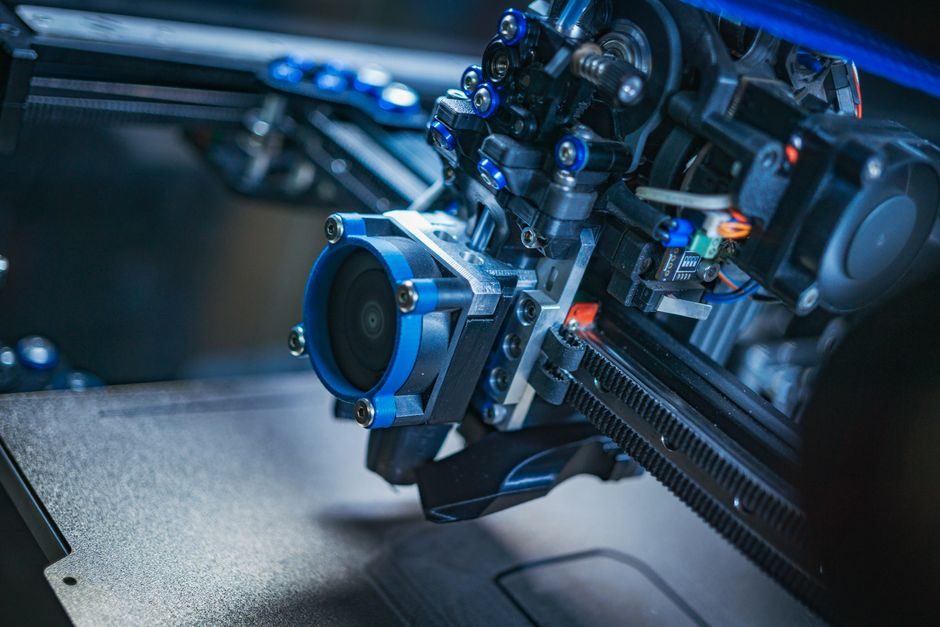
Eleven verified factories and trading companies were active in the 3D-printer ABS filament sub-category on Made-in-China as of 2025-12-23, listing 33 products with quoted prices starting at US$0.10 per kg against a 10 kg minimum [S3]. On the same platform the 3D printing mould sub-category showed 9 manufacturers and 27 products with entry-tier mould pricing at US$0.35 per piece and 15,000-piece MOQs, the lower bounds of which are useful when auditing Asian mould-fabrication lead times against domestic alternatives [S2].
The broader 3D printer category pulled together Diamond Member audited suppliers from Hubei, Guangdong and Zhejiang, with industrial DLP dental-crown units such as the DM-300 quoted at US$13,000–14,980 per set and general-purpose 3D printers in a US$9,999–19,999 band, all at 1-set MOQ [S4]. Prismlab's own supplier page for micro-nano 3D printing, indexed on 2022-12-14, still functions as a factory-pricelist entry point for buyers comparing Chinese resin-based micro-fabrication capacity [S1].
Sub-Category Density on Aggregator Directories
Made-in-China returns a small but curated set: 11 ABS filament vendors carrying 33 SKUs, 9 mould vendors with 27 SKUs, and a separate industrial-printer cluster where Diamond Member audited suppliers dominate the top results [S3][S2][S4]. HKTDC Sourcing, by contrast, surfaces 3D-printing-toy cards as a distinct sourcing node with filterable supplier-type, country and factory-location attributes, which matters for buyers in gift and invitation-card categories who need a 3D-printing visual rather than a printer purchase [S5].
Vendor count per sub-category sits in the 9–11 range on Made-in-China, with each listing pinning a specific City/Province (Longyan and Quanzhou, both in Fujian, are visible in the mould and filament sub-categories respectively) [S2][S3]. That city/region flag is the single most useful field for cross-checking a vendor's claimed plant area against public industrial-park records — a 628 m² plant area and a "Manufacturer/Factory & Trading Company" legal form, for example, identifies a hybrid small-volume producer rather than a Tier-1 OEM [S2].
MOQ and Price-Band Comparison Across Sub-Categories
MOQ and price differ by an order of magnitude depending on whether the buyer is sourcing filament, moulds or complete printers. Filament suppliers on Made-in-China list 10 kg entry MOQs at US$0.10/kg; mould vendors show 15,000-piece MOQs at US$0.35/piece; and complete DLP/industrial printers start at a 1-set MOQ with prices in the US$9,999–19,999 window [S3][S2][S4]. The shape of this curve — cheap consumables, mid-cost tooling, capital-intensive machines — is consistent with how an industrial buyer should stage RFQ releases, with each tier requiring a different supplier-qualification depth.
For process engineers, the practical comparison table reduces to four columns:
Filament (ABS): MOQ 10 kg, ~US$0.10/kg, vendor count 11, supplier-type dominated by trading companies based in Quanzhou, Fujian [S3].
3D printing moulds: MOQ 15,000 pieces, US$0.35/piece entry tier, vendor count 9, plant areas around 628 m², hybrid Manufacturer/Factory & Trading Company legal form [S2].
Industrial DLP printers (e.g. DM-300 dental): MOQ 1 set, US$13,000–14,980/set, Diamond Member audited suppliers in Hubei and Guangdong [S4].
General industrial FDM/FFF printers: MOQ 1 set, US$9,999–19,999/set, same Diamond Member audit tier, multi-province coverage [S4]. Buyers running a PLC-integrated cell should treat the printer price as roughly one-tenth to one-third of a full automated line, which keeps the printer itself off the critical capex path.
Audit Status, Legal Form and Supplier-Type Filters
On Made-in-China the "Diamond Member Audited Supplier" badge is the platform's strongest commercial signal and clusters heavily around the printer OEMs, with Wuhan Raylas Technology and a Hubei-based Diamond Member appearing in the 3D printer search at US$9,999–19,999 pricing [S4]. The mould sub-category on the same platform lists suppliers with the "Manufacturer/Factory & Trading Company" combined legal form, which means the same entity both produces and resells — a flag worth probing when negotiating IP-protected tooling [S2].
On HKTDC Sourcing the filterable attributes run to Supplier Type, Country/Region, Factory Location, and Nature of Business, although the 3D-printing-toy card sub-page shows many fields returning "Not Available" for the gift-and-premium card cluster [S5]. A buyer comparing HKTDC against Made-in-China should expect the HKTDC trade-show-adjacent suppliers to carry more compliance documentation per listing, while Made-in-China carries more raw SKU/MOQ data.
ABS filament vendors, by contrast, frequently appear as trading companies without audited-supplier status, with main products sometimes unrelated to plastics (yoga wear, underwear, swimwear visible in the Quanzhou filament cluster), confirming these are resellers rather than compounders [S3]. For flow control on a 3D-printer resin loop, a separate flow meter specification is required from the printer OEM; filament-vendor side, only the diameter tolerance and moisture-content data sheet matters.
Industrial Application Anchors and Buyer Segments
The DM-300 DLP dental-crown printer entry (US$13,000–14,980) is the clearest sign of how the supplier mix has segmented: dental labs, jewellery casting, and small-batch industrial prototyping buy from the Diamond Member tier in Hubei and Guangdong, while consumer filament and toy-card markets buy from Quanzhou/Longyan trading companies at sub-US$0.50 unit pricing [S4][S2][S3]. The result is a two-tier market where industrial buyers and consumer buyers rarely transact with the same vendor.
For buyers sourcing complete 3D-printer cells, the Made-in-China 3D printer page is the single highest-density index, with Diamond Member audited suppliers and trading companies co-listed in Guangdong and Hubei [S4]. For buyers sourcing raw ABS feedstock, the same platform's filament category is functional but vendor-audit depth is shallow, so independent compound verification is necessary [S3]. For buyers sourcing moulds, the Longyan, Fujian cluster with its 15,000-piece MOQ floor is calibrated for mid-to-high volume runs and is not designed for prototyping [S2]. The micro-nano 3D-printing supplier page operated by Prismlab covers the high-resolution / micro-fabrication niche that the Made-in-China general category does not address, and remains indexed as a 2022 factory-pricelist entry point [S1].
Limitations, Failure Modes and Cross-Check Rules
The directory data is fresh enough for sourcing intelligence but has three structural limits. First, vendor counts (9 mould, 11 filament) only reflect what the aggregator indexes — they are not the total China supply, and any quotation should be validated against a 3+ vendor sample. Second, plant-area data such as "628 m²" only appears on some listings and is self-reported, so it cannot be treated as a capacity certificate [S2]. Third, the HKTDC Sourcing sub-page for 3D-printing-toy cards shows multiple "Not Available" filter values, meaning a buyer using that page as a CRM seeding source will need to chase supplementary data directly [S5].
Failure modes for a sourcing manager reading these pages: trusting a 10 kg filament MOQ as "small" without confirming the resin grade and tolerance band; treating a US$0.35 mould entry price as the run price without confirming steel grade, cavity count, and polishing tier; and assuming any Diamond Member audited supplier has in-house compounding rather than contract manufacturing. Cross-check rules: (1) demand the actual DM-300 spec sheet and DLP build-volume in mm before paying the US$13,000–14,980 quote [S4]; (2) request an ABS filament data sheet with diameter tolerance (typically ±0.02–0.05 mm) and moisture content (<0.1%) rather than relying on the headline US$0.10/kg [S3]; (3) for any mould at US$0.35/piece, request a First Article inspection report against an agreed 3D CAD master [S2]. For a 3D scanner integration upstream of any printed part, a separate 3D scanner spec governs digitisation accuracy and should not be conflated with printer resolution.
Related Sourcing Nodes Worth a Parallel RFQ
Three cross-category sourcing nodes link naturally to 3D-printer sourcing. A buyer looking at the DM-300 dental-crown price band will hit the same Shenzhen/Hubei industrial cluster that supplies the broader IGBT smart manufacturing stack, because printer electronics and motion-control sub-assemblies share those OEM lines. ABS filament buyers sourcing from Quanzhou at US$0.10/kg are buying from the same Fujian trading-company base that supplies raw polymer for welded steel mesh coating lines, so a combined polymer-and-coating RFQ is feasible. Buyers comparing mould vendors at 15,000-piece MOQs against in-house injection moulding should also price the steel section cost of any mould frame, since the US$0.35/piece mould price excludes the bolster. [S1]
Trackable signals to watch over the next sourcing cycle: Diamond Member count changes in Hubei/Guangdong printer listings [S4]; new filament entries with audited-supplier status appearing in the Quanzhou cluster [S3]; and any HKTDC filter field moving from "Not Available" to populated for the 3D-printing-toy card sub-page [S5].