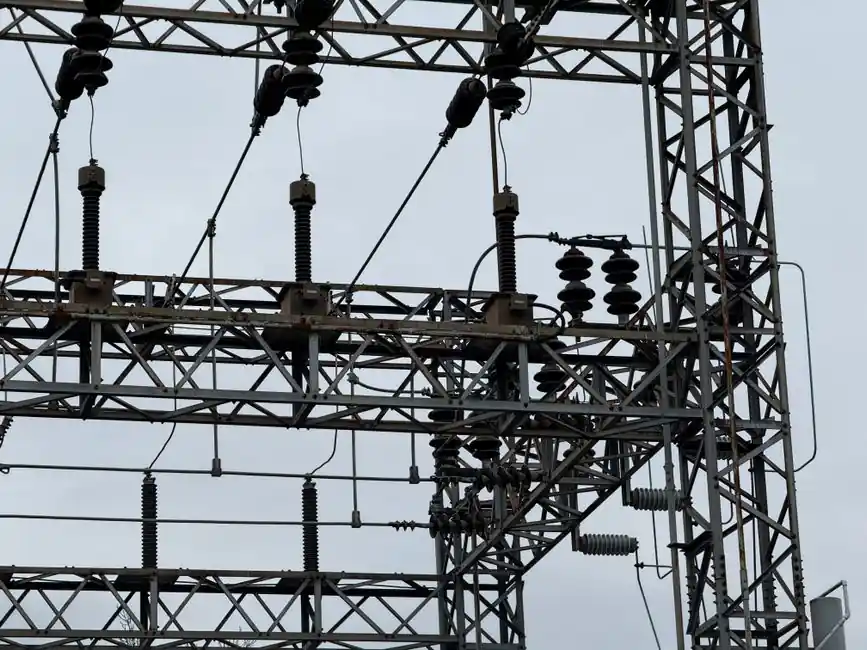
Specifying an industrial adhesive for energy equipment means matching polymer chemistry to the substrate, the operating temperature window, the electrical or thermal demand, and the curing profile a production line can actually deliver, not picking a brand name off a data sheet.
Across battery packs, wind blades, PV modules, transformers, and switchgear, the dominant chemistries in published supplier guidance are epoxy, silicone, polyurethane, and acrylic, with each family mapped to a specific duty envelope [S2][S5]. A reliable selection gate therefore starts with the substrate and the end-environment, not with the brand.
Five Selection Criteria That Drive Every Bond
Design engineers should lock down five criteria before opening a catalogue: substrate and surface energy, operating temperature range, required bond strength, chemical or UV exposure, and the curing method the line can run [S3][S4].
Surface energy determines wetting; metals, glass, and most engineering plastics accept epoxy and silicone, while low-energy polyolefins typically need surface treatment or a primer [S3]. Temperature swings in wind-turbine nacelles, offshore PV, and transformer windings push the requirement beyond what a general-purpose epoxy can sustain, raising the bar on glass-transition temperature and silicone gel stability [S2]. The cure method (room-temperature, heat-cure, UV, or two-part) then dictates whether the line needs ovens, light-curing tunnels, or static mix heads [S5].
Chemistry Map: Epoxy vs Silicone vs Polyurethane vs Acrylic
Epoxy is the workhorse structural adhesive for energy hardware, valued for high shear strength, chemical resistance, and bond integrity on metals and composites; silicone leads where continuous flexibility and a wide thermal window (typically -60 to 200+ degrees C, depending on grade) are required; polyurethane bridges flexible substrates and dynamic joints; acrylic and modified-acrylic systems give fast fixture times for high-throughput assembly [S4][S5].
Within that chemistry stack, performance diverges sharply. Structural epoxies are repeatedly cited as the most widely used thermosetting adhesive for energy and industrial assemblies, owing to high bond strength plus resistance to heat, moisture, and chemicals [S4]. Silicone-based electrically conductive adhesives add EMI shielding on top of moisture and heat protection, an advantage in inverter and converter housings [S5]. Two-part polyurethane systems stay flexible at low temperatures, which suits cable joints and outdoor enclosures that move with thermal cycling [S2]. For graphic attachment and lighter industrial joining, acrylic transfer tapes such as 3M 200MP are still a stock option, though they are not structural replacements for cured epoxies on load-bearing joints [S6].
Where Each Family Fits in Energy Equipment
Wind, solar, battery, transformer, and switchgear each have a default chemistry and a known failure mode, so the family choice is usually driven by sub-sector rather than brand [S1][S2][S5].
Wind blades, towers, and gearbox housings rely on epoxy for structural bonding and on polyurethane or methacrylate for flexible joints, where fatigue resistance and impact absorption matter [S2]. PV module frames, backsheets, and mounting hardware trend toward silicone sealants for long-term UV and weatherability, with structural tapes or epoxies for frame-to-glass attachment [S2]. Battery cells, modules, and packs use epoxy or polyurethane for cell-to-cell bonding, electrically conductive adhesives for interconnection, and thermal adhesives (filled epoxies or silicones) to keep cells inside their safe temperature window and avoid thermal runaway [S5]. Transformers, HV cable joints, and GIS switchgear call for high-dielectric epoxy potting and silicone sealing because insulation breakdown and corona discharge at higher system voltages are now a primary design constraint [S2].
Use Case Comparison: Battery Pack vs Wind Blade vs Transformer
For battery packs, the binding constraints are thermal management, electrical isolation, and vibration damping, making filled thermal epoxies and structural polyurethanes the typical first choice, with silicone gaskets for environmental sealing [S5]. Wind blade root and spar bonds live or die by fatigue and lap-shear strength under cyclic load, where toughened epoxy and methacrylate systems are the established answer, while UV-stable polyurethane topcoats protect the leading edge [S2][S4].
Transformer coil insulation and switchgear sealing demand high dielectric strength, low shrinkage during cure, and the ability to survive thermal cycling at elevated temperature, which is why filled epoxy potting compounds and high-purity silicone gels are specified rather than flexible polyurethanes that would creep under load [S2]. The same family can fail in the wrong role: a flexible polyurethane in a battery cell-to-cell bond will creep under compression and lose thermal contact, and a rigid epoxy in a cable joint will crack under cold-temperature contraction, so chemistry and duty must be cross-checked, not chosen independently [S3][S5].
Common Failure Modes and Selection Pitfalls

Most field failures in energy equipment trace back to surface preparation, thermal mismatch, or a cure profile that does not match the line, not to the adhesive itself [S3][S4].
Adhesion loss from contamination, oil, or release agent is the most common root cause; cleanliness and surface-energy checks (dyne test on plastics, water-break test on metals) are the cheapest insurance before dispensing [S3][S4]. Thermal-mismatch stress cracks rigid bonds when the bonded pair expands differently across the operating range, a problem that shows up in aluminum-to-composite PV frames and in steel-to-polymer switchgear housings. Under-cure, often from cold-shop conditions or inadequate UV intensity, leaves the polymer below its design glass-transition temperature, so the bond passes pull-test but softens in service. In outdoor or coastal sites, salt-spray and industrial-pollution exposure will eat unprotected bonds quickly; silicone and properly formulated epoxy coatings are the usual countermeasures [S2].
Process and Equipment Integration
Adhesive choice is locked to the dispensing and curing equipment the line owns, so any change in chemistry may force a change in mix heads, oven length, or fixturing [S3][S5].
Two-part epoxies and polyurethanes need static mix heads and metered dispense, with a defined open time before the parts must be mated; one-part heat-cure epoxies require ovens sized to the cure schedule, often 80 to 150 degrees C for 30 to 90 minutes depending on the formulation [S3]. UV/light-cure systems cut floor time but demand transparent substrates or access windows and validated lamp intensity, which limits them to specific geometries [S3]. For low-rise insulation and membrane attachment in rooftop PV or building-integrated systems, two-part low-rise insulating adhesives (such as flexible FAST-style products) are applied with notched spreaders and need a defined walk-on time before loading [S7]. Engineers who design the line and the bond in parallel, rather than specifying the adhesive after the line is fixed, consistently hit first-pass yield targets [S3].
Standards, Sourcing, and What to Verify on a Data Sheet

For energy equipment, the standards that actually move the needle are UL 94 flammability ratings on potting compounds, ASTM-based lap-shear and T-peel test methods for bond strength, IEC 61215 / IEC 61730 for PV module-related materials, and IEEE / IEC specs for transformer dielectric systems, while ATEX 2014/34/EU and the IEC 60079 series govern adhesive and sealant use in explosion-protected enclosures [S2][S5].
Data sheets should be checked for glass-transition temperature, dielectric strength, elongation at break, Shore hardness, and the cure schedule the manufacturer actually tested, not the optimistic headline number [S4][S5]. For battery systems, designers should specifically ask whether the candidate adhesive has been tested for thermal runaway propagation and for compatibility with cell chemistries (NMC, LFP, solid-state) under abuse conditions, because the chemistry of the cell affects outgassing and bond degradation [S5]. Decisions on the broader spec path, from construction machinery and equipment selection to NDT equipment acceptance, follow the same rule: the data sheet claim must be backed by a third-party test report at the real operating temperature, not a room-temperature marketing figure.
Track three signals over the next reporting cycle: silicone gel suppliers publishing higher-temperature grades for next-generation 800 V to 1500 V power-conversion hardware, epoxy formulators releasing lower-temperature-cure systems for thick battery pack housings, and adhesive suppliers publishing bonded-joint test data against IEC 61215 / UL 9540A abuse profiles, since these three together will define what a 2026-vintage energy-equipment BOM can actually qualify. For a different angle on industrial joining choices, see the broader industrial adhesive spec map.
For related coverage, see Linear Guide Selection for Agriculture Machinery: Sealing, Load, and Corrosion Gates.