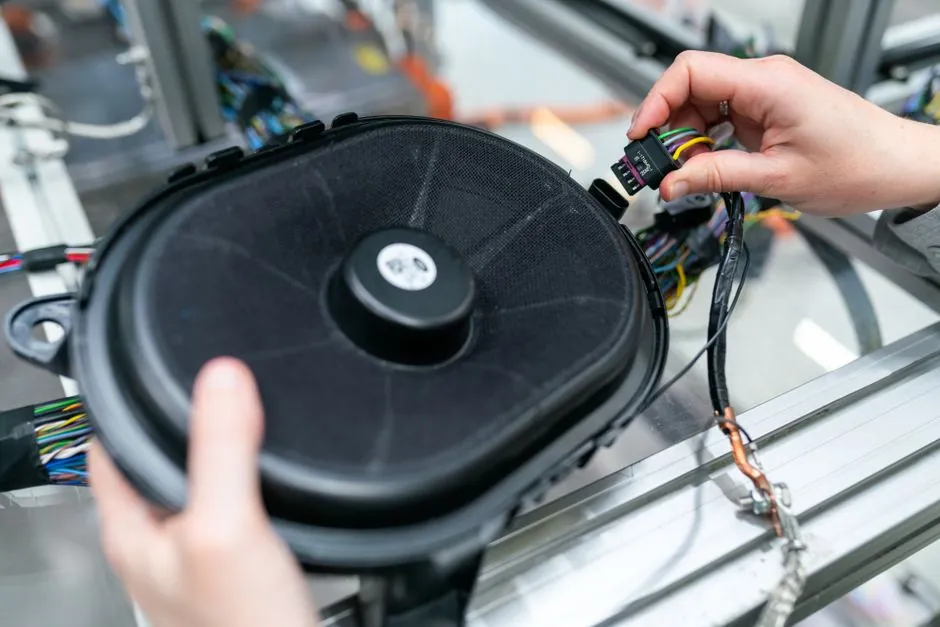
EV-specific adhesives are the fastest-growing slice of the global adhesives and sealants market in 2026, forecast to expand from USD 3.12 billion in 2026 to USD 7.34 billion by 2031 at an 18.67% CAGR [S7], well above the parent market's 5.57%–6.0% growth band [S3][S4].
Electronics adhesives sit on a parallel track: USD 7.2 billion in 2026, an 8.5% CAGR to USD 16.3 billion by 2036, with epoxy holding 36.0% chemistry share and encapsulation applications at 41.2% [S1]. Broader market sizing for adhesives and sealants clusters between USD 72.96 billion and USD 80.97 billion in 2026 across major publishers [S4][S6].
Where the Volume Actually Sits in 2026
The combined adhesives and sealants market reached USD 80.97 billion in 2026 and is projected to hit USD 132.91 billion by 2035 at a 5.68% CAGR [S4], while another tracking puts the 2026 base at USD 81.7 billion rising to USD 123.2 billion by 2033 at 6.0% [S3]. Asia Pacific is the dominant regional block at 38% share in 2025 [S4], anchored by China and India electronics and EV-component assembly growth flagged in the electronics adhesives outlook [S1].
By chemistry, the parent market is led by reactive systems at 48.4% technology share and silicones at 31.5% product share in 2025, with paper and packaging taking 30% of application share and construction leading sealant end-uses [S4]. Within the EV adhesives slice, growth is being driven by structural bonding of battery enclosures, cell-to-pack and cell-to-chassis architectures, and thermal-interface materials around power electronics, which is consistent with broader EV lightweighting trends reported in the parent market where adhesive substitution for welds and mechanical fasteners is gaining ground [S4].
Electronics Adhesives: Epoxy, Silicone, Encapsulation
Electronics adhesives are forecast at USD 7.2 billion in 2026, with epoxy at 36.0% chemistry share and silicone gaining use where flexibility and thermal cycling resistance are required [S1]. Encapsulation is the leading application at 41.2% share because components need protection from moisture, vibration, and mechanical stress [S1]. Semiconductor packaging growth, sensor proliferation in vehicles, and the rise of automated dispensing lines are the three demand vectors cited by the same source [S1].
A second electronics adhesives forecast pegs the segment at a 6.08% CAGR to USD 9.16 billion by 2034 [S2], which is a slower trajectory than the 8.5% CAGR figure from Future Market Insights, which projects growth from USD 7.2 billion in 2026 to USD 16.3 billion by 2036 [S1]. Spec-relevant chemistry for high-temperature power electronics stays epoxy-dominant, while silicone underfills and potting compounds are specified where thermal cycling and CTE mismatch are the limiting factors.
EV Adhesives: The 18.67% CAGR Slice

EV adhesives alone are sized at USD 3.12 billion in 2026 and projected to reach USD 7.34 billion by 2031 at an 18.67% CAGR, the highest growth rate of any sub-segment reviewed [S7]. Demand drivers are cell-to-pack structural bonding, battery pack sealing, motor magnet bonding, and thermal management around inverters and onboard chargers, all of which require chemistries with controlled cure profiles, dielectric strength, and long-term resistance to glycol-based coolants.
Additives used in EV adhesives and sealants formed a USD 91.4 million sub-market in 2022 (2024-02), a smaller but chemically loaded pool where rheology modifiers, conductivity additives, and flame retardants are tuned for battery safety testing [S5]. For buyers sourcing into battery lines, the practical implication is that one-component heat-cure epoxies and two-component polyurethanes are increasingly specified alongside silicone form-in-place gaskets for pack enclosures, and additive packages drive most of the per-unit cost variance.
Selection Criteria for EV and Electronics Specifiers
For electronics and EV buyers, the decision usually comes down to four parameters: thermal conductivity (W/m·K), dielectric strength (kV/mm), glass transition temperature (Tg), and cure profile, with automated dispense compatibility as a fifth gating criterion for high-volume lines [S1]. Epoxies lead on bonding strength and thermal stability, making them the default for semiconductor die attach and PCB underfill; silicones lead on flexibility and thermal cycling, making them the default for encapsulation of sensors and power modules [S1].
A practical comparison for a specifier: epoxy offers the highest bond strength and chemical resistance, silicone offers the best temperature range and CTE compliance, polyurethane sits between the two with better low-temperature flexibility, and acrylics are used where fast fixture time and substrate versatility matter more than thermal performance. Battery pack structural bonding generally defaults to one-component heat-cure epoxy or two-component polyurethane; power electronics potting defaults to silicone for thermal cycling headroom; PCB underfill defaults to capillary-flow epoxy [S1][S7].
Chemistry Comparison Across Adhesive Types
Epoxy holds 36.0% share of electronics adhesives in 2026 and is positioned as the leading chemistry for bonding and stability [S1]. Silicone is the dominant sealant chemistry in the broader market at 31.5% product share [S4] and is the chemistry of choice where electronics require flexibility and thermal cycling resistance [S1]. Polyurethane is flagged as the fastest-growing sealant sub-segment during the forecast period, driven by construction and automotive penetration [S4]. Reactive technologies, including moisture-cure silicones and two-part systems, hold 48.4% of the broader market's technology share [S4].
For high-volume electronics assembly, automated dispensing compatibility is a non-negotiable filter: the same source notes that suppliers with thermal management capability and application support are expected to hold stronger positions as assembly lines automate [S1]. Major participants named across the parent market include Henkel, H.B. Fuller, Sika, Arkema (Bostik), and 3M [S4]. The competitive structure is one in which the same five to seven global formulators compete across automotive, electronics, construction, and packaging, so a buyer's RFQ rarely fails on supplier availability and more often comes down to per-application qualification data.
Standards, Limitations, and Sourcing Risk
Outgassing and ionic contamination requirements are common in semiconductor-grade underfills, and EV pack-level bonding is increasingly specified against OEM internal standards for crash and thermal cycling, even where a published ISO or ASTM method is referenced. [S1]
Limitations on the available data: the EV additives sub-market is reported only through 2022, limiting the view of how additive demand has scaled with the 18.67% CAGR in EV adhesives seen from 2026 onward [S5][S7]. Electronics adhesives forecasts diverge by roughly 200 basis points on CAGR between major publishers, and parent market 2026 sizing ranges from USD 72.96 billion to USD 80.97 billion depending on the publisher [S1][S2][S3][S4][S6]. Sourcing risk concentrates in two areas: high-purity epoxy and silicone base resin capacity, where a small number of upstream chemical producers dominate, and additive supply, where flame retardant and conductivity additive lead times can swing 8-12 weeks during demand peaks [S5]. For buyers adjacent to lighting, controls, and instrument integration, lighting equipment and electric lamps and lamps and light fittings lines share the same encapsulant and potting chemistry pool that this article covers for EV and electronics.
For complementary context on how buyers size instrumentation lines that sit alongside adhesive-dispense and curing stations, see the walkthrough on flush diaphragm pressure transmitters for CIP and SIP lines, and for the upstream aluminum plate supply that frames pack enclosure bonding, the aerospace aluminum plate lead times in 2026 brief is a useful adjacent read. Trackable signals to watch: 2027 updates to electronics adhesives market sizing from the same publishers to see whether the 6.08% or 8.5% CAGR track holds, and the next 12 months of EV adhesives forecast revisions around cell-to-pack adoption rates.
For component-level specifications, see construction machinery and equipment.