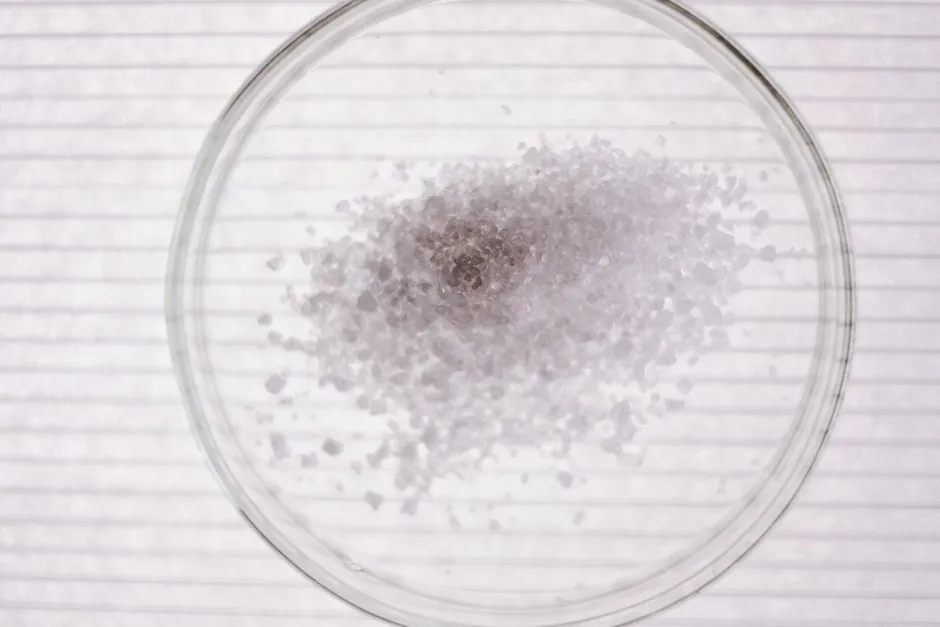
Brown fused alumina and silicon carbide are the two workhorse grains of industrial abrasive use, and 2026 landed costs for both are running 6–15% above Q1 2025, with quote spreads between suppliers widening to 25–35% on identical specs [S2]. Fused alumina is fused in electric arc furnaces from bauxite, while silicon carbide is grown from petroleum coke and silica sand in resistance or Acheson-type furnaces, and both routes are electricity-intensive, which is why energy and feedstock now set the price ceiling more than labour or margin [S2][S4].
Buyers specifying Brown Fused Alumina for grinding wheels, sandblasting media, and refractory grain need to understand which cost driver moves their line item, because the same order can be repriced by raw material, by tariff, or by export licensing depending on origin [S1][S2].
Where 2026 Prices Sit: Range, Spread, and the F46 Anchor
Across coated, bonded, and blasting categories, average landed costs for aluminum oxide grain are up 6–9% year-over-year, and silicon carbide is up 12–15%, with synthetic diamond and CBN moving 15–25% and lead times stretching from 4 weeks to 10-plus [S2]. The 2023 reference price for BFA in a 1-tonne spot quote was roughly USD 680–700 per tonne, a baseline that is now meaningfully below current landed cost on most US and EU destinations once tariff and freight are added [S4].
Within BFA, F46 is the most-specified grit size in the abrasive industry because it sits in the size band used for resin-bonded and vitrified grinding wheels, general-purpose blasting, and coated abrasive sheets, making it a useful price barometer for any quarterly index [S1]. Quote spreads on F46 and adjacent FEPA sizes have widened: 2023 commonly showed a 10% gap between low and high quotes on identical Al2O3 and Fe2O3 limits, while 2026 routinely shows 25–35% gaps as suppliers hedge differently against energy, tariff, and feedstock exposure [S2].
The Three Cost Drivers and How Each Moves the Number
Raw material feedstock is the dominant cost driver: calcined alumina and bauxite feed both aluminum oxide and zirconia alumina and tracked roughly 14% higher in late 2025, while petroleum coke and silica sand feed silicon carbide and have been the single most volatile input, swinging more than 20% inside a single quarter [S2]. For BFA specifically, the furnace energy bill and the iron filings addition that gives BFA its brown colour and toughness both flow through electricity and steel-scrap indices, so any power-market spike in Shanxi, Henan, or Guizhou shows up at the quote within a contract cycle [S2][S4].
Tariffs and carbon-border measures are the second lever: US tariff expansions on imported industrial goods from select origins have added 7.5–25% on certain coated and bonded abrasive SKUs depending on HTS classification, and EU carbon border adjustment (CBAM) has moved from pilot into enforcement on several abrasive-adjacent inputs, raising the cost of grain produced in high-carbon-intensity regions [S2]. For a procurement team, this means the same BFA specification can land at three different effective prices depending on whether the producer is in a CBAM-exposed province, a retaliatory-tariff jurisdiction, or a country with stable duty treatment [S2].
Supply-chain frictions are the third lever, and these are the ones that stretch lead times even when the headline price looks stable: tighter Chinese export licensing on silicon carbide, plus single-source procurement risk, has pushed some buyers to dual-source or accept longer inventory carry, both of which carry a working-capital cost that does not appear on the invoice [S2]. For a fused-alumina patent landscape, only 20 published records exist across 2015–2026, with Imerys holding 10, 3M holding 5, and Carborundum Universal holding 3, which means process innovation at the grain stage is concentrated and feedstock-substitution alternatives move slowly [S5].
Comparing BFA, SiC, and the Adjacent Grains on Decision Criteria

For grinding wheels on carbon steel and general-purpose metal, BFA is the default because its toughness, friability balance, and lower cost-per-tonne beat SiC on ferrous workpieces, while SiC wins on non-ferrous metals, glass, stone, and ceramic because its higher hardness and sharper fracture behaviour cut without loading [S1][S2]. On a 2026 price-per-tonne basis, BFA runs cheaper than SiC in most regions, but SiC's 12–15% increase is steeper than BFA's 6–9%, narrowing the spread and making total-cost-of-ownership models more sensitive to blasting or grinding efficiency per kilo rather than raw price [S2].
Zirconia alumina and sol-gel ceramic grains sit above both on price but below on consumption volume, used where high stock-removal and form-holding matter more than unit cost; alumina polishing slurries and micron-sized diamond cover the precision end where surface finish and tight tolerances dominate over feedstock cost [S2]. [Abrasive grain selection on F46 vs coarser F24 or finer F60]( /news/fused-alumina-and-silicon-carbide-supply-2026-price-and-sourcing-reality.html) is covered in a dedicated sourcing piece, and a side-by-side of BFA, white fused alumina, pink fused alumina, and black silicon carbide is the standard reference for a buyer's first shortlist [S1][S4].
Total Cost of Ownership: Beyond the Per-Tonne Number
Per-tonne price is the wrong metric for any high-volume grinding or blasting line; the right metric is cost per square metre blasted or cost per cubic inch of stock removed, because BFA's reusability in sandblasting cycles directly offsets its higher per-tonne price versus cheaper mineral slags [S1]. BFA is commonly reused through multiple blasting cycles in surface preparation, while lower-cost mineral abrasives often fracture on first impact and contribute to higher dust load and lower recycle rate, which means more frequent media top-up, more disposal cost, and more downtime for hopper refill [S1][S2].
Energy exposure is the second hidden cost: electric arc fusion of bauxite and Acheson growth of SiC are both massively electricity-intensive, so a plant in a region with indexed power contracts will see its BFA and SiC quotes move with the grid, while a plant on fixed-rate power will see the same grain repriced at contract renewal when the supplier's own energy pass-through resets [S2]. Installation and binder cost should be counted too: bonded abrasive grains need phenolic or epoxy binders, and these track crude oil within 60–90 days, so a 10% resin move shows up as a 2–3% move on the finished wheel independent of the grain itself [S2].
Procurement Levers That Actually Move 2026 Landed Cost
Dual-sourcing across two producing countries, ideally one CBAM-exposed and one not, is the single most effective lever because it neutralises both tariff and carbon-border moves and widens the supplier-quote spread you can shop [S2]. Locking annual-volume contracts with a price collar tied to a published alumina or petcoke index transfers feedstock risk back to the supplier and removes the speculative margin that widens quote spreads during volatile quarters [S2].
Spec relaxation is the second lever: tightening Al2O3 minimum to 95% when 92% will do, or specifying FEPA F46 when a near-mesh blend at lower cost performs identically in a coated-abrasive application, can drop 5–10% off the invoice without changing the process result [S1][S4]. Grit-size selection on the F-scale matters more than brand: F46 dominates grinding-wheel and blasting use, F24–F30 dominates heavy rust and scale removal, and F60–F80 dominates surface finishing and light paint prep, so matching the spec to the application avoids paying for tighter sizing than the process needs [S1]. Inventory carry is the third lever, and it works against the buyer in 2026: with SiC lead times stretching and BFA single-source risk elevated, holding 60–90 days of cover is cheaper than a line stoppage, even at carrying cost [S2].
Three trackable signals for the next quarter: watch the bauxite and petcoke spot indices for feedstock direction, watch any new US HTS reclassification notices on abrasive SKUs, and watch the EU CBAM phase-in schedule for additional abrasive-adjacent input codes [S2].
For component-level specifications, see construction machinery and equipment, and lamps and light fittings.
This topic is covered further in AAC block vs AAC brick: same product, different naming and size.