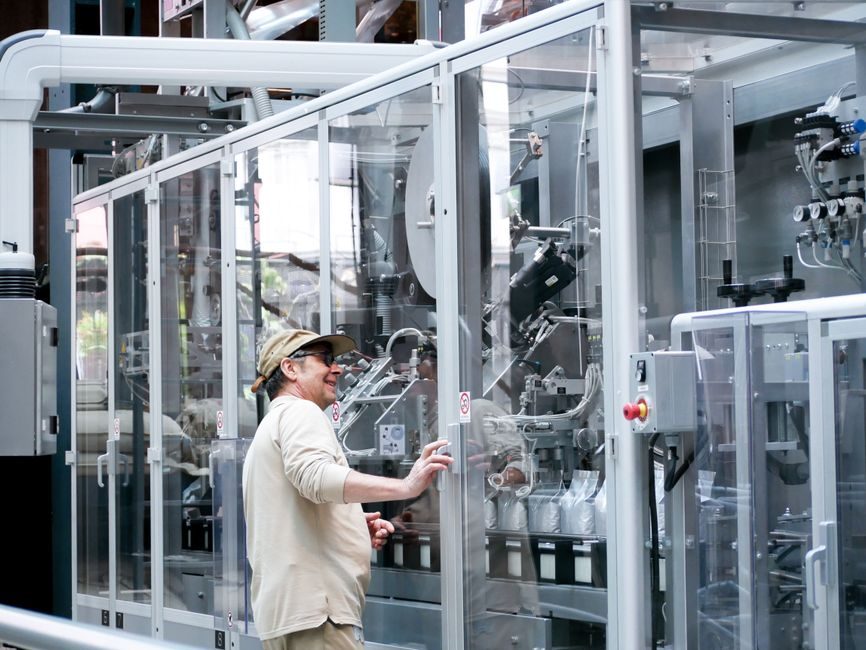
Packaging automation vendors are converging on a single architecture in 2026: a robotic primary packer feeding a modular end-of-line, governed by a unified PLC/HMI, with virtual manufacturing used to validate tooling and pack geometry before steel is cut [S1][S3]. Aagard's published spec sheet for a flagship integrated cell shows a 126.8 ft² machine footprint (13'11" × 9'9") with a 1:5 operator-to-machine ratio, designed for customers who arrived asking only for a case packer and were re-engineered into a turnkey system [S1].
The reference lineup at the mid-tier is no longer a single machine. Aagard scopes primary cartoning, collation, case packing, printing and labeling under one controls architecture; ULMA Packaging splits the same scope across HFFS flow pack, VFFS vertical, thermoforming (the new TFX range) and traysealing; and Block Packaging in Hebei lists packaging machine, cartoning machine, case packer, labelling machine, conveyor system, robot palletizer, vertical lift, filling/sealing and processing machine on a single OEM/ODM bill of materials from a 100,000 m², ~100-employee, 30-engineer shop exporting to 20 countries with 3,000+ cases and 58 patents [S1][S2][S5].
What "advanced" means in 2026: three building blocks
The advanced packaging cell in 2026 is the combination of (1) a robotic primary handler with vision-guided orientation, (2) a digital-twin-driven design pass that proves the pack on screen before tooling is released, and (3) a controls layer that lets one operator run multiple machines through HMI-embedded training [S1][S3]. Aagard's stated build philosophy — "purpose-built for your line, not pulled from a catalog" — is operationalized through their Rapid Launch™ changeover system with defined setup points and verification, and the Rapid Learning™ HMI that ships troubleshooting content inside the panel [S1].
Springer (IJAMT, 2023-12-19) formalizes the design half of that loop: a computer-vision pipeline recognizes the 3D model of the virtual product, extracts geometric features, then big-data analytics map those features to market-preferred pack styles before any CAD geometry is committed [S3]. The result is the same outcome Aagard lists as a deliverable — "engineered around your real constraints: space, maintenance access, and line layout, not a brochure footprint" — and it lands before the line is built, not after [S1][S3].
Selection criteria that actually filter the vendors
Process engineers specifying a 2026 packaging line should score vendors on five weighted criteria, not brochure throughput: (a) operator ratio, (b) controls unification, (c) format-changeover time, (d) virtual-design tooling loop, and (e) post-installation service contract structure [S1]. Aagard publishes a 1:5 operator-to-machine ratio, a 24/7 remote support term, and dedicated account contact under their "Aagard Assurance™" service tier — these are the auditable, comparable numbers, not "high efficiency" copy [S1].
Integration depth is the second filter. Aagard explicitly designs upstream infeed to downstream case packing, printing and labeling as one controls architecture, with documented build standards, FAT and "clear handoff points at every stage" [S1]. ULMA Packaging's 2026 product page exposes the same intent from a different angle: HFFS, VFFS, thermoforming, traysealing and shrink-sleeve are presented as in-house technologies the customer can mix, rather than third-party OEM islands glued together at site [S5]. For a related digital-twin reference architecture in adjacent process manufacturing, see the Lithography Equipment Smart Manufacturing: Tool Classes, Automation Stack and 2026 Line breakdown of how vision, robotics and twin layers are now stacked.
Comparison: integrated builder vs. technology-mix vendor vs. OEM/ODM
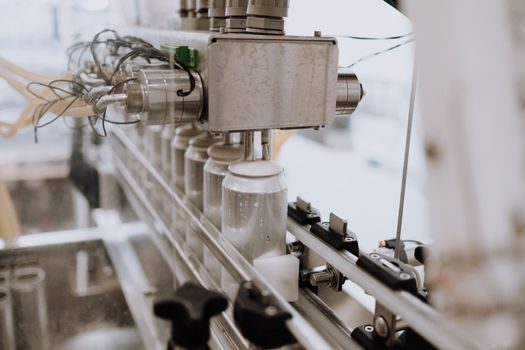
Three procurement archetypes are visible in the 2026 supplier field, and they answer different briefs. (1) Aagard — fully integrated, engineered-to-order, ~126.8 ft² cells with 1:5 operator ratio, strongest on dairy, pet food, ammo, medical/pharma, CPG [S1]. (2) ULMA Packaging — technology-mix vendor with HFFS, VFFS, thermoforming (TFX), traysealing, shrink-sleeve, vertical lift, strongest on meat, poultry, cheese, bakery, ready meals, fish-seafood, medical-pharma, and a published sustainability report [S5]. (3) Block Packaging — OEM/ODM tier, 100,000 m² Hebei plant, 3,000+ cases, 58 patents, exporting to 20 countries, strongest on price-driven cosmetics, food and pharma lines with full packaging-machinery catalog including robot palletizer [S2].
The decision matrix is therefore cost vs. format agility vs. after-installation risk transfer. Integrated builders like Aagard monetize risk transfer (24/7 support, dedicated account contact, documented controls) [S1]; technology-mix vendors like ULMA monetize format agility across seven product families [S5]; Chinese OEM/ODMs like Block monetize installed-cost per cell on a large engineering base [S2]. A 1:5 operator ratio is only meaningful if the line genuinely runs five cells unmanned for the bulk of the shift — verify that with the OEM's reference list, not the brochure.
Robotics, vision and the operator-to-machine ratio
Robotic cartoning, orientation control, fragile-pack handling and unstable-collation handling are the four named competency claims on Aagard's site, all of which depend on vision-guided end-of-arm tooling (EoAT) rather than hard-fixture mechanics [S1]. The 1:5 ratio is enabled because each machine self-recovers from mis-oriented product through vision feedback, so one operator can patrol five cells instead of tending one [S1]. This is consistent with the IJAMT computer-vision + big-data packaging-design pipeline, which expects the same vision layer to be present both in design (3D model recognition) and on the line (orientation feedback) [S3].
For comparison, Chip Packaging Smart Manufacturing: AOI, Robotics and Digital-Twin Stack in 2026 runs an analogous loop at semiconductor scale: AOI replaces hard fixturing, robotics replaces manual handling, the digital twin replaces physical commissioning. The packaging-machinery world is now running a lower-resolution copy of the same stack, with thermoforming (ULMA TFX) and traysealing as the mechanical analog of a die-bonder [S5]. Adjacent process manufacturing is moving the same way — see Electrolyzer Smart Manufacturing: Stack-Assembly Automation Specs and 2026 Line Reality for a stack-assembly reference.
Virtual manufacturing and digital-twin design pass
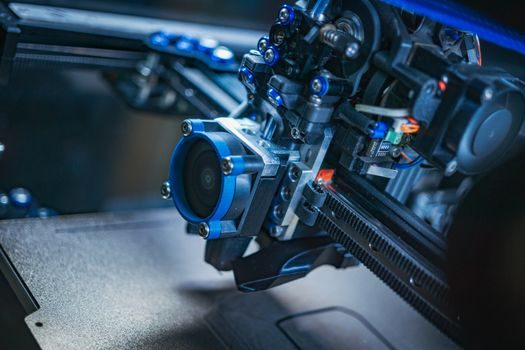
The Springer paper (IJAMT, 2023-12-19) defines a three-stage virtual packaging design method: (1) computer-vision extraction of 3D model and key features of the virtual product, (2) big-data analysis of market and consumer demand to fix pack style and elements, (3) CAD synthesis of the packaging geometry from the two upstream outputs [S3]. The experimental result claimed in the abstract is "significant" improvement in packaging design efficiency and quality, with the value coming from killing physical rework — fewer trial packs, fewer tooling iterations [S3].
The same pattern is the rationale for why Aagard's design engagement starts with an iterative discovery even when the customer only asked for a case packer: the geometry and the line constraints are tuned in software before a single bracket is machined [S1]. For an adjacent example of how a digital-twin layer sits on top of a robotic line in a different industry, the E-Axle Manufacturing: Process Map, Half-Shaft Specs and Flexible Line Architecture walkthrough shows the same twin-first, build-second sequencing for a different end-of-line.
Limitations, failure modes and where the stack breaks
The published failure modes that re-appear across the three vendor archetypes are format changeover risk, spare-parts lifecycle risk, and integration risk with the customer's existing WMS/MES. Aagard addresses all three with documented build standards, FAT, defined handoff points, 24/7 remote support and a spare/change-parts program bundled into the Aagard Assurance™ tier [S1]. Without that tier, the buyer carries the integration risk; with it, the OEM does, and the contract structure becomes the deliverable, not the machine.
Operator-to-machine ratios also fail in predictable ways. A 1:5 ratio is only achievable if (a) the upstream feeder is consistent enough that the cell rarely starves, (b) the vision system handles the SKU mix without re-teaching, and (c) the changeover time is short enough that one operator can route through five cells between changeovers [S1]. If any of these fails, the ratio collapses back to roughly 1:1.1 — the same number a hard-fixtured line would post. A second known failure mode is the OEM/ODM tier's documentation depth: a 3,000-case, 58-patent shop in Hebei will ship functional machines at lower cost, but the controls narrative, FAT artifacts and CE/UL documentation set may not match an integrated builder's — a real liability for medical-pharma and ammo lines where the audit trail is part of the deliverable [S2].
Standards, sourcing and what to track next
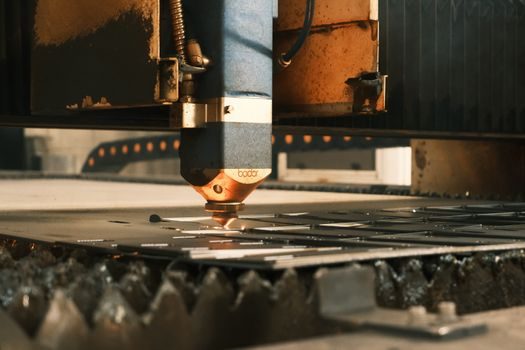
For process engineers sourcing a 2026 packaging line, the auditable inputs are the operator ratio, the published footprint, the documented controls architecture, the service-tier contract, and the list of supported product families — not the marketing language around "smart" or "Industry 4.0" [S1][S5]. ULMA's published seven product families (meat, poultry, cheese, produce, bakery/confectionery, ready meals, fish-seafood, medical-pharma) and explicit technology list (HFFS, VFFS, thermoforming, traysealing, stretch film, shrink-sleeve) is a cleaner procurement matrix than category-mix prose [S5].
Two near-term signals worth tracking: (1) MD&M East 2027, scheduled May 19-20, 2027 at the Jacob K. Javits Convention Center, New York, with packaging, automation and medtech co-located — its 2026 edition passed with 4,000+ attendees and speaker submissions open for 2027 [S4]. (2) Continued roll-out of the TFX thermoforming range from ULMA, which signals that the form-fill-seal / thermoform-and-trayseal split is being consolidated under one vendor, not split between two [S5]. Both are concrete, dated events an engineering buyer can register against. For the related encyclopedia entry on vacuum packaging machines, the architectural pattern described above is the operating context into which a vacuum-packaging module is now integrated rather than the standalone machine it used to be.
For component-level specifications, see additive manufacturing material, and smart camera.