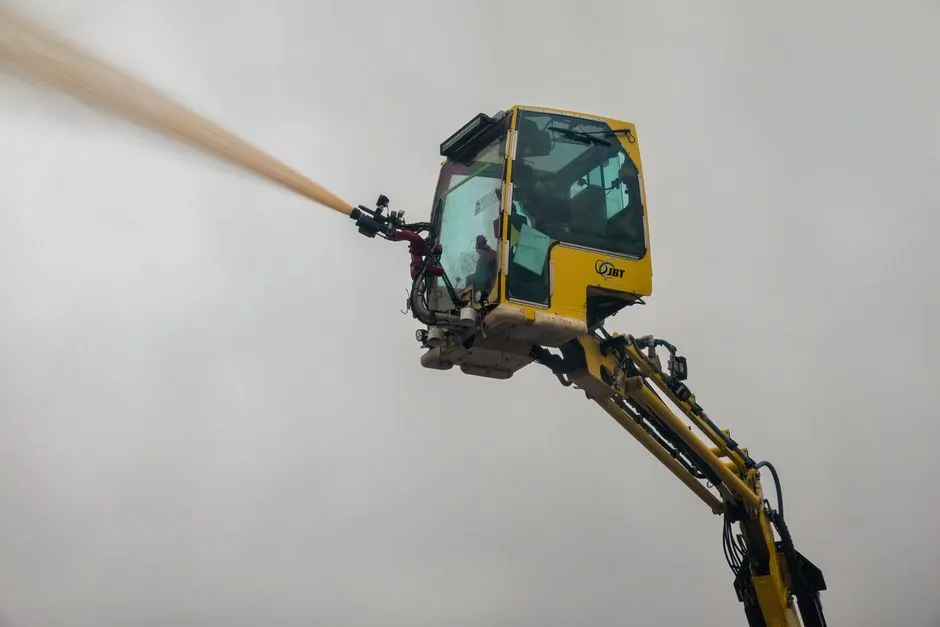
Demolition work drives aerial work platform (AWP) selection toward high-reach, high-outreach, terrain-tolerant machines, with articulating booms (38-136 ft) and telescopic booms (52-138 ft) dominating the upper envelope per Haulotte's published product range [S1].
Selecting a platform for demolition is fundamentally different from selecting one for new-build maintenance: load conditions are dynamic, debris falls continuously, ground is uneven, and reach trajectories are non-vertical [S2][S3]. A typical demolition AWP decision hinges on five numbers: working height, horizontal outreach, platform capacity, ground clearance, and gradeability.
Platform Type vs Demolition Task: Where Each Machine Earns Its Keep
Boom lifts (articulating and telescopic) are the primary AWP class for structural demolition, façade strip-out, and overhead slab removal because they combine vertical lift with horizontal outreach past obstacles [S2][S4]. Articulating booms (jib knuckles) handle inside-corner work where the operator must reach up-and-over a partial wall; telescopic booms deliver straight-line reach into open façades and roof-edge work [S2][S5].
Scissor lifts (typically 18-63 ft platform height) are the wrong primary tool for active demolition but the right tool for low-elevation strip-out on finished slabs, where a wide platform carries two workers plus material bins [S1][S5]. Vertical mast lifts (13-26 ft per Haulotte range) fit interior demolition of ceilings, MEP strip-out, and confined retail back-of-house work where a scissor footprint will not clear door frames [S1][S2]. Trailer-mounted booms (41-71 ft) and truck-mounted platforms are mobile options for short-duration façade and signage removal across multi-point sites [S1][S2].
Selection Criteria: The Five Numbers That Decide the Machine
Working height is the first filter: a soft-strip interior fit-out at 4-6 m can be served by a mast lift, while a 12-storey façade demolition needs a 40 m+ telescopic boom [S1][S3]. Horizontal outreach is the second filter and often the binding constraint, because the platform must reach past the building face to a safe stand-off distance so falling debris does not strike the machine or crew [S3][S4].
Platform capacity (commonly 200-450 kg for boom lifts, up to 1,000+ kg for larger scissor and telescopic models) must be sized for crew weight plus tools plus a debris bin plus the impulse load of a dropped slab segment [S3][S5]. Ground clearance and gradeability (rough-terrain booms typically offer 30-45% gradeability) decide whether the machine can traverse a demolition site's broken slab and rubble-strewn access routes [S2][S3]. Power source (diesel for outdoor, electric or bi-energy for indoor air-quality-sensitive work) is the fifth filter, and on enclosed-structure demolition projects electric-only indoor AWPs are commonly specified to keep diesel particulate out of the work zone [S2][S5].
Demolition-Specific Hazards That Reshape the Spec
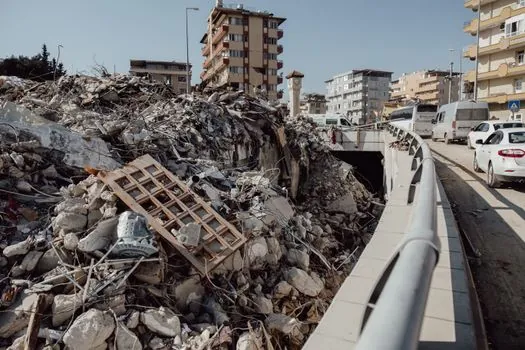
Falling debris is the dominant hazard on a demolition AWP, and it changes both machine choice and guarding spec: a demolition-rated boom typically requires a reinforced platform floor, mesh to mid-rail, and often a debris shield above the controls [S3][S4]. Operators must also plan a stand-off distance equal to the platform height plus a safety margin, because the collapse radius of any wall being worked extends well beyond the wall thickness.
Ground bearing pressure matters more on demolition than on new-build sites: a tracked or outrigger-supported boom spreads load across a prepared mat, while a wheeled rough-terrain scissor can punch through a compromised slab [S3][S4]. OSHA's aerial-lift safety guidance and equivalent regional frameworks require selection and operation to be matched to the specific fall and tip-over risk profile, not just to the reach number [S2].
Comparison: Platform Types on Four Demolition Decision Criteria
On working height, articulating and telescopic booms dominate the 12-42 m range, while scissor and mast lifts cap out near 19 m and 8 m respectively [S1][S5]. On horizontal outreach, telescopic booms lead (often 15-20 m+ on 40 m class machines), articulating booms are mid-range but with up-and-over geometry, and scissor/mast lifts offer near-zero outreach [S2][S4].
On platform capacity, larger booms carry 230-450 kg, heavy-duty scissor lifts carry up to 1,000 kg+ for crew-and-material work, and mast lifts are typically 130-200 kg for single-operator use [S3][S5]. On terrain tolerance, rough-terrain diesel booms with 4WD and oscillating axles handle broken ground, electric scissor lifts require finished slabs, and tracked spider booms are the answer for soft subgrade or interior floors with weight limits [S2][S3]. The decision matrix is: reach drives boom selection, capacity drives scissor selection, footprint drives mast selection, and ground condition drives power-source and chassis selection.
Who the Boom Lift Is For, and Who Should Pick a Different Machine
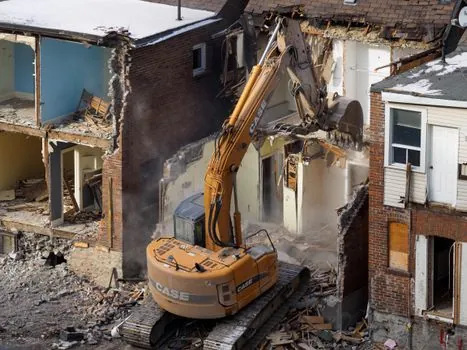
Articulating and telescopic boom lifts are the right answer for: structural demolition above 8 m, façade strip-out, roof-edge work, bridge-soffit access, and any task where the operator must reach over an obstacle to the work face [S2][S4][S5]. Scissor lifts are the right answer for: low-rise interior strip-out, slab-on-grade work, and any task that needs a wide platform for two workers and a debris bin, not horizontal outreach [S1][S5].
Mast lifts are the right answer for: ceiling demolition in finished spaces, MEP strip-out, retail interiors with narrow doorways, and any task below 8 m where manoeuvrability beats platform size [S2][S5]. Truck-mounted and trailer-mounted booms fit short-duration multi-point façade and signage work where mobility between drops matters more than maximum reach [S1][S2]. None of these replace a demolition hammer for the breaking work itself, but they put the operator at the work face safely.
Operational and Sourcing Standards Worth Pinning to the Spec
OSHA 29 CFR 1926.453 (aerial lifts) and the equivalent ANSI A92.20 / A92.22 design and training standards govern operator qualification, pre-shift inspection, and fall-protection tie-off on AWPs in North American demolition work [S2]. For European projects, EN 280 governs mobile elevating work platforms (MEWPs) and is the baseline CE marking reference. Fleet owners evaluating total cost over a 5-7 year life should weigh residual value, telematics, and parts availability, as detailed in the related TCO analysis for aerial work trucks [S1].
For demolition contractors pairing an AWP with a wheel loader on slab-clearance duty, the size-class and bucket-match logic from the road-construction selection guide applies directly to debris-handling cycles on a demolition site.
Limitations and Failure Modes That Decide the Buy vs Rent Call
Boom lifts are expensive to own and expensive to transport; for projects under 3-6 months, rental with a service-inclusive contract typically beats ownership once transport, certification, and insurance are loaded in [S3][S4]. Electric indoor booms have limited duty-cycle runtime per battery charge, which constrains shift length on a 10-hour demolition day; diesel rough-terrain booms solve runtime but fail indoor air-quality requirements [S2][S5].
Articulating booms sacrifice outreach for up-and-over geometry, so specifying an articulating boom where straight-line reach dominates leaves reach on the table. Telescopic booms have larger tailswings, which on tight urban sites can clip adjacent structures during slewing. Mast lifts tip easily if the operator over-reaches, and scissor lifts become unstable on slopes beyond their rated gradeability, which on a demolition slab can be a moving target [S3][S4].
Track the next spec-driving signal in 2026: OEM telematics platforms (e.g. Haulotte SHERPAL and equivalents) are now standard on new booms and feed utilisation, load, and fault data into the same fleet dashboard contractors use for wheel loader telematics, and that data is starting to reshape buy-vs-rent thresholds. Also watch for the 2026 ARA / IPAF rental-fleet reports, which historically move AWP acquisition prices within 60-90 days of publication.