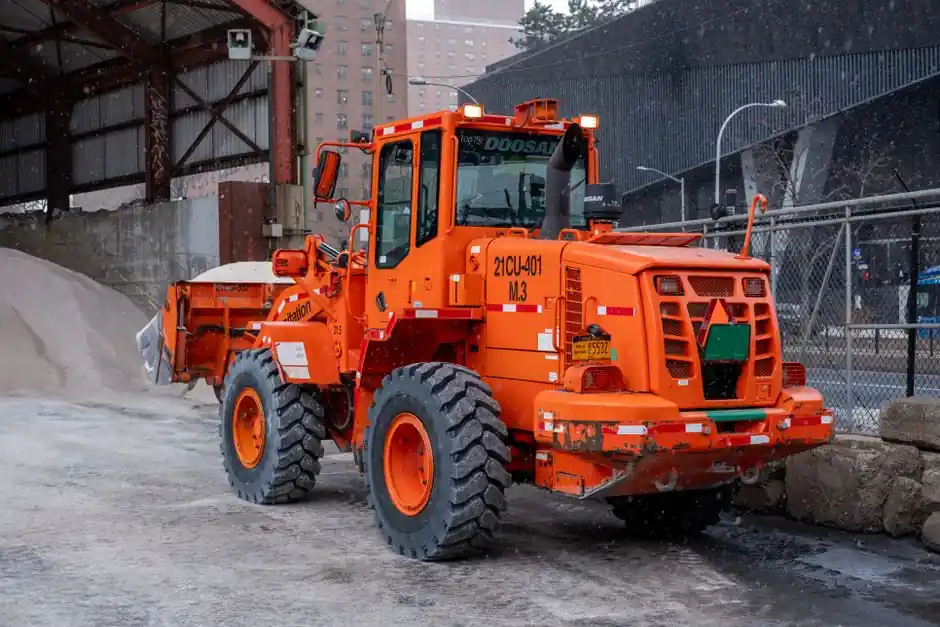
A wheel loader is a tire-mounted, front-bucket machine whose three working systems (engine/drivetrain, hydraulics, operator controls) let one unit load trucks, build stockpiles, and finish subgrade in road-building cycles [S1]. Road construction is listed among the canonical applications, where the loader's role is to level surfaces and create a level base for the new pavement structure [S2].
For 2026, the 11,152 financed wheel loaders sold in the U.S. between June 2025 and May 2026 (EDA) confirm continued fleet investment, and the segment ranks as the fifth most popular construction equipment category behind compact track loaders, mini excavators, excavators, and stand-on compact utility loaders [S4].
Size Classes: Compact, Small, Medium, Large
Wheel loaders are commonly grouped into four size classes, with compact units handling light-duty work in tight spaces and large models moving into quarry and mining duty [S6]. The mass bands most consistently cited across the industry are compact at 9,000–20,000 lb, medium at roughly 20,000–50,000 lb (with some brand lineups extending to ~80,000 lb), and large above 80,000 lb, climbing to about 590,000 lb in surface-mining configurations [S5].
Bobcat's 2025 entry into the 90+ hp segment illustrates the compact-to-small boundary: the L205, L235, L255, and L285 span 142–189 hp, 2.5–5.5 yd³ buckets, and 27,274–34,487 lb operating weights, marketed explicitly for "big load-and-carry tasks" rather than finish grading [S4]. On road jobs, a subgrade-prep contractor usually lives in the 20,000–50,000 lb band; an aggregate producer loading highway-class trucks lives above 50,000 lb.
Tipping Load vs Safe Operating Load: The Real Lift Limit
Tipping load and safe operating load define how much a wheel loader can lift and carry without losing stability, and these numbers, not peak horsepower, set the real working limits during normal cycles [S3]. The safe operating load is the figure a contractor should use for cycle-time and truck-loading calculations, because the tipping-load value is a static-stability threshold, not a productive working point.
For a road job, the key is to size the bucket so a typical pass of granular subbase, aggregate, or recycled asphalt sits comfortably below the safe operating load with the linkage at full lift and the bucket rolled back. Spec sheets from Case, Deere, and the other majors all publish both numbers; comparing them across brands is the cleanest cross-brand check a buyer can run without standing on a scale [S3][S4].
Bucket and Attachment Selection by Task
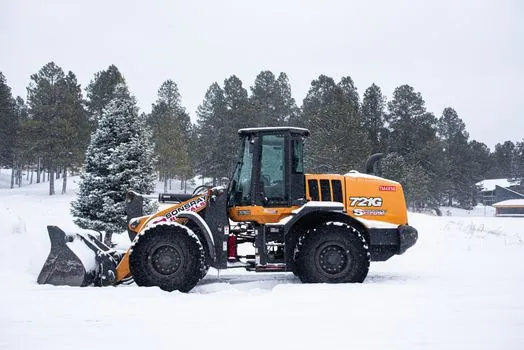
Bucket capacity, edge type, and attachment interface determine whether the loader is a subgrade finisher, a truck loader, or a stockpile reclaimer. A general-purpose bucket with a bolt-on cutting edge is the default for loading crushed stone into highway trucks; a wider, lighter bucket is preferred for stripping topsoil and spreading subbase lift-to-lift [S3].
For road work specifically, the practical bucket envelope is dictated by truck target: most on-highway end-dump and transfer trailers target a clean load at 12–14 ft of dump-body height, which a 20,000–50,000 lb loader can clear comfortably when set up correctly [S3]. The wheel loader in its road-construction role is also used to level surfaces and create level bases, so a flat-bottom finishing bucket or a quick-coupler with a grader-rake attachment is a common field add-on, distinct from a high-tip or light-material bucket used in aggregate yards [S2].
Road-Construction-Specific Criteria
Road-building duty imposes three constraints that don't always show up on a generic spec sheet: travel speed between cut and fill, ground pressure on finished subgrade, and reach to the truck's target. Compact wheel loaders in the 18–25 mph roading band can be driven between dispersed road jobs without a lowboy, which is a real cost saver for small subgrade crews [S8].
A loader that is oversized for daily work is harder to maneuver, slower in tight areas, and less precise during loading, while an undersized unit spends too much time at the edge of its capability and burns fuel inefficiently, so the engineering choice is to match the typical load, not the occasional peak [S3]. For cut-to-fill work on a new alignment, the operating-weight class also controls ground-pressure risk on prepared subgrade; staying in the medium class is often the trade-off between traction and surface damage. Compact models such as those in the 903/906/907/908 family illustrate the mobility end of this trade-off, with on-road travel between 18 and 25 mph but smaller bucket envelopes [S8].
Comparison: Compact vs Small/Medium vs Large for Road Work
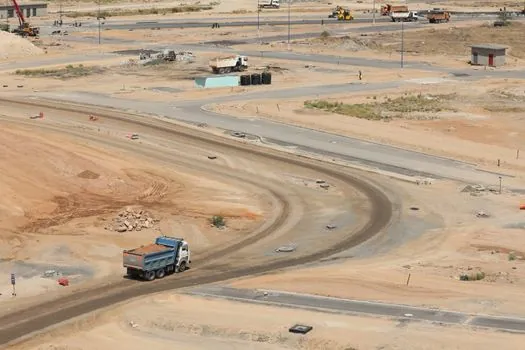
For a highway earthworks contractor, the practical comparison matrix is operating weight, bucket capacity, and roading speed. Compact units (under 20,000 lb) offer 0.8–2.5 yd³ buckets and 18–25 mph roading but limited truck-loading reach. Small-to-medium units (20,000–50,000 lb) cover 2.5–5.5 yd³ buckets and can reach 12–14 ft truck bodies. Large units (above 80,000 lb) start at 5+ yd³ and climb past 22.5 yd³ in flagship models like the 1121G at 61,650 lb operating weight and 345 hp [S4][S5].
Across brands, Case's nine-model lineup above 90 hp spans the 142 hp 521G through the 345 hp 1121G, which Case calls "a mountain mover" for demanding truck-loading work [S4]. The decision pivots on whether the dominant cycle is truck loading, load-and-carry, or subgrade finishing; road construction is usually the first two with finishing as a secondary task, which is why the medium class is the most commonly specified.
Common Selection Mistakes
Three errors recur on road-construction bids. First, buying to peak hp rather than to safe operating load, which leaves the machine right at its stability edge on every pass [S3]. Second, ignoring truck or hopper heights, which forces the operator to ramp up to the target, slowing cycle time and increasing fuel burn per ton moved [S3]. Third, choosing a wheel loader where a different machine fits better, for example using a large loader for finish grading on a confined right-of-way when a motor grader would do the work in fewer passes. For broader context on the trade-off between loaders and graders on road jobs, see the comparison in motor grader selection criteria.
A related pitfall is over-applying a wheel loader to demolition-adjacent road work where a different attachment platform may be cheaper per hour, and an under-rated bucket in dense wet clay will burn fuel without filling the truck. Buyers who anchor the spec to material behavior (loose granular vs dense clay) and to truck cycle time, rather than to a brand preference, get more reliable fleets.
How the Decision Should Be Made
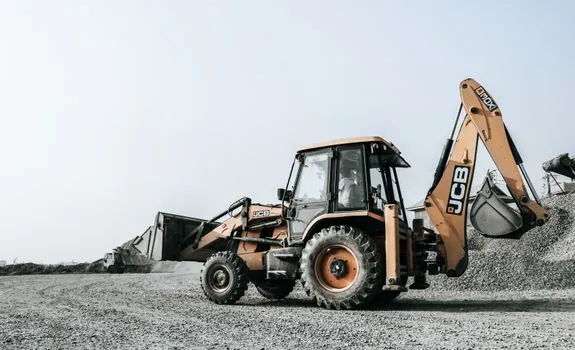
The selection flow is: define the dominant cycle (truck load, load-and-carry, or stockpile reclaim); pick the operating-weight class that handles the typical load with margin; confirm the bucket reach clears the truck target at the linkage's full lift; then cross-check safe operating load, not tipping load, against the heaviest material pass expected on site [S3]. Final step is to confirm attachments and coupler type, because quick-coupler compatibility is now standard on 90+ hp loaders and directly affects how the same prime mover serves a subgrade crew versus an aggregate yard [S4].
For road-construction fleets, two trackable signals to watch through 2026 are OEM automation rollouts (real-time bucket payload data and object-detection systems) and the continued expansion of compact roading-capable models, both of which shift the operating-cost math for small and mid-sized earthworks contractors [S4][S8]. Also worth tracking: how the wheel loader class integrates with adjacent equipment on a road job, from the skid steer loader on tight utility cuts to the road roller closing behind the subbase spread, since fleet balance, not single-machine spec, drives the per-ton cost.