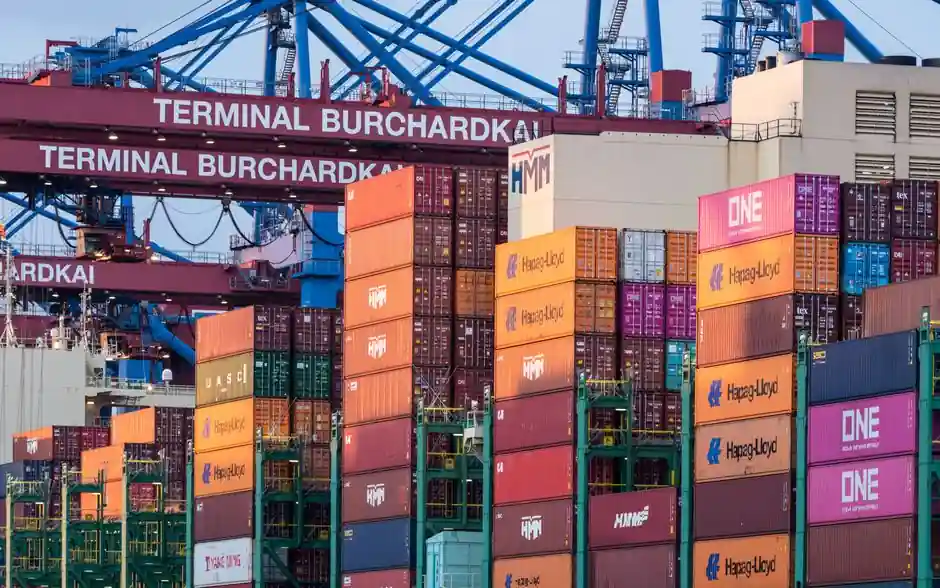
A port-ready forklift must lift at least 30,000 lb, survive salt-air corrosion, and run three-shift cycles without thermal overload [S3].
Heavy-duty classes span 18-85 ton ratings: Kalmar's DCG180-540 line covers 18-54 ton container handling, while the DCG600-850 reaches 85 tons for energy-sector project cargo [S3]. On the smaller end, rough-terrain units and telehandlers handle 12,000 lb at up to 50 ft reach for mixed pallet work on uneven ground [S3].
Diesel heavy forklifts: 14-32 ton workhorses for three-shift terminals
Three-shift terminal operations demand chassis, hydraulics, and frames rated for continuous high-load shuttling without thermal shutdown [S2].
Common diesel classes for ports: 14-18 ton units with 0-7,000 mm lift height; 28-32 ton heavy-duty units in the same mast range; and 20-25 ton mid-range forklifts, all typically fitted with Cummins, Isuzu, Deutz, or Chinese engines for parts commonality across fleets [S1]. Above 30 ton, you are in true container-handler territory, with Kalmar's 18-54 ton DCG180-540 line purpose-built for stacking ISO containers efficiently at berth [S3]. When yard space favors density over reach, a dedicated reach stacker typically beats a heavy forklift on containers per square meter, but loses on odd-shaped project cargo where a heavy truck's versatility earns its keep [S4].
Electric heavy forklifts: 33-tonne reality and charging-window economics
Heavy electric forklifts up to 33 tonnes are now specified for new European terminal builds, with operators weighing overnight charging windows against diesel refueling speed [S4].
Lead times for new heavy electric units remain long through 2026, pushing many terminals toward high-quality used machines for immediate capacity [S4]. The total-cost-of-ownership case for electric rests on energy cost per cycle, brake wear from regenerative systems, and the elimination of engine bay ventilation in semi-enclosed berths. Where berth schedules permit a 6-8 hour charging window and grid power is reliable, the 33-tonne electric class is now a real specification, not a pilot. Where turnaround pressure is brutal, diesel still wins on refuel time. The 2026 European port guidance increasingly recommends matching electric units to dedicated lanes or yard zones, keeping diesel on hot-shift rotation.
Rough terrain, telehandlers, and side loaders: matching surface to lift
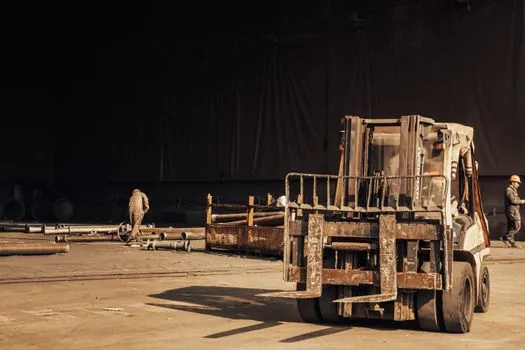
Rough terrain forklifts with large tires, strong suspension, and higher ground clearance are specified for gravel, broken concrete, and sloped yards common at inland shipping hubs [S3].
On uneven surfaces, telehandlers lift up to 12,000 lb and reach over 50 ft, bridging the gap between warehouse forklifts and heavy container handlers for mixed pallet and odd-load work [S3]. Side loaders, working on three wheels, carry long loads from 5,500 lb to 17,600 lb and thread narrow aisles where standard forklifts cannot position the load in line with the chassis [S1]. This surface-matching logic applies across terminal zones: a flat paved apron takes a high-capacity pneumatic-tire forklift; a gravel laydown area takes a rough-terrain unit; a long-timber or steel stockyard takes a side loader. Misallocating machine class to surface is the single most common cause of tip-risk incidents and undercarriage wear in port yards.
Spec checks that prevent under-trucking and thermal failure
Continuous lifts near rated capacity cause engine and hydraulic temperatures to spike, a spec gap, not a maintenance failure [S3].
Three diagnostic questions separate spec failures from maintenance failures: are you regularly lifting within 10 percent of rated capacity, are hydraulic temperatures spiking during continuous lifts, and is the spreader or mast rated for the stacks you actually run [S3]? If the answer to any of those is yes, the issue is under-trucking, and the fix is moving into a higher capacity class. In salt-air terminals, galvanized components, multi-layer paint systems, and IP-rated electrical enclosures are the difference between a five-year operational lifespan and a ten-year one, because salt degrades hydraulic seals and electrical connectors long before it visibly rusts bodywork [S4]. Heavy-duty cooling packages for transmissions and braking systems are non-negotiable for three-shift duty cycles [S4].
Selection matrix: machine class versus load and surface
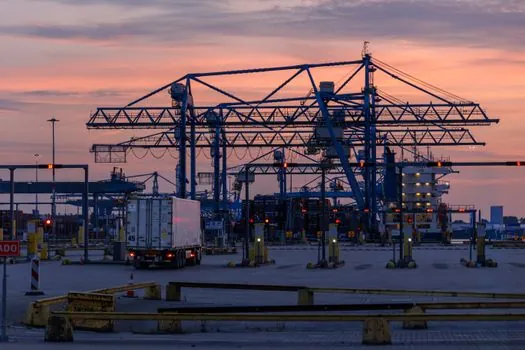
Container handling at berth: 18-54 ton heavy forklift or reach stacker, with super-heavy 60-85 ton class reserved for project cargo in the energy and industrial sectors [S3].
General yard and warehouse transfer: 5-10 ton diesel forklift with Isuzu, Cummins, Deutz, or Chinese engines, lifting 0-7,000 mm, suited to moving goods from ship to warehouse without crane dependence [S1]. Long-load steel, timber, or pipe yards: side loader, 5,500-17,600 lb capacity, three-wheel configuration for narrow-aisle alignment [S1]. Uneven gravel or sloped yards: rough terrain or telehandler, 12,000 lb at 50 ft reach, with high ground clearance and reinforced suspension [S3]. Inland port or stevedore work near Denver and similar climates: rough terrain pneumatic forklifts sized for snow, dust, and thermal cycling across the year [S2]. For terminals electrifying fleets, the 33-tonne heavy electric class is now a credible 2026 specification where overnight charging aligns with shift patterns [S4].
Where forklifts fit, and where they do not
Forklifts are the right tool where load shape varies, yard geometry is constrained, and shift intensity is high; they are the wrong tool where stacking density above 8-9 containers high is the priority [S5].
Reach stackers dominate pure container stacking because they lift higher and faster in container-only lanes. Heavy forklifts earn their place when cargo mix includes breakbulk, steel coils, project machinery, or odd dimensions that defeat spreader-based container handlers. Warehousing within the port complex depends on forklifts because cranes cannot enter the warehouse footprint, making 5-10 ton diesel units the standard ship-to-warehouse bridge [S1]. Loading delivery trucks at berth is forklift territory, moving bulky cargo from dock-side ship to outbound road transport in tight time windows [S1]. The selection failure mode is using a heavy forklift where a reach stacker belongs (lost stacking density) or using a reach stacker where a heavy forklift belongs (lost versatility on breakbulk).
Track three signals through late 2026: 33-tonne electric unit deployments at major European ports, lead-time compression on new heavy diesel orders, and the spread between used and new high-capacity forklift pricing as terminals balance immediate capacity against fleet renewal.
Detailed specification references: terminal block, forklift, and rough terrain forklift.
Related analysis: Forestry Road Roller Picks: Specs, Drum Type, and 2026 Selection Logic.