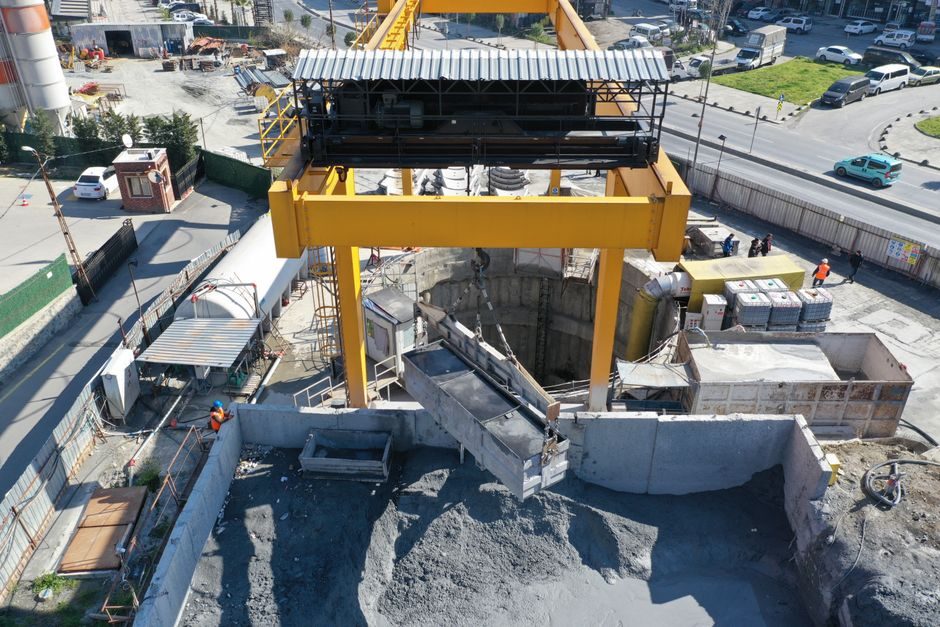
A stationary concrete batching plant combines weighed aggregate, cement, water, and admixtures in a controlled sequence, typically delivering 25–240 m³/h in current production lines covering HZS25 through HZS180 frame sizes [S8]. Compared with site-mixed or volumetric setups, the batch-plant model enforces per-batch recipe control through load cells, moisture probes, and PLC-driven weigh cycles, which is why highway, bridge, and precast operations rely on it for repeat-spec production [S1][S4].
Spec engineers should treat the batching plant as a capital asset, not a piece of consumable kit: its class, mixer model, and aggregate bin count drive both throughput and total cost of ownership, and the wrong match locks the project into years of inefficiency. The decision below is whether a stationary batching plant, a mobile plant, or site mixing fits the job profile.
Core Spec Range: Output, Mixer, and Power Bands
Current commercial stationary plants cover an output envelope from 25 m³/h up to 240 m³/h, with the mid-range HZS60 to HZS180 tier most commonly quoted in global catalogs [S8]. The reference data set lines up the next three frames cleanly: HZS60 produces 45–60 m³/h from a JS1000 twin-shaft mixer at 1 m³ per cycle and 130 kW total installed power, while HZS75 climbs to 60–75 m³/h via a JS1500 mixer at 0.75 m³ per cycle and 165 kW, accepting aggregate up to 80 mm across 3–4 bin configurations [S3]. At the top, HZS180 reaches 150–180 m³/h with a JS3000 mixer discharging 3 m³ per cycle at 280 kW, paired with a 700 t/h inclined-belt aggregate conveyor [S3].
Plants advertised at 25–240 m³/h with concrete-mixer + concrete-pump + concrete-mixer-truck line-ups reflect the same pattern across the HaoMei, CONMACH, and Made-in-China catalogs [S3][S4][S5]. For projects that need to validate concrete quality downstream, also see concrete admixture selection, which directly affects the w/c ratio the plant must hold.
Advantages: Why Engineers Specify a Batching Plant
Consistent quality control is the headline gain: a PLC-driven weigh cycle keeps each batch within tight ratio tolerances, which delivers higher compressive-strength uniformity, lower material wastage, and auditable compliance with project specs [S1]. The same automation cuts manual-labour hours per cubic metre and reduces truck-turnaround downtime, so a single HZS180 frame can keep a fleet of transit mixers loaded at its 150–180 m³/h nameplate without quality drift [S1][S3].
Long-run cost is the second lever. Bypassing third-party ready-mix supply removes per-cubic-metre margin stacking, and reducing rejected pours through tighter mix control recoups the capex differential over multi-year projects [S1]. Modern plants add dust collection and water-recovery loops, which both cut environmental exposure and reduce raw-water draw on site, an increasingly binding constraint in arid-region and urban projects [S1]. Versatility is the third: aggregate bin counts of 3–4 (HZS60) up to 3–4 (HZS75/HZS180) allow on-the-fly mix redesign between structural, pavement, and precast pours without re-tendering supply [S3]. Where fibre-reinforced concrete is in scope, the same weigh head can dose concrete fiber alongside the standard inputs.
Disadvantages: Capex, Footprint, and Permitting Drag
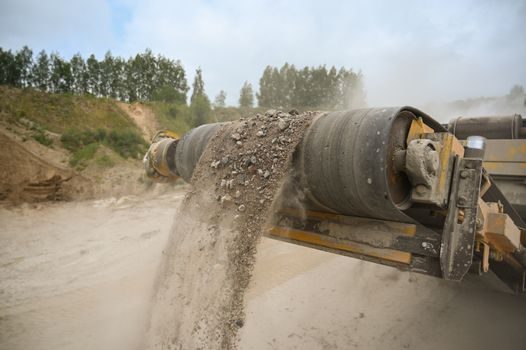
Capex is the dominant drawback. New-build stationary plants in the 60–180 m³/h band are routinely quoted at USD 17,500–285,000 per set ex-works, before civil works, silos, generators, and erection labour, so payback depends on a sustained 2–5 year pour programme [S8]. Site preparation is non-trivial: aggregate stockpiles, cement silos, and a 4.1 m discharge-height foundation must be in place before the first batch, and the 1100 kW twin-generator auxiliaries often required for off-grid operation add both fuel cost and acoustic footprint [S3][S6].
Operational drag is the second cluster. Stationary plants are fixed once erected, so a project that relocates mid-schedule will either pay to dismantle and rebuild or run a mobile unit alongside, eroding the original unit-cost case [S4][S6]. Permitting and environmental compliance — dust emission, stormwater runoff, noise, and truck queuing — typically require local approvals and continuous monitoring, which adds compliance overhead that volumetric or site-mix alternatives avoid [S1][S6]. Finally, a single-frame plant represents a single point of failure: a mixer, conveyor, or PLC outage halts the entire pour train, so mission-critical pours need a standby mixer or a contract with a ready-mix supplier. For pours that still need to be densified after the plant discharges, concrete vibrator choice becomes part of the same uptime planning.
Decision Matrix: Stationary vs Mobile vs Site Mix
Three deployment models compete for the same pour schedule, and the right answer is set by project duration, mobility, and quality audit needs rather than sticker price. A stationary batching plant wins on per-cubic-metre cost and mix consistency for any project pouring more than roughly 30,000 m³ over 12+ months at a fixed location, with the HZS75–HZS180 frame as the typical sweet spot (60–180 m³/h, 165–280 kW) [S3][S8]. A mobile or compact plant fits short-duration, multi-site, or remote work where relocation cost would dominate, accepting lower hourly output in exchange for redeployability [S4][S6]. Site mixing or volumetric trailers suit small pours under ~2,000 m³ total where the capex amortisation and permitting burden cannot be justified, with the explicit trade-off that mix variance rises and audit traceability is weaker [S1][S6].
Cost is the only dimension where site mixing wins outright (low upfront, no permitting), but it loses on quality control, throughput, and labour hours per m³; stationary plants invert that trade-off, winning throughput and quality at the price of capex and permitting drag. Mobile plants split the difference, with output bands overlapping HZS60–HZS90 territory and lower mobilisation cost than a full stationary rebuild [S3][S4][S6].
Selection Criteria Engineers Should Lock Before Purchase
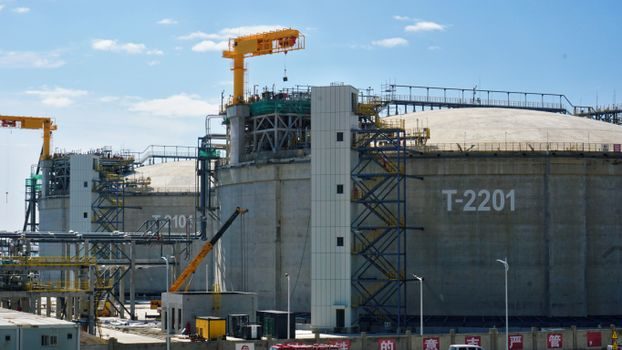
Five inputs drive the right model code, and skipping any of them usually ends in under- or over-spec'd plant. First, peak hourly demand: take the largest single-day pour target and add a 20–30% reserve, then map that to the HZS productivity band (25 / 35 / 50 / 60 / 75 / 90 / 120 / 180 / 240 m³/h) [S8]. Second, max aggregate size: HZS75 accepts up to 80 mm, smaller frames are typically limited to 60–70 mm, and undersizing here blocks certain mix designs outright [S3]. Third, aggregate bin count: 3-bin frames suit single-source supply, 4-bin frames are required for projects blending coarse fractions or recycled aggregate [S3].
Fourth, mixer type and index: JS-series twin-shaft mixers (JS1000 / JS1500 / JS3000) dominate because of their short cycle and high tip speed, but they require consistent concrete admixture dosing to avoid stickiness and build-up. Fifth, installed power and grid: 130 kW (HZS60) up to 280 kW (HZS180) sets the electrical scope, and a 1100 kW twin-generator set is the typical off-grid fallback [S3][S6]. Where the project also needs controlled saw-cuts, joint planning, or slab grooving, the concrete groove cutter is selected downstream of the plant's discharge schedule, not in parallel.
Application Fit: Precast, Civil, Commercial, Municipal
Four application clusters drive the bulk of plant demand, and each has a slightly different optimum spec. Precast manufacturing (pipes, barriers, panels) needs tight mix repeatability and rapid mould turnover, so a high-output stationary plant with a JS3000-class mixer and 4-bin aggregate is typical [S1][S3]. Heavy civil construction (highways, bridges, tunnels) prioritises continuous high-volume output and on-site stockyards, mapping cleanly onto HZS120–HZS180 frames at 120–180 m³/h [S1][S3]. Commercial and industrial building projects usually sit in the HZS60–HZS90 band (45–90 m³/h) where pour peaks are sharp but total volume is moderate [S1][S3].
Municipal infrastructure — water-treatment plants, dams, public works — leans on long-duration reliability and environmental controls (dust collection, water recycling) more than peak rate, so dust-suppression spec and standby power carry weight equal to nameplate throughput [S1]. In all four cases, concrete curing compound selection runs downstream of the plant, but its application rate must be consistent with the water/cement ratio the plant is set up to deliver.
Standards, Compliance, and Sourcing Reality
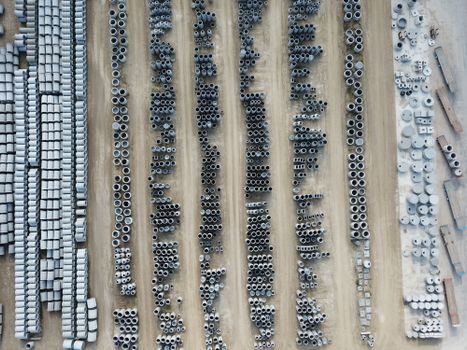
No single ISO or EN standard "certifies" a concrete batching plant as a whole; instead, compliance is built up from component-level standards covering the mixer, load cells, control system, and electrical safety, plus project-specific mix-design specs (compressive strength class, exposure class, max w/c ratio). Sourcing reality in 2026 is heavily China-centric: Made-in-China and Alibaba list the bulk of OEM capacity, with the HZS model family as the de-facto global shorthand for stationary plants in the 25–240 m³/h band [S2][S5][S8]. Used equipment is also a real market — US dealers such as REMCON list pre-owned Erie MG-12CP frames alongside new gensets, with a 32-year track record cited for process-flow and compliance consulting on resold plants [S6].
Trackable next nodes for any spec engineer: confirm the JS-mixer index and aggregate bin count on the OEM data sheet before issuing a PO; verify the installed-power figure against local grid or genset capacity (a 280 kW HZS180 will not start cleanly on a small site transformer); and lock the dust-suppression and water-recovery spec against local environmental permits before final selection. For projects where truck-mounted placement runs alongside the plant, Truck-Mounted Concrete Pump Installation: Outrigger, Boom, and Chassis Spec Map is the natural downstream read.