
For 2026 fleet planning, an aerial work truck configured for snow removal typically pairs a Class 4 chassis (GVWR 14,001-16,000 lb) with 4WD, a front-mounted 7.5-9 ft straight or V-plow, and a 35-45 ft platform height, per the vendor guidance cross-referenced in [S4] and [S6].
The 2026 commercial-plow truck shortlist centers on the Ford Super Duty, Ram 2500/3500, and Chevrolet/GMC 2500/3500, with V8 diesel power and minimum 11,000 lb GVWR for plowing duty [S4]. Aerial lift integration on these chassis runs through a rear pedestal mount with subframe, leaving the front frame rails free for the plow bracket and hydraulics.
Chassis Class, GVWR, and Drivetrain Match
Sno-Way segments plowing trucks into three buckets: half-ton (light/medium duty), three-quarter and one-ton (heavy workloads), and fleet/municipal (Class 4-6) [S5]. For an aerial-equipped snow unit, the one-ton/Fleet bracket is the practical floor because the rear pedestal, outriggers, and crew basket add 1,800-3,200 lb before payload [S6].
Weight distribution drives traction more than raw engine output on a plow truck; a properly configured pickup with ballast ahead of the rear axle outperforms an overpowered truck with a 60/40 rear bias in plowing, per Hiniker 2026 setup guidance [S2]. For aerial conversions, weight bias shifts rearward once the lift and outrigger box are mounted, so specers typically require 4WD plus front ballast plates rated 400-700 lb to recover steering grip on ice [S2][S5].
Engine match is straightforward for the 2026 shortlist: Ford 6.7L Power Stroke V8 turbo-diesel, Ram 6.7L Cummins I6 turbo-diesel, and GM 6.6L Duramax V8 turbo-diesel dominate the plow-rated one-ton segment [S4]. Gasoline V8s remain a lower-cost option for fleets that run a lighter lift (under 30 ft) and shorter routes, per Custom Truck's bucket-truck reference [S6].
Plow Spec Match to Truck and Route Type
Plow selection follows a path width and rigidity rule, not a brand rule: a 7.5 ft straight blade handles residential and tight commercial lots, an 8-9 ft straight or V-plow covers most commercial lots, and a 9-10 ft V-plow with hydraulic wing extensions serves municipal and arterial routes [S5].
The Sno-Way Down Pressure hydraulic system adds up to 250 lb of downforce on the cutting edge, which reduces salt pass counts and trips per storm [S5]. For aerial work trucks that also carry a man-basket, this downforce feature is doubly valuable because it lets one operator clear the lot before elevating to do overhead de-icing or sign work, eliminating a second vehicle.
V-plow geometry matters in tight lots: a 7.5 ft V-Plow with a 31 in. center height at the hinge is a typical contractor spec for Class 3 one-ton trucks per Hiniker's 7000/8000/9500 series listings [S2]. Fleet/municipal operations move up to 9-10 ft V-plows with 36-39 in. moldboard height for high-throughput arterial work, paired to trucks with 19,500+ lb GVWR [S5].
Aerial Lift Spec on a Snow-Rated Chassis

An aerial work platform built onto a plow truck typically uses a 35-45 ft platform height for sign, signal, and overhead de-icing duty, with a 500 lb basket rating and a two-section telescopic or articulating boom per Custom Truck's reference on bucket-truck configurations [S6]. Smaller gasoline-hydraulic units with 30-34 ft platform height fit on half-ton chassis and handle residential tree-trim contracts that double as snow support, while diesel-powered 45-55 ft units move onto Class 5-6 chassis for municipal fleets [S6].
For dual-purpose snow/overhead work, a pedestal-mounted articulating boom with 20-25 ft side reach lets the operator cut ice off signal heads and overhead signs without repositioning the truck, which is the dominant bottleneck on municipal routes. Insulated booms (46 kV or higher rating) are commonly specified where the lift must approach power lines for de-icing drip-loop work.
Hydraulic cold-weather ratings deserve attention: standard ISO 32 mineral hydraulic fluid is rated for -20 C operation, but a sub-arctic or synthetic fluid (ISO VG 22 or lower) is required for reliable -30 C and below, which matters for any chassis operating in northern US or Canadian winter fleets [S6].
Comparison: Pickup vs Dedicated Bucket Truck vs Skid-Steer for Snow
The three core platform options for snow removal split cleanly by lot size, overhead work, and capital cost. Pickup-based plow trucks (Ford Super Duty, Ram 3500, Chevy 3500) handle 80-90% of commercial lot work and cost the least to upfit, but cannot lift workers overhead without a trailer-mount lift [S3][S4].
Dedicated bucket trucks (Class 4-6 chassis with rear-mounted aerial lift) add $80,000-150,000 over a comparably equipped pickup but consolidate plow, lift, and material handling into one vehicle, which is the math that drives municipal and utility fleet purchases [S6]. Telehandlers and skid-steers with snow attachments (V-plows, snow pushers, blowers) cover bulk lot clearing faster than trucks but do not handle plowing along curbs or aerial work, so they supplement rather than replace a plow truck [S1][S3].
A decision-grade comparison lines the options up against four criteria. On upfront cost: pickup lowest, bucket truck highest, skid-steer in between. On lot coverage rate: skid-steer with a 10 ft pusher is fastest, bucket truck and pickup tied. On overhead capability: bucket truck only. On versatility across a 24-hour storm cycle: bucket truck wins because one operator can plow, salt, and de-ice overhead signals in a single shift [S3][S5][S6].
Weight, Tire, and Ballast Detail
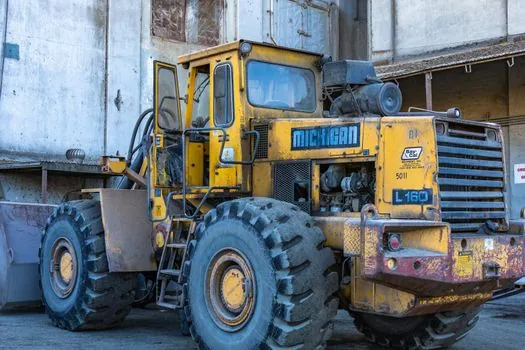
Tire selection on a snow-rated chassis is a chain problem: aggressive siped winter tires (3PMSF or mountain-snowflake rated) on 17-18 in. wheels carry more load and bite better than all-season, while dedicated snow-tread on 20 in. wheels sacrifices some grip for cosmetic appeal [S2]. For aerial work trucks that spend part of the day parked on outriggers, load-range E tires at 80 psi cold are the typical fleet spec.
Front ballast of 400-700 lb in the bumper or hitch receiver is the single most cost-effective traction upgrade on a plow truck, and it becomes more important once the rear pedestal and outrigger box shift the center of gravity rearward [S2]. On aerial conversions, ballast must be removable in summer to avoid overstressing the front suspension during non-plow operations.
Frame reinforcement is often the hidden cost: a Class 4-6 chassis built for a rear-mounted lift typically already has the frame extensions and crossmembers, but a half-ton or three-quarter-ton chassis upfit for both plow and lift usually needs an aftermarket frame reinforcement kit ($1,200-2,800) and a high-capacity alternator (240-320 A) to feed the lift hydraulics and lighting [S6].
Limitations, Failure Modes, and Operator Constraints
Aerial work trucks configured for snow have one operational ceiling: they cannot be driven with the boom elevated, which means aerial de-icing or sign work requires a stop-and-deploy cycle that is 4-6x slower than a dedicated bucket truck with a hydraulic outrigger that deploys on the fly. Municipal fleets absorb this with route planning; smaller commercial operators typically split duties between a plow pickup and a separate bucket truck. [S1]
Common failure modes on dual-purpose units are hydraulic, not structural: cold-start failure of the lift pump below -25 C with standard fluid, frozen fittings on the plow harness, and battery depletion from extended idle with the lift hydraulics cycling. Specs that mitigate these are block heaters, synthetic hydraulic fluid, dual 1000 CCA batteries, and a high-output alternator [S6].
Operator certification under ANSI A92.2 (vehicle-mounted aerial devices) and OSHA 1910.67 (vehicle-mounted elevating and rotating work platforms) is mandatory for the lift side of the truck, separate from the Class B CDL required to drive the chassis on most Class 4-6 conversions. A snow contractor running an aerial work truck must therefore carry both credentials on every job site.
Sourcing, Standards, and Decision Signals
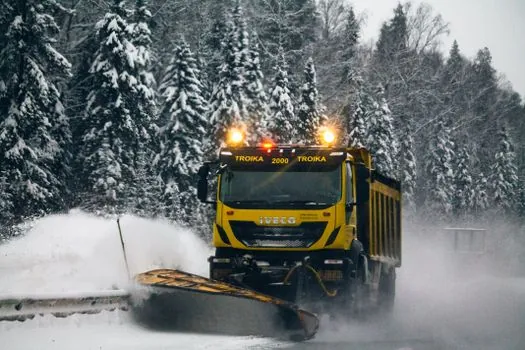
The reference data for this spec map comes from four 2025-2026 vendor and dealer sources: Comvoy's 2026 Best Trucks for Snow Plowing guide (2025-12) [S4], Hiniker's April 2026 pickup setup article [S2], Sno-Way's October 2025 truck setup guide [S5], and Custom Truck's bucket-truck reference [S6]. A dump truck chassis with a front plow mount is the natural alternative for fleets that already operate plows on dump bodies and want to add a rear lift, a pattern covered in our spec map on heavy chassis selection.
Trackable signals for the 2026-2027 season: (1) any 2026 municipal RFP that bundles plow plus aerial de-icing into one vehicle, which is the demand pattern that drives bucket-truck upfitter order books, and (2) revision activity on ANSI A92.2 around cold-weather hydraulic fluid ratings, which would force a spec update on the fluid section above. For related reach and refuse work, a reach truck is a different machine class and does not apply to on-road plow truck selection.
See also our earlier report, Concrete Mixer Truck Selection for Demolition Projects: Spec Map.