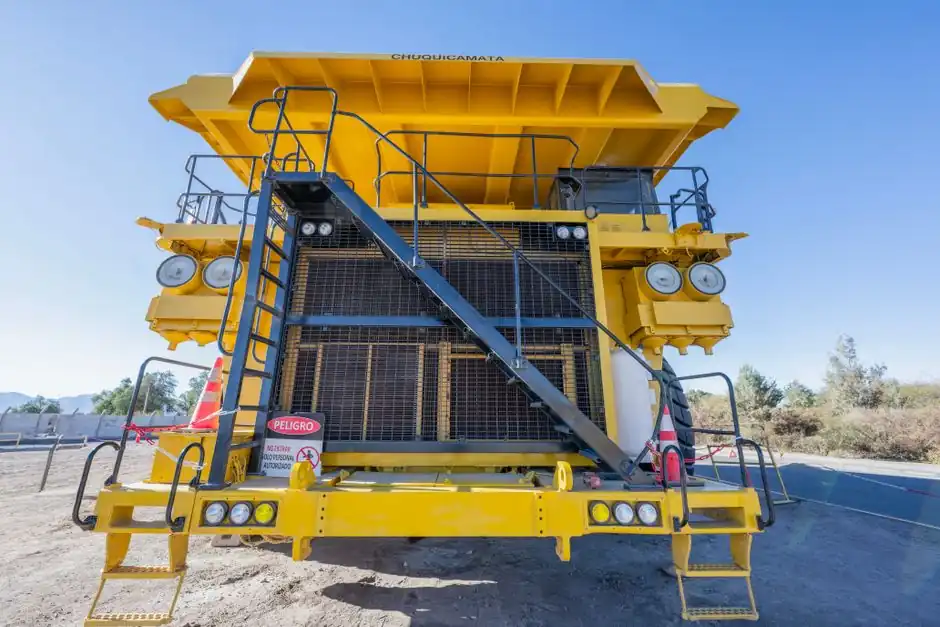
Rigid mining dump trucks span a payload range of 90 tons to over 400 tons and pair with engines above 1,500 hp, while articulated dump trucks (ADTs) and smaller off-road units cover the 5 to 60 ton segment below them, with the choice dictated by haul-road quality, cycle distance, and payload per trip [S1][S3].
Haul-road investment is the single biggest swing factor: a rigid hauler in its preferred environment delivers the lowest cost per ton, but only after a mine commits to building and maintaining firm, well-graded roads; ADTs trade some payload for the ability to work soft, steep, or muddy ground without that civil investment [S2].
Payload Tiers and Where Each Class Fits
Selection by tonnage is the first filter buyers apply, and the public 2026 guidance splits the market into five practical bands: 5 to 10 tons for small mines, tunnels, and small quarries; 10 to 20 tons for medium mines and general earthwork; 20 to 40 tons for large open-pit mines and longer hauls; 40 to 100 tons for high-volume overburden; and the rigid class above 90 tons, typically running to 400+ tons with 1,500+ hp [S1][S3]. A 50 to 75 ton band is where the rigid-versus-ADT decision is sharpest, because both architectures are offered with overlapping nominal payloads but very different operating envelopes [S2].
Buyers should anchor the tonnage to a shovel or loader pass count: a rigid 90 to 150 ton truck usually wants a 22 to 36 m³ bucket match, and a 200+ ton class unit typically pairs with a 40 m³+ mining excavator, since mismatched loading extends cycle time and inflates tire wear [S1].
Rigid vs Articulated: Decision Matrix
Rigid haulers, built on a fixed frame, are described in 2026 OEM guidance as the gold standard for high-volume, long-distance hauling on firm, consistent haul roads, with faster cycle times, higher payloads, and long service life when road investment is sustained [S1][S2]. The trade-off is sensitivity to weather, since thick mud or heavy rain can ground a rigid truck and force downtime that an ADT would simply drive through [S2].
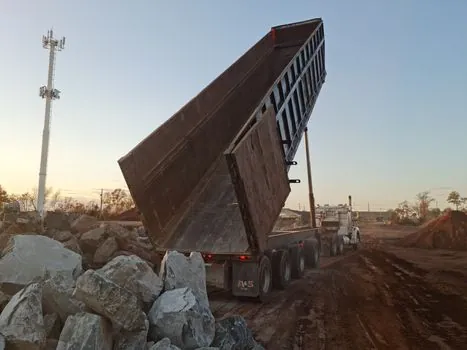
Articulated dump trucks use a permanent all-wheel-drive configuration with an oscillating hitch and a high-floatation suspension, which is why they dominate soft, steep, or rough terrain and short-cycle work; their payload is smaller, but speed and fuel economy on poor roads are often better, and they double as multi-purpose site-development machines during shoulder seasons [S2][S6]. The same Volvo-published 2026 guidance frames the choice not as "which truck is better" but as "which truck is best suited to my unique situation", a framing reinforced by SANY's parallel 2026 buyer guide, which calls truck selection a long-term operating decision rather than a vehicle purchase [S1][S2][S4].
Quick comparison: on cost-per-ton, rigid wins on good roads; on capital avoidance, third-party ADT rental removes upfront capex but adds safety and crew-management overhead; on versatility, an owned ADT can serve overburden removal plus general site work; on weather resilience, ADT outperforms rigid on soft or wet ground [S2].
Selection Criteria Beyond Payload
Engine torque and power, payload capability, structural resiliency, fuel consumability, and braking and steering safety are the five criteria Indonesian dealer United Tractors lists first for coal-mining fleets, and they map directly to mine site conditions rather than brochure numbers [S5]. Climbing ability, hydraulic tailgate unloading speed, and tire life are the next-tier checks, and the SINOTRUK 2026 buyer guide adds maintenance ease and service life as factors that swing total cost of ownership over a multi-year project [S4][S5].
For open-pit operations in the 90 to 400+ ton class, the spec floor is roughly 1,500 hp, a high-capacity dump body with hydraulic tailgate, retarder or engine-assisted braking for sustained descent, and a frame designed for continuous-shift duty in dust and high ambient temperatures [S1]. For 6×4 and 8×4 on-road biased mining dump trucks, driveline configuration matters: 8×4 is favoured where higher gross weight and traction are needed, and 6×4 is preferred where manoeuvrability and fuel economy matter more than peak payload [S4].
Use Cases by Mining Application
Open-pit metal mines (copper, iron ore, gold) and large coal operations point to rigid haulers in the 90 to 400+ ton class running long, well-maintained haul roads between the pit and primary crusher or stockpile [S1][S4]. Quarry and aggregate operations typically sit in the 20 to 40 ton band with rigid or semi-rigid chassis on shorter cycles, and the same band covers limestone, granite, and aggregate production sites [S3][S4].
Mines with steep grades, muddy benches, or undeveloped infrastructure are the natural home of ADTs in the 25 to 45 ton class, and they are also common in large construction sites, infrastructure projects, and earthmoving operations that need to share equipment across tasks [S2][S6]. Coal haulage and overburden removal often mix the two architectures, with rigid haulers on main ramps and ADTs on auxiliary benches, a pattern that aligns with the dynamic-compactor selection map for mining sites where similar load-class matching applies [S2][S6].
Outsource, Rent, or Buy?
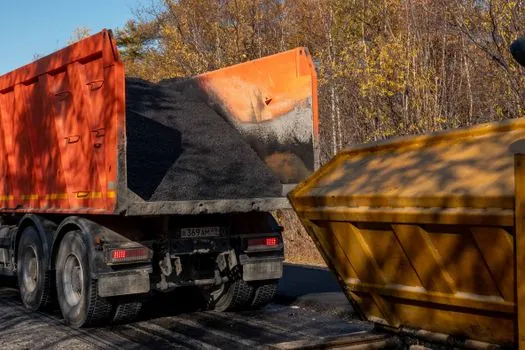
Third-party ADT rental is a common 2026 pattern for overburden removal, especially when a mine runs the campaign only once or twice a year; the upside is zero capital outlay and immediate availability, the downside is safety and logistics overhead from external crews running unfamiliar machines on site [S2]. For year-round overburden contracts, the same guidance recommends owned or long-leased ADTs to lock in utilisation and control maintenance [S2].
Buyers who treat a mining dump truck as a one-line vehicle purchase, rather than a multi-year operating asset, routinely underestimate fuel, tyre, and brake wear; the 2026 SINOTRUK guide explicitly flags that transport is one of the largest operating expenses in mining, and that reliability over the project life matters more than the lowest sticker price [S4].
Electric and Future-Energy Options
Electric mining dump trucks are now listed as a distinct category in 2026 OEM product literature, pitched on lower pollutant emissions, reduced energy consumption, and quieter operation, although SANY's 2026 buyer guide treats them as an emerging rather than mainstream option [S1]. Diesel-electric drivelines on large rigid haulers remain the workhorse configuration, and the same electric-pump and concrete-pump chassis constraints that govern related mining equipment, such as reach and output matching for truck-mounted concrete pumps, also apply when electrifying auxiliary systems on a dump truck [S1].
Trackable signals for the next planning cycle include the share of new rigid haulers delivered with hybrid or full-electric drivelines, ADT operating-cost benchmarks versus rented third-party fleets, and tightening site-emission rules at Tier 1 coal and iron-ore customers, all of which feed back into the rigid-versus-ADT decision in the 50 to 75 ton band [S1][S2].
For a wider context on heavy equipment matching around the haul fleet, see the motor grader selection guide for port and terminal operations, which covers road maintenance for the same class of haul trucks, and the dynamic compactor selection map for mining, which pairs ground-improvement equipment with mining haul cycles.
For component-level specifications, see mining dump truck, dump truck, and reach truck.