
Stationary wet-mix plants in the AJ-60 to AJ-180 range, delivering 60–180 m³/h, are the default specification for urban infrastructure such as bridge piers, metro segments, and high-volume road bases, with twin-shaft or planetary compulsory mixers the dominant configuration for projects that demand continuous, tightly-controlled output [S2][S4].
Mobile and dry-mix plants remain a secondary tier: mobile units run 20–80 m³/h and can be set up in 1–3 days for scattered urban utility work, while dry-mix configurations suit hauls beyond 100 km where wet concrete would start setting in the drum [S1][S2].
Project Volume Threshold and Plant Class Fit
The economic break-point for owning a batching plant on an urban job sits at roughly 2,000 yd³ (≈1,530 m³) of placed concrete, above which in-house production undercuts per-yard ready-mix supply and starts to recover capital cost within a single project cycle [S3]. Below that line, contractors are usually better off hiring a mobile or buying ready-mix from a regional producer.
For long-duration urban infrastructure (metro boxes, highway interchanges, large bridge decks) the spec converges on a stationary wet-mix plant with output of 60–180 m³/h, mounted on engineered foundations with silos, aggregate bins, and conveyors laid out to keep haul-truck cycle times short [S2][S4]. A compact mobile plant at 20–80 m³/h is the right pick only when the work is phased, the site footprint is tight, or the project is short enough that a fixed foundation is not justified [S1][S2].
For continuous high-rise or tunnel pours where drum-truck travel time would compromise workability, on-site wet-mix plants with the mixer set as close to the formwork as possible are the standard answer [S1].
Mixer Selection: Twin-Shaft vs Planetary for Urban Mixes
Twin-shaft and planetary compulsory mixers dominate urban-infrastructure specifications because they deliver short cycle times and high homogeneity, both of which matter when the design mix is C30–C40 structural concrete and the pour rate has to stay flat across an 8–12 hour shift [S1][S4].
Compulsory mixers also tolerate low water/cement ratios and high dosages of water-reducing concrete admixtures, which is why they are paired with grades such as C35 and P6/P8 impermeable mixes used on water-retaining structures [S1].
Dry-mix tumble-drum mixers only stay relevant on remote or haul-distance-heavy sites; on dense urban jobs they are harder to justify because residence-time control in the agitator truck becomes the limiting factor on cement concrete workability [S1].
Batching Accuracy, PLC Control, and IoT Monitoring
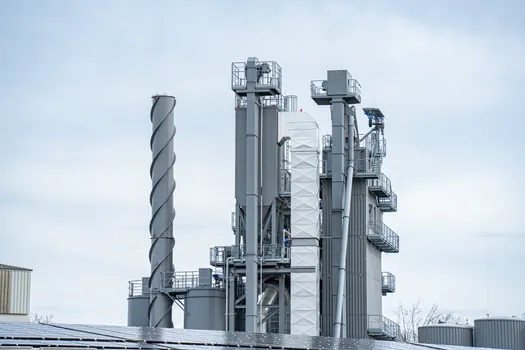
Batching accuracy is the single specification that most directly governs structural conformity, and the current OEM guidance is to specify PLC-based weighing with redundancy in the form of physical-button or backup controls so a single HMI failure cannot halt a shift [S2][S4]. Modern dual-mode systems are reported to cut operator error by around 50% and trim preparation time by over 30% compared with single-interface panels [S2].
IoT-based remote monitoring on a stationary plant is now the mainstream option, tracking motor temperature, vibration, and current against live thresholds, flagging anomalies before they become stoppages, and trimming unplanned failure rates by up to 40% according to manufacturer data; predictive maintenance scheduling is reported to cut maintenance cost by about 25% and extend service life by more than 15% [S2].
For urban projects the practical ask is recipe management for at least 4–6 mix designs (C30, C35, C40, P6, P8, plus a pumpable grade for concrete pumping into dense rebar cages), all switchable from the control cabin without re-calibration of the load cells.
Comparison: Stationary Wet-Mix vs Mobile vs Dry-Mix on Urban-Job Criteria
Across the three main options a specifier can line the decision against four urban-job criteria: output range, setup time, transport radius, and foundation need. Stationary wet-mix covers 60–180 m³/h, needs 2–4 weeks of foundation work, suits a 30 km delivery radius, and handles C30–C40 plus P6/P8 grades; mobile wet-mix covers 20–80 m³/h, sets up in 1–3 days, needs only level ground or simple piers, and suits 30–100 km hauls for short or phased pours; dry-mix plants run 40–120 m³/h, set up in 2–5 days, suit hauls beyond 100 km, and are limited to mixes that tolerate final water addition in the truck [S1][S2].
The criterion that usually eliminates the dry-mix option on urban infrastructure is the inability to verify final water/cement ratio at the plant, a parameter inspectors check on every structural pour; wet-mix at the plant resolves that audit gap [S1][S4].
For very tight urban sites where the stationary plant is the right capacity but the footprint is wrong, a compact mobile with the same mixer class is the fallback, accepting lower throughput in exchange for a 1–3 day redeploy between phases [S2].
Site Constraints, Permits, and Environmental Compliance
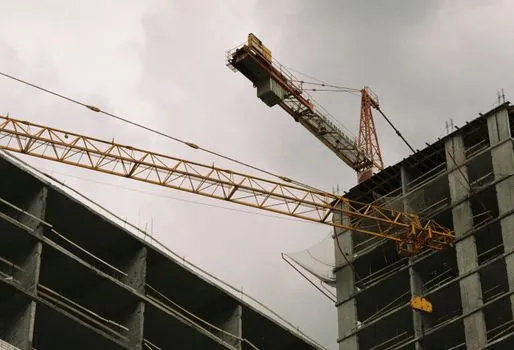
Urban sites add three constraints the spec must answer: ground bearing, dust and noise emissions, and truck cycle time. Engineered foundations are mandatory under silos and mixers on stationary plants, with drainage and ground stabilisation called out for any site exposed to heavy rainfall or fill [S4].
On environmental compliance the modern stationary plant integrates sealed screw conveyors for cement transfer, dust collectors on the cement silos, level sensors, and enclosed aggregate handling, all of which are now standard in manufacturer reference designs and are typically required to satisfy local air-quality permits near residential or commercial receptors [S1].
For mobile plants in low-emission zones, several manufacturers now offer eco-friendly variants with reduced engine idle, hybrid power, and full enclosure of the mixing section to keep particulate and noise inside the working envelope [S6].
Mobility, Logistics, and What a Mobile Plant Can and Cannot Do
Mobile plants are a real answer on urban projects, but only when the work matches their design envelope: temporary sites, phased works, road repair, and remote spurs. Hot-sale mobile models (AJY-60, AJY-90, AJY-120) cover 60–120 m³/h, fit on standard semi-trailers, and need no foundation beyond level ground [S2].
They are not a substitute for a stationary plant on a single large bridge or interchange deck, where 8–12 hour continuous pours at 90–120 m³/h are the norm and the mobile plant's smaller silo and bin volume would force batch-frequency stoppages. Pairing a stationary plant with a truck-mounted concrete pump for placement is the more common urban configuration when the pour point is far from the mixer.
On multi-package urban programmes (for example a metro line split into several station boxes over 24–36 months), running one stationary plant plus a relocatable mobile unit for satellite works is a documented logistics pattern that keeps fresh-mix supply within the 30 km wet-mix window [S1][S4].
Buying-Checklist Items That Decide the Award
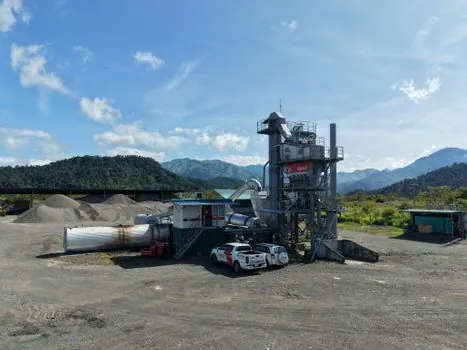
Beyond capacity and mixer class, the specifier-side checklist that most often shifts the award between competing bids is automation level, mixer warranty terms, spare-parts lead time, and dust/noise enclosure. PLC with dual-mode HMI and physical-button backup, plus IoT telematics on the mixer, gearboxes, and silo level sensors, is now the expected baseline rather than an upcharge [S2][S7].
Spare parts availability is a hard constraint on urban infrastructure because a multi-day stoppage triggers liquidated-damages clauses; vetting the local dealer for wear-parts stock on the specific mixer model is a standard pre-award step [S7].
Finally, total cost of ownership should be modelled on five-year horizon, with realistic assumptions on energy, concrete admixture consumption, and residual value, rather than on headline price alone; the ROI calculation on a 2,000+ yd³ urban project typically closes in 12–24 months when the plant is also used on follow-on contracts [S3].
Trackable signals to watch over the next two quarters: any municipal tender that pre-specifies IoT telematics and ±1% cement-weighing accuracy as pass/fail criteria, and any revision of urban low-emission-zone rules that reclassifies mobile plant engines, both of which will tighten the spec window for new concrete batching plant procurement.