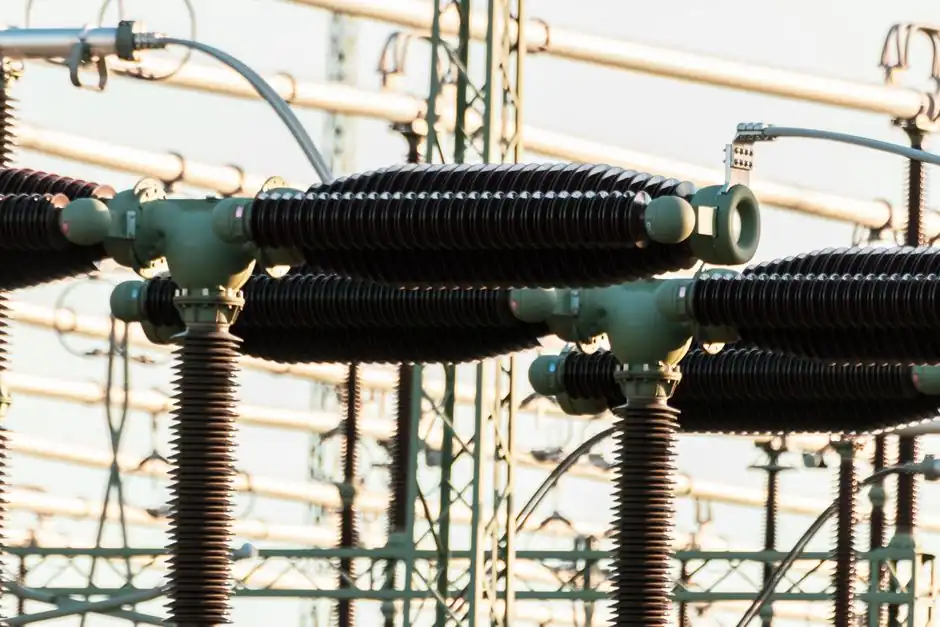
Large power transformer (>100 MVA) delivery times are sitting at 100-128 weeks in 2026, which puts any 500 kV unit ordered on 2026-09-20 on an arrival window no earlier than Q3 2028 [S2]. Hitachi Energy's published transformer-component delivery table, refreshed 2026-08-26, lists tap-changer lead times on a separate, also-extended preliminary schedule, meaning the 500 kV transformer delivery slot is gated by both the active part and the on-load tap-changer [S1].
For grid, substation, and data-center HV interconnect work, that window collapses the planning horizon: specification freeze, factory audit, and slot reservation need to land 24-30 months before energization. Buyers comparing a 500 kV UHV build to a standard dry-type transformer should treat the two as different procurement categories entirely, since 500 kV oil-immersed units are built-to-order with project-specific impedance, loss, and short-circuit targets [S3].
Why the 500 kV slot is the long pole in 2026
Reported 2026 lead-time data puts large power transformers at 100-128 weeks, medium-voltage switchgear at 90-100 weeks, and 2 MW+ backup generators at 52-78 weeks, with the transformer-driven critical path stretching to roughly 2.5 years [S2]. On a 500 kV UHV build, the transformer therefore dictates the energization date: if the unit is reserved in September 2026 for a 128-week slot, the substation cannot be back-fed before approximately 2028-10, and downstream dry-type transformer station-service units can no longer be sequenced in parallel without float.
Wood Mackenzie's framing in the same supply-chain picture is that the market is "structurally out of balance," with data-center, EV charging, grid-modernization, and renewable-interconnection demand all hitting the same forging, winding, and tanking capacity simultaneously [S2]. For a 500 kV UHV transformer, the bottleneck is concentrated: the 500 kV class requires its own winding halls, vacuum oven sizing, and partial-discharge test bays, so capacity is not freely fungible with 220 kV or 400 kV lines [S3].
What sits inside the 2026 booking window
Hitachi Energy's preliminary component table, dated 2026-08-26, treats tap-changers, insulation components, and other transformer accessories under a separate schedule from the active part, with final delivery times always governed by the order acknowledgment rather than the public table [S1]. That distinction matters on a 500 kV unit: the on-load tap-changer (OLTC) and the bushing set are commonly the schedule-binding sub-assemblies, so buyers should request a per-component delivery split, not a single headline number.
A 500 kV UHV transformer specification typically locks rated voltage (500 kV / √3 on the HV side, with tertiary or LV as project-defined), MVA, impedance percentage, no-load and load loss values in kW, temperature rise (commonly 65 K oil / 70 K winding by IEC 60076 for oil-immersed units), and short-circuit withstand capability before the factory can release a binding delivery slot [S3]. Any post-award change to impedance, sound level, or transport dimensions tends to push the slot out by an additional production campaign, which on a 100-128 week baseline is often a full quarter.
Selection criteria that actually move the 2026 slot

Five buyer-side variables shorten or stretch a 500 kV delivery slot in 2026: (1) loss class, where stricter no-load/load loss caps reduce the number of competing bidders; (2) impedance percentage and short-circuit withstand, which constrain the winding and clamping design; (3) cooling method (ONAN/ONAF/ODAF vs. OFAF), which sets radiator or forced-oil skid scope; (4) transport weight and dimensions, since a 500 kV unit commonly exceeds 200 t and may require route studies, rail girders, or a heavy-lift vessel; and (5) partial-discharge and sound-level guarantees tied to substation location [S3].
On a criteria-based comparison, a standard oil-immersed 500 kV autotransformer scores well on per-MVA cost and well-established IEC 60076 testing, but typically lands in the middle of the 100-128 week band; a low-loss, low-noise custom design with special impedance pushes toward the 128-week ceiling; a dry-type transformer at 500 kV is not a commercially available category and cannot be used as a substitute, so the 500 kV UHV slot must be filled by an oil-immersed or ester-filled power transformer [S3]. Transportability is the hidden gate: a fully assembled 500 kV unit often cannot pass a given road or bridge, and the factory may default to a three-phase or single-phase split that adds 8-16 weeks of site assembly to the critical path [S3].
Booking mechanics: how the 2026 slot is actually reserved
Hitachi Energy explicitly states that published preliminary delivery times are not contractually binding and that "final delivery times are always as per the order acknowledgment," which on a 500 kV UHV transformer is a separate signed confirmation against a reserved production campaign [S1]. The practical 2026 sequence is: (a) technical specification freeze; (b) bidder shortlist (commonly 3-5 vendors for utility tenders, narrower for UHV); (c) commercial bid with preliminary slot; (d) order placement with down payment, at which point a binding order acknowledgment date is issued; (e) engineering review, including transport study, and (f) manufacturing, which itself runs roughly 60-80 weeks of the total 100-128 week window [S2][S3].
On the cost side, electrical infrastructure represents 40-50% of the average $11.3M/MW data-center build cost reported in Turner and Townsend's 2025 cost index, and copper price moves of roughly 35% since 2022 can add $1.5-2.5M per MW to a build, with the transformer absorbing a disproportionate share of the copper content [S2]. That cost weight, combined with a 128-week lead time, is the practical reason 2026 procurement teams are booking 500 kV slots before they have a fully permitted site.
Who the 2026 slot is for, and who should walk away

The 2026 500 kV delivery window is built for utilities, ISO/RTO transmission planners, large industrial power hubs, and hyperscale data-center developers with a 2028 or later energization date, a project-finance structure that can carry 24-30 months of capex on the balance sheet, and a substation site that can absorb a 200 t+ transformer delivery [S2][S3]. It is not appropriate for fast-follower projects, for buyers who need back-feed in 12-18 months, or for any application that can be served by 110-220 kV equipment, because the 500 kV slot is a different cost and schedule category.
Buyers in that "wrong fit" category should look at medium-voltage switchgear (90-100 week lead time, far more vendor options) or, for indoor or low-fire-load applications, dry-type transformer alternatives at lower voltage classes, with the understanding that no dry-type transformer substitutes for a 500 kV UHV transformer in a transmission role [S2][S3]. The clean engineering answer in 2026 is to right-size the voltage class to the project, not to chase a 500 kV slot because the project brief says "high voltage."
Standards, tests, and the documentation that locks a slot
A 500 kV UHV transformer is typically specified and tested to the IEC 60076 series (with regional equivalents such as IEEE C57 for North America), with insulation coordination per IEC 60071, short-circuit withstand per IEC 60076-5, and sound level per IEC 60076-10, and these standards are the language in which the order acknowledgment is written [S3]. Partial-discharge acceptance, temperature-rise testing at rated load, and impulse testing on the 500 kV winding are the three tests most likely to gate factory acceptance, and any failed test on a 100-128 week schedule is a multi-quarter event.
Buyers who want to compress schedule risk in 2026 should request: (1) a written component-level delivery split (active part, OLTC, bushings, radiators, control cabinet) tied to the order acknowledgment; (2) a transport study with route survey, rail or barge plan, and a 3D lift plan for the 200 t+ main tank; (3) a spare-parts list sized to the first 5-7 years of operation, since a 500 kV unit commonly has 25-40 year design life and lead-time on spares is on the same extended clock; and (4) a documented FAT plan that names the IEC clauses, witness points, and hold points, so the FAT window itself is part of the 100-128 week critical path rather than a hidden tail [S1][S3].
Capacity-planning math for 2026-2028
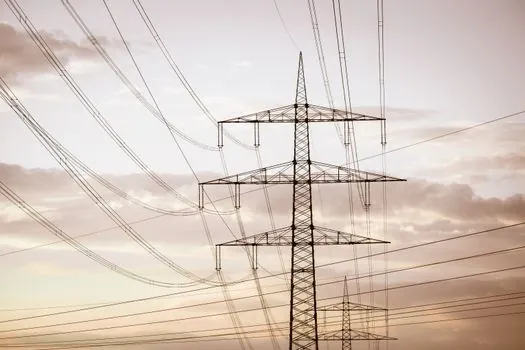
If a buyer places a 500 kV UHV transformer order on 2026-09-20 and accepts a 128-week delivery window, site arrival is on or around 2028-10-03, and energization, once transport, oil processing, and commissioning are added, lands in Q1-Q2 2029 on a non-aggressive plan [S2]. Buyers who can tolerate a 100-week window and find a vendor with a sooner campaign can pull that to roughly 2028-07, but in 2026 the difference between the 100-week and 128-week bids is rarely more than 6 months, because the bottleneck is shared forging and core-steel capacity, not factory labor [S2].
Two trackable signals to watch through 2026-2027: the next refresh of Hitachi Energy's transformer-component delivery table, which moves on roughly a quarterly cadence and is the cleanest public read on whether tap-changer and bushing lead times are extending or contracting [S1]; and any update to large power transformer lead-time reporting from trade outlets like Power Magazine, which the 2026 data set is anchored to and which is likely to re-survey the market once the 2025 cohort of orders has cleared the factory floor [S2]. For a project energizing in 2029, the procurement clock is already running.
For component-level specifications, see aluminum window door.
For related coverage, see Ultrasonic sensor suppliers 2026: brand tiers, spec map, sourcing guide.