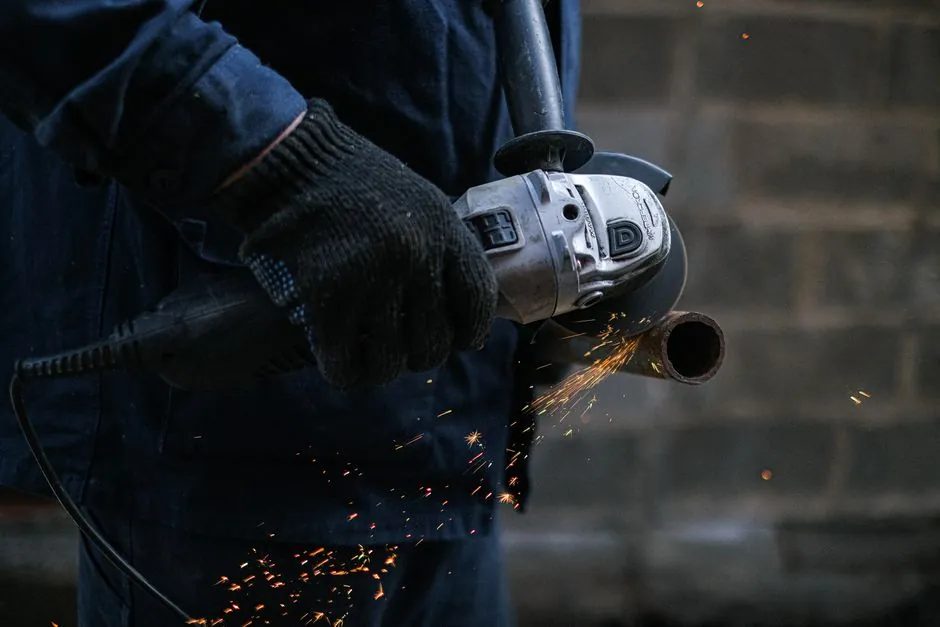
Brown fused alumina and silicon carbide grain supply is structurally tight through Q4 2026, with landed costs running 8–20% above Q1 2025 across coated and bonded categories [S2].
Aluminum oxide grain specifically has moved 6–9% year-on-year, while silicon carbide is up 12–15% on petroleum coke volatility and tighter Chinese export licensing [S2]. The USGS continues to track fused aluminum oxide and silicon carbide as the two dominant manufactured abrasive commodities outside superabrasives [S1].
Raw Material Pressure Driving the 2026 Spread
Alumina feedstock tracked roughly 14% higher in late 2025, feeding directly into brown and white fused alumina pricing within a single quarter [S2]. Petroleum coke, the primary carbon source for silicon carbide synthesis, has swung more than 20% inside one quarter, making SiC the most input-volatile of the two main grains [S2].
Electric arc fusion of bauxite and Acheson-process silicon carbide crystal growth are both electricity-intensive, so any grid-cost spike flows into the finished grain within roughly 90 days [S2]. The result is a wider supplier-to-supplier quote gap, with 2026 spreads of 25–35% on identical specs versus roughly 10% in 2023, because producers are hedged differently against energy and feedstock [S2].
Comparison of Main Grain Options by Decision Criteria
Brown fused alumina, white fused alumina, and silicon carbide each fit a different operating envelope, and the table below reflects what the 2026 supply data implies for specifiers [S2][S4][S7].
Brown fused alumina (BFA) suits ferrous grinding, has the most stable supply, and moved only 6–9% in price; it is the default for general-purpose bonded abrasives on steel. White fused alumina (WFA) is higher-purity, harder, and more friable, with documented growth in NEV, electronics, and optics finishing where surface integrity matters [S4][S5]. Silicon carbide is harder still and sharper, preferred on glass, stone, and non-ferrous metals, but it carries the highest 2026 price increase (12–15%) and the most feedstock risk [S2][S4].
For cost-driven general grinding on carbon steel, BFA wins on landed cost and lead time. For precision finishing of electronic ceramics or optical components, WFA's higher purity and friability justify the premium, as discussed in this purity-grade comparison of alumina grades for industrial use. For non-ferrous and stone work where hardness and thermal conductivity matter, SiC remains the spec of record despite the supply squeeze.
Tariff and Regulatory Layer Reshaping Sourcing Maps
US tariff expansions on imported industrial goods have added 7.5–25% to certain coated and bonded abrasive SKUs depending on HTS classification, and EU CBAM enforcement is now active for several abrasive-adjacent inputs [S2]. Retaliatory tariffs and Chinese export licensing on silicon carbide feedstock have tightened overseas availability further, with price transmission into fused grain typically lagging the policy by one quarter [S2].
Buyers who single-source from one region now face both a tariff premium and an FX risk, which is why the 2026 procurement pattern favors dual-qualified suppliers across two trading blocs. FEPA and JIS grit-size standards remain the cross-border reference for particle size acceptance, so a dual-sourced WFA or SiC spec does not need to be re-qualified at the part-number level when the producing region changes [S4].
Market Size and Forward Demand Signal
The global abrasive grains market was valued at $14.2 billion in 2025 and is projected to reach $18.6 billion by 2034 at a 4.1% CAGR, with aluminum oxide grain specifically forecast to reach a 152 index by 2035 on electronics miniaturization [S3][S5]. Electronics precision finishing is the fastest-growing end-use, pulling high-purity white fused alumina demand that the alumina ceramic encyclopedia entry covers for broader structural uses.
Predictive models for aluminum oxide grain point to a 4.6% CAGR through 2035, faster than the broader abrasive grains basket, driven by wafer polishing, NEV battery component finishing, and precision optics [S5]. For comparison, silicon carbide demand growth in the abrasives segment is constrained by feedstock volatility, although power-semiconductor and refractory pull-through is tightening merchant SiC availability independently of abrasives.
Patent and Production Technology Signals
Patent activity around electric arc fusion of fused alumina and abrasive grain crystal engineering has intensified, with filings concentrated on energy efficiency, lower-TiO2 brown fused alumina routes, and grain morphology control for engineered abrasives [S6]. Resonac's high-purity electrofused white alumina, with single-crystal grain structure for high hardness and friability, is one documented commercial example of the engineered-WFA direction [S7].
The R&D signal matters for buyers because patent-protected grain geometries carry a performance premium but typically a 12–24 month exclusivity window before generic equivalents catch up, which is a useful negotiation lever on long-term contracts. Silicon nitride is sometimes paired with SiC in engineered grain blends for high-temperature grinding, although it remains a niche volume relative to fused alumina.
Failure Modes and Practical Selection Rules
Coated abrasive failure modes, including dulling, loading (clog), and shedding, are directly tied to grain-workpiece mismatch rather than raw hardness, with FEPA-graded silicon carbide outperforming aluminum oxide on non-ferrous metals but underperforming on mild steel because of chemical wear at the cutting interface [S4]. Binders (phenolic resin vs. animal glue) and abrasive distribution density control the wheel structure looseness, and a tighter structure pushes more heat into the workpiece [S4].
Practical rule: specify WFA or semi-friable alumina for heat-sensitive alloys and finishing passes, BFA for stock removal on carbon and alloy steels, and SiC for non-ferrous, stone, glass, and ceramic workpiece materials. Storage contamination and grit-size mix-up are the two most common field failures and are independent of the 2026 supply situation [S4].
Sourcing Tactics That Hold Up Under 2026 Conditions
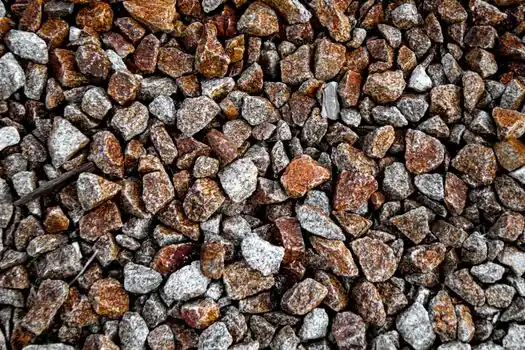
Dual-sourcing across at least two FEPA-graded suppliers in different tariff zones is the single most effective hedge, because the 25–35% inter-supplier spread observed in 2026 means there is real economic value in re-quoting every quarter [S2]. Locking 6–12 month fixed-price contracts on brown fused alumina is feasible because the price move is the most moderate, while silicon carbide is better run on shorter index-linked agreements tied to a published petcoke benchmark [S2].
Trackable signals for the next two quarters: any change in Chinese silicon carbide export licensing volume, the next USGS manufactured abrasives data release under the construction machinery and equipment end-use breakdown, and the Q4 CBAM carbon-cost adjustment for abrasive-grade alumina imports into the EU. Watch the lamps and light fittings sector indirectly, as optical polishing pulls high-purity WFA and tends to lead general electronics demand by one to two quarters.