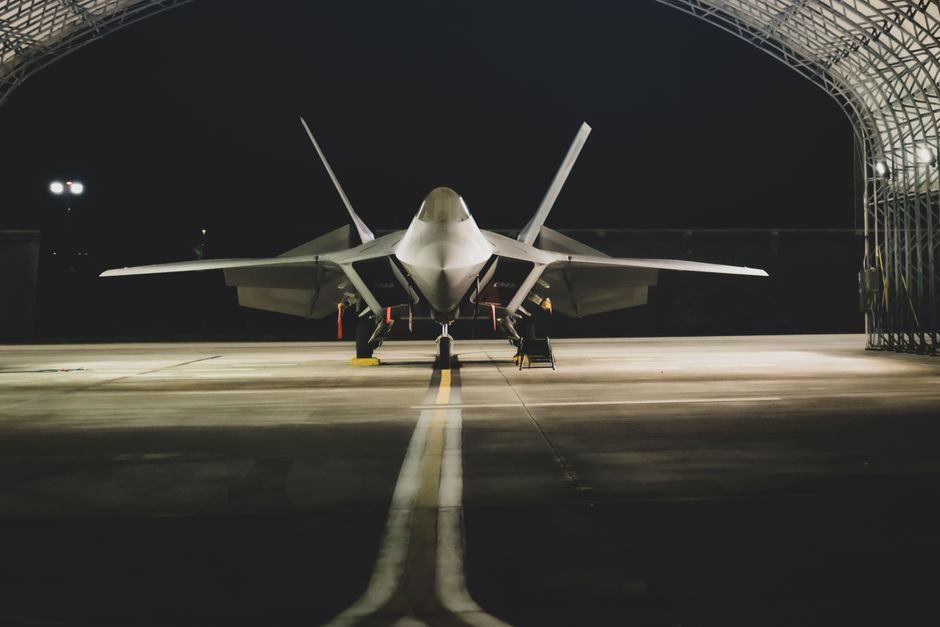
Aerospace production technology is the integrated chain that turns an aerodynamic, structural, and systems design into a flight-certified airframe, rotorcraft, launch vehicle, or satellite — covering materials, joining, machining, assembly, inspection, and qualification testing [S1][S4]. UCAS frames the discipline as engineers overseeing the production of aerospace technology from design through testing using existing scientific concepts [S1].
The reference literature is anchored by two peer-reviewed journals: Aerospace Science and Technology (Elsevier, ISSN 1270-9638, E-ISSN 1626-3219, bimonthly, founded 1997, France) carrying a 5-year impact factor of 5.6 and a 2024-2025 Impact Factor of 5.8 with a 22.4% self-citation rate [S3][S5][S6]; and Aerospace Technology Japan (Japan Society for Aeronautical and Space Sciences, ISSN 1884-0477) publishing registered peer-reviewed work on rotorcraft vortex state, periodic orbit calculation, and micro-thruster impulse-bit reduction [S2]. The 95th-percentile CiteScore ranking of 8/157 in Aerospace Engineering confirms the field is treated as a hard-engineering discipline rather than applied physics [S6].
Definition and scope of aerospace production
Aerospace production converts a designed aerospace system — fixed-wing aircraft, rotorcraft, unmanned aerial vehicles, launch vehicles, or spacecraft — into a flight-qualified product. The ScienceDirect overview states that aerospace engineering exists to explore unknown areas and to develop and use valuable resources obtained from space, with technology at this stage improving human production methods [S4]. For process engineers, the practical envelope is: specialty materials (aluminum-lithium, titanium alloys, carbon-fiber reinforced polymer composites, ceramic matrix composites), high-tolerance machining (often sub-0.05 mm on turbine and structural components), cleanroom-class assembly for avionics, and qualification testing against airworthiness frameworks [S1][S4]. The peer-review literature is the canonical source of process innovations: 98.77% of Aerospace Science and Technology's content is original research rather than review [S3].
UCAS positions the graduate pipeline as engineers who oversee production of aerospace technology end-to-end, embedding process-engineering roles inside the value chain rather than treating manufacturing as a downstream service [S1]. That framing aligns with how the journal's editorial scope is organized — vortex ring state recovery for the TH135 helicopter, bisection-method periodic-orbit calculation in the planar circular restricted three-body problem, and impulse-bit reduction mechanisms in micro-thrusters are all problems that fall back to manufacturing tolerances, sensor calibration, and material choice [S2].
Main process families and what each is FOR
Aerospace production technology is not one process but a layered set, and each family fits a specific part of the airframe or spacecraft. The dominant families, as referenced in the 2025-2026 aerospace-engineering literature, are: (a) metallic airframe fabrication — machining of aluminum-lithium and titanium alloy billets, stretch forming of skins, and high-speed 5-axis milling of monolithic structures; (b) composite layup and cure — autoclave or out-of-autoclave (OOA) processing of carbon-fiber reinforced polymer (CFRP) prepreg for wings, fuselage barrels, and rotor blades; (c) additive manufacturing — selective laser melting (SLM) of titanium and Inconel for topology-optimized brackets and turbine components, with subsequent hot isostatic pressing (HIP); (d) propulsion and thermal systems — turbine disk machining, single-crystal blade casting, and thermal-barrier coating application; (e) electronics and avionics assembly — surface-mount PCB lines operating under IPC-A-610 class 3 for flight hardware, with pressure sensor calibration cells for flight-control and engine-monitoring channels; and (f) final assembly, integration, and test (FAIT) including full-aircraft structural testing, ground vibration testing, and flight-test instrumentation [S1][S4].
The 2026 research literature flags rotorcraft and small-satellite sub-fields as especially process-intensive. Vortex ring state (VRS) recovery for the TH135 helicopter, for example, is a flight-physics problem whose engineering fix is implemented as a flight-control law change plus an upgrade to the air-data and rotor-state sensor suite — meaning production engineers must qualify new pressure transmitter and pitot-statics hardware against the new envelope [S2]. Micro-thruster impulse-bit reduction in small-satellite propulsion is a process-engineering problem: bit dispersion is dominated by feed-line surface finish, valve-seat micro-geometry, and iron-ingredient contamination in the propellant, all of which are production variables, not design variables [S2].
Selection criteria for aerospace production processes

When a process engineer picks a route, four criteria govern almost every aerospace buy-decision: (1) part-criticality class — primary structure (Class 1, fail-safe + damage-tolerance), secondary structure (Class 2, safe-life), and non-structural (Class 3) drive process-capability ceilings; (2) material compatibility — titanium, CFRP, CMC, and aluminum-lithium each exclude entire process families (e.g. galvanic corrosion risk when CFRP is bolted to aluminum without isolating shims); (3) production volume and rate — high-rate commercial programs (single-aisle, >60 aircraft/month) favor stamping, automated fiber placement, and robotics; low-rate defense and space programs favor hand layup, electron-beam welding, and additive; (4) qualification regime — process qualification to Nadcap AC7110 (composites), AC7111 (heat treating), AC7115 (NDT) is the practical gate for Tier-1 suppliers [S1][S4].
The journal-driven research line reinforces the same criteria. The TH135 VRS-recovery study specifies flight-test instrumentation tolerances and sensor-bandwidth requirements; the periodic-orbit calculation paper assumes thruster-firing accuracy down to specific impulse-bit resolution, which in turn dictates the precision of the flow meter used in propellant feed-line ground testing; the impulse-bit reduction study isolates the iron-ingredient concentration in the propellant as a production control variable rather than a design variable [S2]. All three papers treat aerospace production as a multi-input tolerance problem where the final performance metric is bounded by the loosest process step.
Standards, inspection, and qualification gates
Aerospace production is gated by airworthiness, materials, and process standards that function as the entry ticket to a program. The structural-design world runs on damage-tolerance and fatigue frameworks; the materials world runs on AMS (Aerospace Material Specification) and MM (Mill Product) designations; the NDT world runs on NAS 410 for personnel certification and EN 4179 for NDT procedures. For civil aviation, the production organization approval (POA) framework requires a qualified manufacturing inspection system, with first-article inspection (FAI) to AS9102 and serialized traceability per AS9100 [S4].
Process-specific qualifications are the gating mechanism for special processes. Heat treating is qualified to Nadcap AC7110/12, welding to AC7110/5, NDT to AC7110/3, and additive to AC7110/21; composite layup and cure are covered by AC7110/2. Engine and propulsion work adds further gates: single-crystal turbine blade production uses directional-solidification furnaces with controlled cooling rates, and the acceptance of the finished blade is set by metallographic and dimensional inspection against engine OEM specifications. The fact that 98.77% of Aerospace Science and Technology's content is original research, of which only 2.47% is Gold OA [S3], indicates that proprietary process knowledge tends to stay in OEM internal specifications rather than the open journal literature — which is why the public research literature is more useful for upstream physics (VRS, periodic orbits, impulse bits) than for shop-floor parameters.
Real use cases from 2025-2026 research
Three concrete production-relevant use cases appear in the 2026 research record. (1) TH135 helicopter VRS recovery — Shunsaku Arita, Akihiro Sugawara, Daisuke Honda, Kouta Tsuruki, Ryo Endo, and Noriaki Itoga evaluate vortex ring state and recovery maneuver for the TH135 in the Aerospace Technology Japan record, a paper that directly drives production decisions on flight-control sensor count, sensor placement, and the qualification regime for replacement rotor-state units [S2]. (2) Periodic-orbit calculation using the bisection method in the planar circular restricted three-body problem (PCRTBP) — Morimitsu, Bando, and Hokamoto, again in Aerospace Technology Japan — supports mission planning for cislunar small-satellite trajectories, which in turn sets the production-acceptance window for the propulsion subsystem's specific impulse [S2]. (3) Impulse-bit reduction mechanism in micro-thrusters — the iron-ingredient contamination work isolates a controllable feed-line and propellant-purity variable rather than a thruster-design variable [S2].
These use cases show that the production-engineering content of the 2026 aerospace literature is dominated by tolerance and contamination problems at the sensor and propulsion subsystem boundary. A reader interested in how this maps to broader manufacturing-process technology can compare with the spec-gate framing used in capital-equipment buying, for example the four-gate approach in Bulldozer Selection Criteria: 4 Spec Gates for 2026 Buyers — both domains treat a small set of evidence-based gates as the only honest way to rank otherwise-similar options. For the process-engineering side, a comparable gate-based comparison can be drawn from Display panel production technology 2026: substrate, OLED stack, laser patterning and, where substrate choice, stack deposition, and laser-patterning tolerance play the same gate-keeping role that AS9100 traceability, Nadcap AC7110, and FAI play in aerospace.
Limitations, constraints, and failure modes
The biggest constraints on aerospace production technology in 2026 are not conceptual but process-capability bound. First, qualified-process scarcity: special processes (welding, heat treat, NDT, composite cure, additive) are gated by Nadcap accreditation, and the global pool of Nadcap-accredited suppliers is finite, so a single supplier outage can halt an entire OEM's rate. Second, raw-material bottlenecks: titanium, single-crystal superalloys, and high-grade CFRP prepreg have lead times measured in quarters, and the qualification cycle for a substitute supplier is typically 12-24 months. Third, design-to-production lag: changes to a flight-control law, sensor suite, or thruster design (as in the TH135 VRS-recovery work) can obsolete in-service production test equipment, forcing a parallel re-qualification of the test stand [S2].
Failure modes cluster at process boundaries: galvanic corrosion at CFRP-to-aluminum interfaces when shim isolation is missed, hydrogen embrittlement in high-strength steel parts after improper acid pickling, porosity in additive titanium parts when the build-chamber oxygen partial pressure drifts above specification, and BVID (barely visible impact damage) in composite laminates that passes visual inspection but is rejected at ultrasonic NDT. Each of these is a known, documented failure mode in the public materials and NDT literature; the engineering response is statistical process control on the upstream variable (isolation shim thickness, acid-pickle bath chemistry, build-chamber O2 ppm, autoclave ramp rate) rather than inspection of the finished part. Aerospace production engineers treat inspection as a confirmation step, not a quality gate [S1][S4].
Sourcing, standards, and where to look next

For engineering readers who need a verifiable production-engineering reference, the 2026 baseline is: Aerospace Science and Technology (Elsevier, ISSN 1270-9638, E-ISSN 1626-3219, bimonthly from 1997) with 2024-2025 IF 5.8, 5-year IF 5.6, CiteScore 10.30, h-index 64, JCR Q1 Aerospace Engineering rank 8/157 at the 95th percentile, and self-citation rate 22.4% [S3][S5][S6]; and Aerospace Technology Japan (Japan Society for Aeronautical and Space Sciences, ISSN 1884-0477) as the open access companion, indexed at J-STAGE with peer-reviewed original work on rotorcraft and micro-thruster production problems [S2]. UCAS's subject guide and the ScienceDirect aerospace-engineering topic page are the standard practitioner-orientation references for the field's career and scope definitions [S1][S4].
Two trackable signals to watch through 2026: the next Journal Citation Reports release, which will update Aerospace Science and Technology's IF and JCR quartile position from the 2024-2025 IF of 5.8 [S6]; and any update to Aerospace Technology Japan's article count on J-STAGE, which was 303 registered articles as of the 2026-05-29 snapshot [S2]. Process engineers specifying new equipment for an aerospace line should treat the open literature as a physics-and-tolerance reference, and OEM process specifications, Nadcap audit reports, and AS9100/AS9102 documentation as the binding production source of truth — the two layers answer different questions, and conflating them is the most common cause of an over- or under-specified production cell.