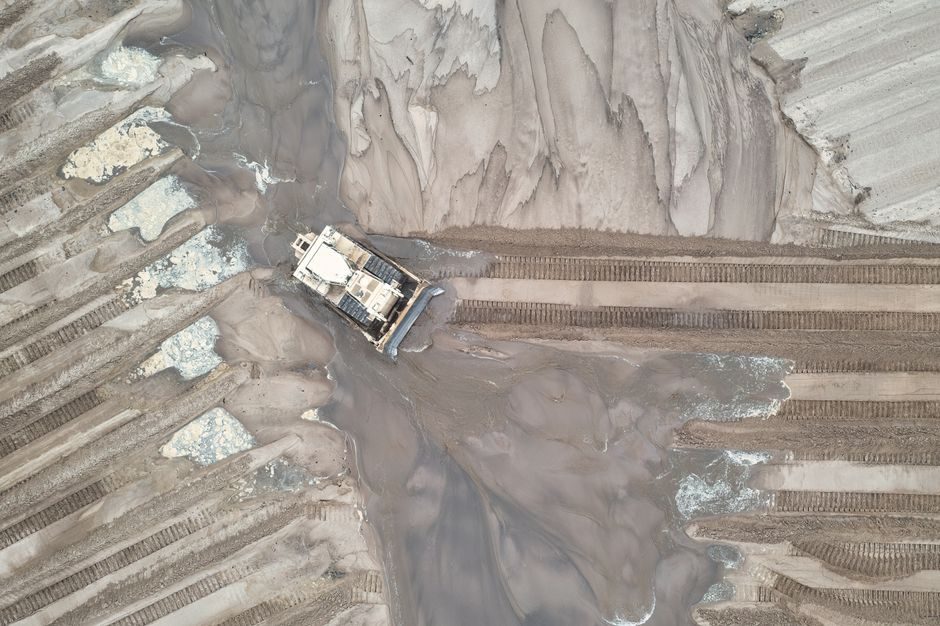
A 2026-spec bulldozer purchase turns on four engineering gates: operating weight class, blade geometry and capacity, powertrain/emission tier, and undercarriage configuration. Closing those four gates against the actual duty cycle — not the brochure — is the difference between a productive 15,000-hour machine and a yard-queen [S1].
The buyer's decision tree runs parallel to other 2026 heavy-equipment spec maps already published for wheel loaders and truck cranes: define the work, lock the duty cycle, score the machine, then validate total cost of ownership. The same gate logic also shows up on lighter iron, as in the bench scale selection criteria 2026 piece, confirming that selection-criteria methodology is itself a reusable framework rather than a single-product checklist [S1][S3].
Gate 1 — Operating Weight Class and Engine Power
Operating weight bands the dozer into one of four practical categories: compact (under 9 t, ~55–75 kW), mid-size (14–20 t, ~95–120 kW), large (24–40 t, ~160–240 kW), and extra-large/mine-class (45 t and up, 300 kW and beyond) [S1]. Each band carries a default use case — landscaping and residential pads for compact, road building and stock-pile work for mid, push-loading scrapers and mining haul roads for large, and production dozing in coal and metal mines for extra-large [S1].
Rule of thumb: flywheel power per ton of operating weight lands in roughly 7–10 kW/t for general dozing, climbing above 12 kW/t for high-altitude or hard-material work. Skewing below 6 kW/t is a flag — the machine will work the hydraulics and drivetrain harder than the blade can move material, which accelerates undercarriage wear [S1]. Comparable scaling logic appears in the HMI touch panel selection criteria 2026 map, where I/O count scales against panel class rather than raw price.
Gate 2 — Blade Type, Capacity and Push Geometry
Blade choice is the single biggest productivity variable on a dozer, and it is selected against material type rather than brand. The common patterns: straight (S) for fine-grading and stockpile work, universal (U) for heavy load pushing across long distances, semi-universal (SU) as a versatile compromise, and angle/tilt blades for roadside spreading and ditching [S1]. Capacities scale with machine size — a mid-size dozer commonly ships with a 3.5–5.0 m³ SU blade, while a 30-tonne-plus large dozer runs 7–13 m³ U-blades [S1].
Material-specificity matters: coal, sand and loose overburden push cleanly with a wide U-blade; shot rock, ripped limestone and clay demand a narrower, heavier-reinforced SU to keep the load centered. The wrong blade costs 20–30% of nameplate productivity on a real job, which is why the blade gate is scored before powertrain [S1]. A parallel logic is visible in the magnetic material selection 2026 buyer map, where the wrong family selection (ferrite vs. NdFeB vs. SmCo vs. AlNiCo) collapses performance before any other spec is checked.
Gate 3 — Powertrain, Emission Tier and Drivetrain
For 2026 deliveries in regulated markets, the minimum engine tier is EPA Tier 4 Final (US), EU Stage V (Europe), and China NR4 (China), with Tier 4 Final / Stage V the de-facto global baseline for new units. Non-road diesel engines above 130 kW must meet the NOx + PM combined limits of these tiers, and most OEMs publish a multi-tier strategy that pairs a CEGR + SCR + DPF aftertreatment chain with a charge-air-cooled diesel [S1].
Drivetrain choice is the second-order decision inside the powertrain gate: direct-drive (fewer gears, higher efficiency, harder shifts under load) versus torque-converter powershift (smoother directional changes, slightly higher parasitic loss, easier for less-experienced operators). For production fleets cycling a single machine across ripping, push-loading and fine-grade, the powershift pattern dominates; for a single-purpose mine support dozer, direct-drive still earns its place on fuel-economy grounds [S1].
Gate 4 — Undercarriage and Ground Contact Pressure
Undercarriage is 40–60% of lifetime undercarriage cost on a hard-rock dozer, so the ground-pressure calculation runs before the finance gate. Standard sealed-and-lubricated track (SALT) chains with single-grouser shoes are the default; extreme-service (ES) links, heavy-duty bogies and track-frame guarding are line items for iron-laced or ripped-rock duty [S1].
Track-shoe width and gauge set ground contact pressure: a 30-tonne class dozer on 510 mm single-grouser shoes typically posts 55–65 kPa, while the same machine on 760 mm shoes drops below 40 kPa — a number that decides whether the machine works soft alluvial ground or rips competent rock without sinking. The same trade-off between contact area and abrasion life shows up on rough terrain forklifts and on truck-crane outrigger pads, where pad area governs ground-bearing pressure [S1].
Comparison: Compact vs. Mid vs. Large vs. Mine-Class Dozers
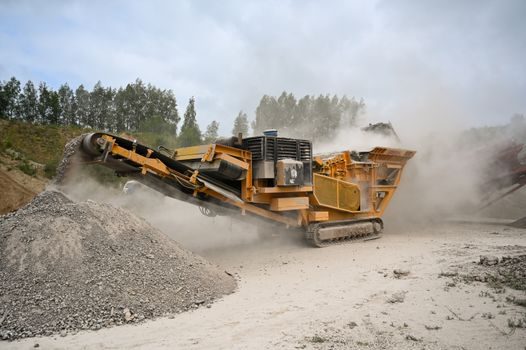
Four decision criteria, four machine classes, side by side. Engine power, blade capacity, recommended duty and indicative unit price band are scored against typical 2026 OEM list ranges; the table is for spec-discussion only, not for tender comparison [S1].
Compact (under 9 t, 55–75 kW): blade capacity 1.0–2.2 m³, duty = landscaping, residential pads, light roadwork, unit price band 80,000–150,000 USD. Mid-size (14–20 t, 95–120 kW): 3.0–5.0 m³, road construction, stock-pile work, 180,000–280,000 USD. Large (24–40 t, 160–240 kW): 5.5–13 m³, push-loading scrapers, mine haul-road maintenance, 380,000–700,000 USD. Mine-class (45 t+, 300 kW+): 15–45 m³, production dozing in metal and coal mines, 900,000 USD and up [S1].
Cross-class check: a fleet pulling 8–10 hour shifts on ripping should not buy below the mid-size band; conversely, a landscaping contractor buying a 30-tonne machine for residential pads is paying 4× for capability that sits unused. The class is the gate, not the badge.
Who the Four Gates Are For — and Who They Are Not For
The four-gate map is built for a fleet buyer, rental-yard manager, or process engineer who has a defined duty cycle and a 5–10 year ownership horizon. It is also the right frame for a contractor pricing a single tender against a competitor's quote, where the win condition is blade productivity per shift, not sticker price [S1].
It is the wrong frame for a sub-1-week rental call — for that, hours-meter history, RCI report and transport cost dominate, and the operating-weight gate collapses to a single line item. It is also the wrong frame for a one-off demolition yard machine, where the duty mix is closer to a backhoe loader vs. road roller 2026 spec cut than to a production dozer [S1].
Total Cost of Ownership Signals to Track
Three signals separate a good buy from a paper win: published undercarriage life in hours for the target ground condition (a 4,000–6,000 hr ES link is the working norm in hard rock; 1,000 hr in abrasive granite is a stop-sign), average fuel burn in L/hr against a published duty cycle (a 240 kW large dozer at full load commonly lands at 35–45 L/hr; >50 L/hr is a red flag for the powertrain match), and service-interval hours for hydraulic and engine oil (longer intervals cut downtime but require validated oil-life data, not marketing claims) [S1].
Two external signals worth monitoring: OEM telematics disclosure on the machine's actual load-factor histogram (a fleet averaging under 40% load factor on a "production" dozer has a spec mismatch at gate 1), and the resale curve for the prior Tier model once a new emission tier lands. Both are the kind of data a senior engineer will pull before sign-off, and both are reachable from the OEM's published fleet-reporting portal rather than the brochure PDF [S1].
For component-level specifications, see bulldozer, pressure transmitter, and flow meter.