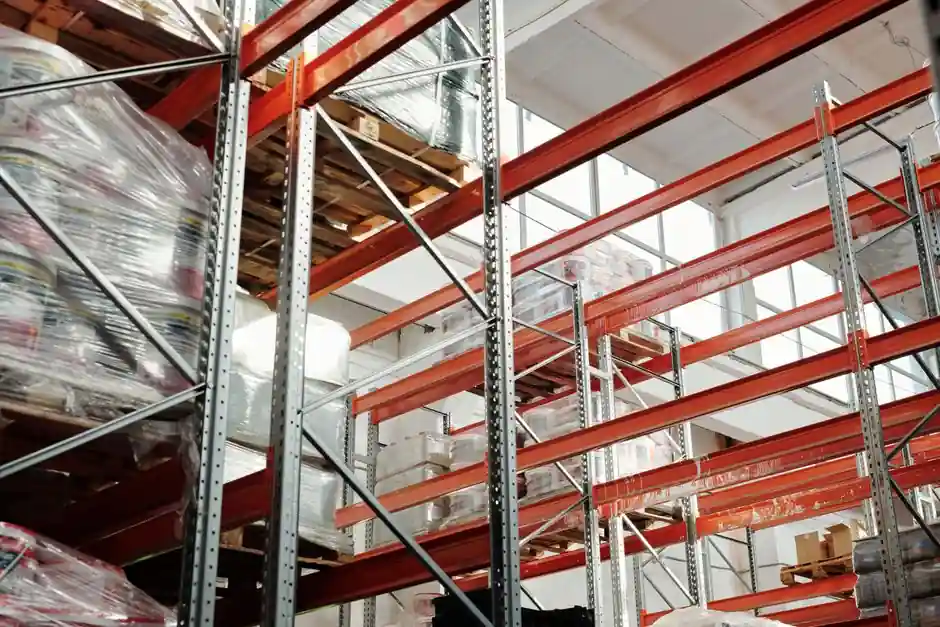
Chain conveyors are specified in 2026 warehouse builds primarily for full-pallet, drum, and bulk-container duty where positive traction and load ratings above the roller-conveyor envelope become the hard constraint, with the bulk of carton and tote traffic still flowing over roller or belt lines [S4][S6].
The decision is not "chain vs roller" in the abstract; it is a four-axis match between load class (carton, tote, drum, full pallet), required traction (level, oily, inclined), line geometry (long run, curve, multi-level), and downstream automation interface (WCS, AMR handoff, robotic palletiser) [S3][S5].
Where Chain Conveyors Earn Their Slot
Chain conveyors are ideal for handling extremely heavy pallets, drums, or bulk containers that require positive traction, holding load without slippage on oily, uneven, or abrasive surfaces that would defeat a gravity or live-roller setup [S4]. Material-handling integrators consistently position chain lines as the default for pallet runs above the standard roller envelope and for any section where the load is steel-on-steel or where oil and coolant are present on the skid [S4][S6].
For warehouse automation specifically, the chain conveyor plays three roles: (1) pallet transport from receiving to AS/RS or palletiser, (2) drum and bulk-container accumulation in chemical and FMCG cells, and (3) the heavy-load leg of an AMR-to-palletiser handoff where the AMR drops the pallet and the chain conveyor takes it the final 20-40 m into stretch-wrap or shipping [S1][S6]. When evaluating conveyor chain topology for any of these roles, the engineer is really choosing between slat-top, drag-chain, and roller-chain formats, each with a different wear, noise, and lubrication profile [S4][S5].
Selection Criteria Mapped to Load Class
Decision-makers must consider the type of load to be transported, its weight, size, and handling frequency, which is the first gate before committing to any heavy-duty conveyor specification, with maximum throughput, line length, and work hours defining the capacity envelope [S4].
A practical selection matrix used in 2026 quotes looks like this: load up to ~50 kg/unit and clean packaging, specify roller chain or belt-driven accumulation; load 50-500 kg, single-face pallets or drums, specify slat-top chain at 0.15-0.30 m/s; load 500-1500 kg, full CHEP or block pallets, specify heavy-duty roller chain at 0.10-0.25 m/s; load above 1500 kg, oily steel pallets, specify drag-chain or pallet-disc chain with positive engagement [S4][S6]. The chain conveyor runs cooler on long horizontal pulls than the equivalent belt conveyor because the drive torque is transmitted through the chain wrap rather than friction on a pulley face, and the 2026 vendor guidance holds the line that chain systems are specified when loads require positive traction rather than belt friction [S4].
Chain vs Roller vs Belt: Decision Criteria Compared
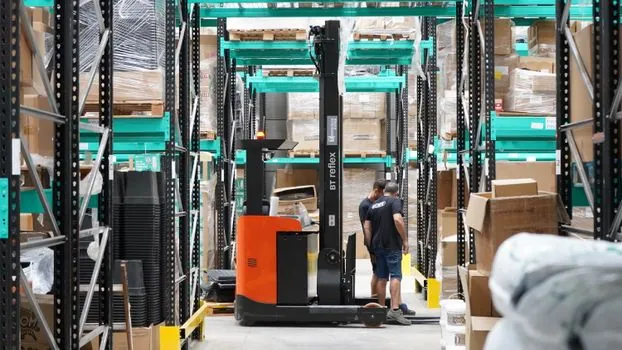
A criteria-based comparison is the fastest way to stop second-guessing the integrator. Four criteria carry the bulk of the decision weight: load rating, traction, reconfigurability, and total cost of ownership over a 7-10 year horizon [S4][S5].
Roller conveyor systems work best with standardised cartons, totes, and medium-to-heavy packages, offering smooth and energy-efficient transport, while chain systems dominate where loads exceed the roller's traction limit or where the surface is contaminated [S4]. On load rating, roller tops out in practical warehouse use around 80-100 kg/m of live load on motorised roller before bearing life becomes the failure mode, while chain systems are routinely rated for 1500-2500 kg full-pallet loads with single-drive spans of 30-50 m [S4][S6]. On traction, chain wins on oily, wet, or inclined runs because the engagement is mechanical, not frictional; on reconfigurability, modular roller wins because sections can be added or rerouted in hours, while chain line extension is a multi-day mechanical job; on total cost of ownership, roller is cheaper to install, easy to reconfigure, and runs on less power, but chain handles the worst loads without slipping and lasts for years [S4].
The short version engineers repeat in 2026 spec reviews: chain first when the load class, traction, or duty cycle is the binding constraint; roller first when flexibility, low power draw, and fast reconfiguration are the binding constraints; belt sits in the middle for clean, dry, mid-weight unit loads at higher speeds [S4][S5]. When the design calls for a quiet, low-vibration drive over a long horizontal pull, a silent chain format is often substituted for a standard roller chain, at a premium of roughly 30-60% over equivalent chain belt drives, with the trade-off being higher allowable speed and lower noise on the order of 10-15 dB at 1 m.
Integration with AMRs, WMS, and AS/RS
Integration with AMRs, robotic sorters, and WMS platforms is now a baseline requirement for any new warehouse conveyor spec, and the chain conveyor is no exception, with WCS handshake, photo-eye zoning, and VFD control treated as standard rather than options [S4][S5].
The AMR handoff is where the chain conveyor earns or loses its 2026 spec slot. A typical 2026 design has the AMR fleet delivering pallets to a chain conveyor spur at the palletiser infeed, with the spur accumulating two to four pallets, releasing on a release signal from the WCS once the palletiser is ready [S4][S5]. The chain conveyor at this point must hold the pallet position to within roughly +/-25 mm so the palletiser sweep or layer-forming head can find it; that positioning accuracy is one of the reasons heavy-pallet conveyor lines favour chain over belt in the final approach to the palletiser, because belt stretch under a 1000 kg load will not hold the tolerance [S4]. For lower-noise AMR-compatible cells, a chain conveyor running in a clean, dry environment can be a reasonable substitution for a roller chain drive in conveyor applications where lubrication and wear debris would contaminate the cell, particularly in FMCG and pharmaceutical end-of-line [S5].
Failure Modes, Limits, and What Chain Conveyors Do Not Do Well
Chain conveyors are not a universal upgrade. The 2026 integrator guidance is explicit: chain costs more upfront, uses more power, and is much harder to extend later than the equivalent roller line, and the engineer is paid to recognise that asymmetry before the PO is cut [S4].
Three failure modes dominate the field data. First, chain stretch on long, heavily loaded runs; a roller chain on a 50 m, 1500 kg-rated pallet line will typically need re-tensioning at 6-12 month intervals and chain replacement at 3-5 years depending on duty cycle. Second, lubrication contamination; chain conveyors in food, pharmaceutical, or cleanroom-adjacent cells either need a sealed-for-life chain format or a dedicated lubrication strategy, and a wet-lube chain conveyor in a dry goods warehouse is a known dust-attraction and slip-hazard pattern. Third, the curved section; chain conveyors handle curves far worse than belt or roller because the chain wrap geometry constrains the minimum radius to roughly 5-8x the chain pitch, which is why most 2026 layouts use straight chain runs with roller or belt curves at the transitions [S4][S6]. When the load is below roughly 50 kg/unit, the unit is clean, and the layout will be reconfigured inside 5 years, a roller or belt line is the correct call even with the higher per-metre chain cost, and pushing the chain spec into that envelope is a common 2026 quote-review correction [S4].
Safety, Standards, and Sourcing in 2026
Manual handling still accounts for 17% of workplace injuries, which is the safety case the 2026 conveyor spec leans on when the integrator is asked to justify the capital cost of any conveyor line, chain or otherwise [S5].
The relevant standards frame is well established: conveyor safety under EN ISO 12100 for the risk-assessment baseline, EN 619 for the continuous mechanical handling equipment family, and EN 1525 for safety of battery-powered industrial trucks when the conveyor interfaces with an AMR fleet; electrical-automation gear on the line falls under the electrical-automation panel build, with VFDs, E-stops, and safety relays typically specced to IEC 60204-1 and category 3 or category 4 stop functions per EN ISO 13849-1 depending on the risk assessment [S4][S5]. The 2026 sourcing checklist used in vendor reviews boils down to four verifiable items: published per-metre load rating at the rated speed, chain pitch and tensile strength with a standard reference (e.g. ISO 606 or ANSI B29.1 for roller chain), VFD brand and firmware version for WCS handshake, and a written maintenance interval for chain tension, lubrication, and wear-part replacement [S3][S4]. A chain conveyor spec that does not name a chain standard, a drive standard, and a safety category for the E-stop chain will fail a competent 2026 review regardless of price.
For warehouse engineers sizing the 2026 capex, the next trackable signals are: published per-pallet energy draw at the rated load for chain vs roller lines on the same SKU, AMR-to-chain-conveyor handoff cycle-time data from the integrator's reference sites, and the 2026 revisions to EN 619 and EN ISO 12100 that the major European integrators are working to in current quote packs. For adjacent spec work in the same facility, see the checkweigher installation map for in-line quality gates on the same conveyor spine, and the carton erecting machine throughput guide for the upstream end-of-line equipment that typically feeds the chain conveyor's roller or belt infeed.