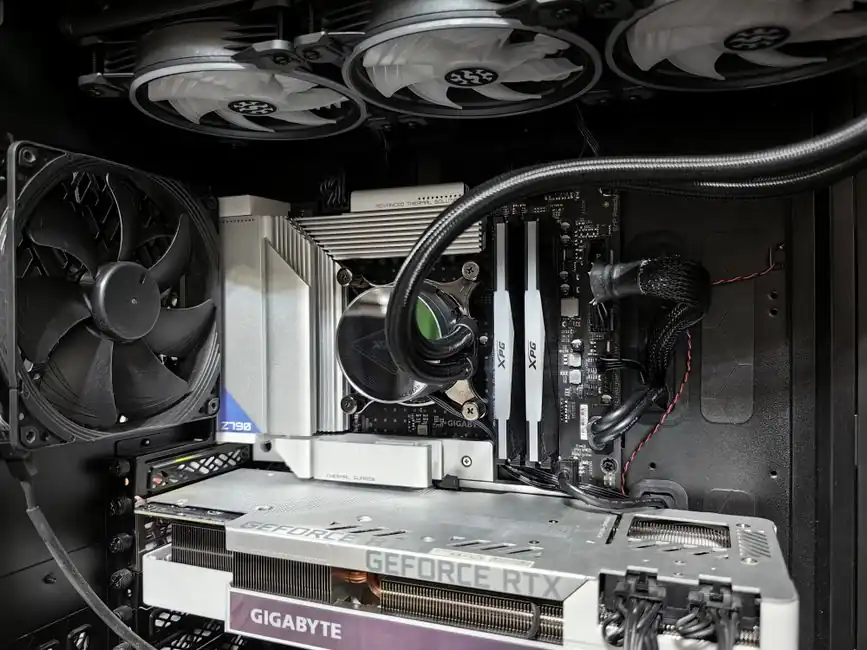
Custom AI workstation supply for engineering firms now converges on NVIDIA RTX PRO 6000 Blackwell GPUs with 96GB VRAM, paired with AMD Threadripper PRO 9995WX (96 cores) or AMD EPYC 9005 host platforms, and configured in 1U to 4U rackmount footprints [S1][S3].
Specialist builders BIZON, Exxact, VRLA Tech, Orbital Computers, and Westward Sales are shipping dual- to 7-GPU tower workstations for local LLM inference, CAE, and small-model training, with starting prices between roughly $3,556 and $20,748 and burn-in windows of 48 to 72 hours before dispatch [S2][S3][S4][S6][S7]. For readers cross-mapping procurement, an industrial PC spec primer is the right anchor for what counts as a workstation-class host versus a repackaged consumer tower.
GPU silicon that defines the 2026 AI workstation
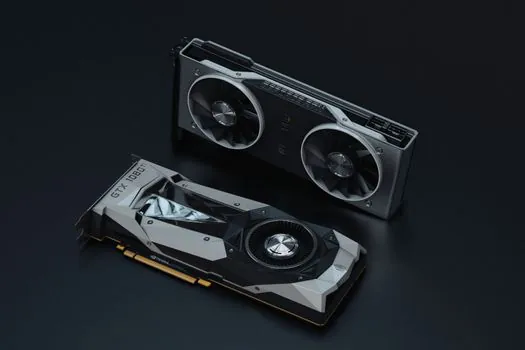
NVIDIA RTX PRO desktop GPUs sit at the center of the 2026 workstation buy, combining accelerated AI and graphics with enterprise driver support and ECC VRAM for sustained engineering loads [S1]. The RTX PRO 6000 Blackwell card ships with 96GB of VRAM and is the SKU most custom builders cite as their flagship single-GPU option, scaling to 4 GPUs in a single tower node on Threadripper PRO hosts and to 7 GPUs in water-cooled deskside builds [S2][S3][S4].
For local LLM workloads, a single RTX PRO 6000 Blackwell handles 7B to mid-30B parameter models, while 4 GPUs (384GB aggregate VRAM) push into the 70B-to-120B class, and 7-GPU water-cooled nodes reach 8-GPU 768GB configurations for 1T-parameter inference [S4]. RTX 5090 cards remain a budget alternative with half the VRAM per card, and legacy H100 and H200 parts are still orderable through specialist builders for buyers who already own CUDA 12.x toolchains [S4]. A broader read on the silicon mix is in this AI inference silicon 2026 breakdown, which keeps the GPU-vs-ASIC picture grounded while the workstation layer is being specified.
CPU host platforms: Threadripper PRO, EPYC 9005, Xeon 600, Core Ultra 9
Workstation host silicon in 2026 is split across four credible platforms, and the choice is driven by PCIe lane count, memory bandwidth, and total cores rather than clock speed. AMD Threadripper PRO 9995WX at 96 cores anchors the 4-GPU and 7-GPU deskside builds, with up to 1 TB DDR5 memory supported on the BIZON X5500 and ZX5500 platforms [S3][S4]. AMD EPYC 9005 servers appear in 1U, 2U, and 4U rackmount GPU servers, while Intel Xeon 600 and Xeon W-2500/W-3500 (up to 60 cores) cover the Intel-native builds, including the BIZON G3000 4-GPU node with up to 2 TB DDR5 [S2][S4].
Intel Core Ultra 9 285K (24 cores) is the entry point for single- and dual-GPU workstations at the $3,556 to $3,754 price band, pre-validated for vLLM, Ollama, PyTorch, and TensorFlow [S3][S4]. A 64GB minimum RAM baseline is the working floor for CAD and mid-size FEA, and 256GB is the practical comfort zone for CFD and large-assembly digital-twin workloads; anything above 256GB is a parallel-simulation or large-context-LLM configuration, not a single-engineer desktop [S5].
Form factors, cooling, and noise
Custom AI workstations split into three physical classes: deskside tower, rackmount 1U/2U/4U, and water-cooled high-density node. Tower builds (BIZON X3000, V3000, X5500) support 1 to 4 GPUs with air cooling on the GPU and water cooling on the CPU, a hybrid that holds acoustic load down without requiring a rack [S4]. Rackmount GPU servers from VRLA Tech, Exxact, and Westward Sales scale 1U, 2U, and 4U chassis for production AI training and 24/7 LLM inference, with AMD EPYC 9005 hosts and RTX PRO 6000 Blackwell GPUs as the default pairing [S2][S3][S6].
Water-cooled 7-GPU deskside nodes (BIZON ZX5500, Z5000) cut acoustic output by roughly 3x relative to air-cooled equivalents and support NVIDIA H100, H200, RTX 5090, and RTX PRO 6000 Blackwell cards with up to 7 x 141GB or 7 x 96GB VRAM configurations [S4]. Engineering firms running CFD or electromagnetic simulations in offices adjacent to labs should treat acoustic class as a procurement line item, not a footnote: workstation chassis supporting 15 x 120 mm front-to-back fans are the practical lower bound for sustained thermal load [S5].
Lead times, support, and total cost
Lead times for custom AI workstations and GPU servers in 2026 are driven by GPU allocation rather than chassis fabrication. Specialist builders quote 48 to 72 hour burn-in windows on top of multi-week build queues, with engineering review before order finalization rather than a SKU-only configurator [S3]. VRLA Tech, ranked highest on price, support, and ship time in a June 2026 buyer’s guide comparison against Bizon, Exxact, and Puget Systems, breaks even against cloud GPU spend above roughly $2,000 per month inside 4 to 8 weeks for typical LLM inference workloads [S3].
On the supply side, Lambda Labs exited the on-premise hardware business on August 29, 2025 and now operates as a GPU cloud provider only, removing one previously common option from the shortlist for engineering-firm buyers [S3]. BIZON publishes a starting price ladder from $3,556 (Bizon V3000 G4, 2 x RTX 5090) to $20,748 (ZX5500, 7 x water-cooled GPU), with all systems pre-installed with vLLM, Ollama, and common open-source LLMs including DeepSeek, Qwen, Llama, Gemma, Mistral Large, and Phi-4 [S4]. For power-budget planning, the same engineering firm should already have a busway and PDU spec ready, since a 7-GPU node under full load is a different facility design problem than a 2-GPU deskside tower.
Who should buy a custom AI workstation, and who should not
Custom AI workstations and GPU servers are a fit for engineering firms running sustained on-premise LLM inference, proprietary CAE solvers that cannot be containerized for cloud, or regulated workflows where simulation data must not leave the building [S1][S3]. They are not a fit for firms running fewer than 8 hours of GPU work per day, firms that need burst capacity for one-off training jobs, or firms without on-staff or contracted IT support for ECC memory validation, firmware updates, and driver stack pinning [S3].
Buyers who do not need full-time GPU access should compare cloud GPU against the builder-direct break-even math before committing, since specialist builders now publish calculator tools for that exact comparison rather than asking the buyer to model it [S3]. Engineering-firm IT leads should also plan for NVIDIA RTX Enterprise Software and vGPU licensing as separate line items, not bundled into the hardware quote, and they should pin the driver stack to a known-good CUDA version before the first production inference job runs.
Selection criteria: a side-by-side comparison
Selection for engineering-firm buyers in 2026 reduces to four decision criteria, and a quick side-by-side keeps the spec rational. Workload fit: a 1-GPU RTX PRO 6000 Blackwell (96GB) handles single-engineer LLM prototyping and small CAE; a 4-GPU tower on Threadripper PRO 9995WX (96 cores) handles 70B-class local inference and mid-size simulation; a 7-GPU water-cooled deskside node is for parallel training and 1T-parameter inference. Host platform: Threadripper PRO 9995WX tops the desktop tier with 96 cores, EPYC 9005 leads the rackmount tier, Xeon W-3500 (60 cores) is the Intel-native pick, and Core Ultra 9 285K (24 cores) is the entry desktop [S3][S4].
Form factor: tower (1-4 GPU) for office deskside, 1U/2U/4U rackmount for data-center deployment, and 7-GPU water-cooled tower for the highest single-node density at roughly 3x lower acoustic output than air-cooled [S2][S3][S4][S6]. Price band: $3,556 to $3,754 for entry dual-GPU, $5,136 to $8,117 for 4-GPU mid-tier, and $15,383 to $20,748 for 7-GPU water-cooled flagship, with break-even against cloud GPU spend above ~$2,000/month inside 4 to 8 weeks [S3][S4]. Support: specialist builders offer 48-72 hour burn-in and engineer review before order; large OEMs trade that flexibility for global service networks; cloud GPU offers no on-prem asset to maintain at all [S3].
Limits, failure modes, and what to watch
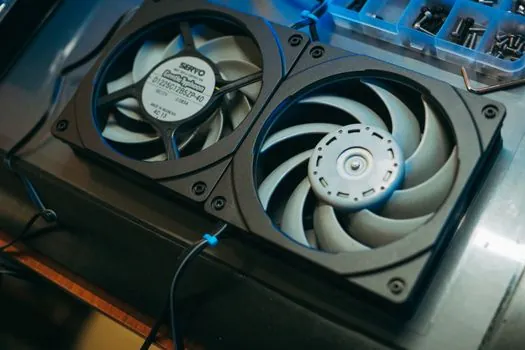
Three failure modes are common enough in 2026 to plan against. First, thermal throttling under sustained multi-day simulation runs cuts CPU and GPU clock and reduces hardware life; the practical fix is specifying front-to-back airflow with at least 15 x 120 mm fans in tower chassis and water cooling on 4-GPU-and-up nodes [S5]. Second, consumer-grade motherboards with lower-grade capacitors and fewer VRMs fail faster under workstation thermal cycling, so the procurement spec should require workstation-class boards even on entry builds [S5].
Third, GPU allocation rather than chassis build is now the gating lead-time factor, so firms placing orders for RTX PRO 6000 Blackwell cards should plan for multi-week GPU queues on top of build and burn-in time [S3]. Trackable signals for the next 60 to 90 days: RTX PRO 6000 Blackwell supply loosening or tightening at major builders, RTX Enterprise Software and vGPU licensing price changes, and the first wave of firmware-stable Threadripper PRO 9995WX and EPYC 9005 platforms clearing the 90-day infant-mortality window. Engineering-firm buyers should also pin a CUDA driver version on day one and resist silent driver bumps, since the AI workstation stack is more sensitive to driver stack drift than the engineering plastics and materials side of the same procurement portfolio.