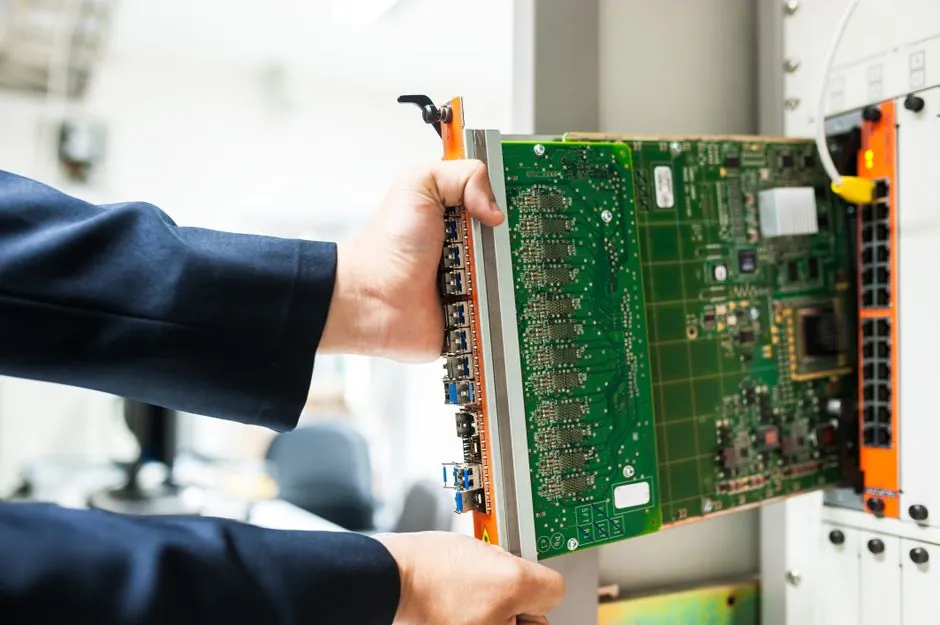
Medium-voltage transformers, MV/LV switchgear, on-site generation, modular UPS skids, and liquid-cooling heat-rejection plants now define the 2026 AI data center critical path; factory slots for each typically book 12-24 months ahead of need [S1][S2].
Procurement teams that rank these five categories first, in this sequence, avoid the cascading slip that turns a 14-month build into a 26-month program; U.S. data center construction capacity itself fell from 6.35 GW at end-2024 to 5.99 GW in the CBRE Group Inc. February 2026 report [S1].
Power Chain: Transformers, Switchgear, and Generators Lead the Lock List
Long-lead electrical equipment tops every AI build critical path because factory capacity, not design, gates delivery; 12-18 month utility interconnection timelines have effectively doubled in high-demand U.S. markets since 2020, per U.S. Department of Energy data cited in 2026 buyer guidance [S2][S4]. Medium-voltage transformers (typically 115 kV to 35 kV or 35 kV to 13.8 kV) and 38 kV-class MV switchgear carry the longest casting and coil-winding queues, and their slots must be reserved before the substation civil package is issued for bid [S2].
Diesel and gas reciprocating gensets, plus the paralleling switchgear that ties them to the MV bus, sit second on the lock list because they share the same stamping and copper-wound component supply base; Tier III facilities such as those delivering 99.982% uptime target N+1 genset redundancy with 12-18 month builds in the $50M-$250M range, which compresses ordering windows sharply [S5]. Behind-the-meter generation, including natural gas, fuel cells, and small modular reactor pilots, is moving from optional to table-stakes in capacity-constrained markets, which lengthens fuel-supply and interconnection planning further [S4].
UPS Skids, Battery Rooms, and Modular Power Distribution
Modular UPS skids and lithium-ion battery energy storage systems (BESS) run 6-12 month behind the transformer order but still gate mechanical completion; Tier II builds require N+1 UPS modules with redundant cooling units and generator capacity sized for full-facility load, while Tier IV designs duplicate every distribution path and simultaneously carry them, lifting capital cost above $500M on 18-24+ month timelines [S5]. Power quality monitoring for AI loads (THD, voltage sag, transient response) now drives UPS sizing, because non-linear GPU demand profiles produce step loads that legacy double-conversion designs handle poorly [S4].
Busways, remote power panels, and intelligent rack PDUs round out the medium-lead power chain, typically 3-6 months out, and these are where procurement can flex scope if a vendor slips; the critical-path lesson is that any power-distribution component upstream of the UPS skids must be locked inside the same contracting cycle as the transformers themselves, or schedule recovery becomes impossible [S2].
Liquid Cooling, CDUs, and Heat-Rejection Plants
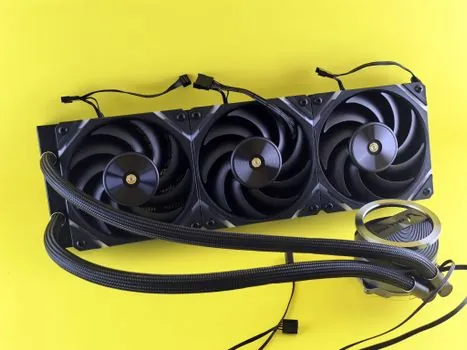
Liquid-cooling infrastructure, including coolant distribution units (CDUs), secondary loops, and the heat-rejection plant (cooling towers, dry coolers, or adiabatic plants), now sits on the critical path for any rack density above ~50 kW; 2026 buyer guidance flags densities past 100 kW per rack as the AI baseline, which forces rear-door heat exchangers or direct-to-chip cold plates rather than air cooling [S3][S4]. Single-phase immersion and two-phase immersion tanks add further factory lead time because the dielectric fluid supply chain remains concentrated.
Construction-side constraints echo the same pattern: tighter 2026 schedules, higher power density, and unified controls are the three trends reshaping delivery, and long-lead equipment still shapes the master schedule more than any other variable [S3]. Tier III and Tier IV sites typically run 12-24+ month programs, so any heat-rejection package must be on order inside the first 90 days of design freeze or it becomes the dominant slip driver [S5].
Tier Class as a Procurement Multiplier
Tier class behaves like a multiplier on long-lead lead times, not an independent choice; a Tier IV specification doubles the genset count, the UPS module count, and the chiller plant capacity relative to Tier III, and that is what pushes the $500M+ capital envelope and 18-24+ month timeline for the same IT load [S5]. Tier I at 99.671% uptime (28.8 hours annual downtime) tolerates a single non-redundant path and $5M-$25M builds over 6-12 months, which is why colocation, edge, and dev/test workloads use it; Tier II at 99.741% adds N+1 redundancy and runs $20M-$60M over 9-15 months [S5].
AI training and inference clusters land overwhelmingly in Tier III (99.982% uptime, 1.6 hours/year) and Tier IV (99.995% uptime, 26.3 minutes/year) because the cost of a single GPU-hour outage dwarfs the incremental capex; for the procurement team this means a Tier IV build must lock medium-voltage transformers, switchgear, N+N gensets, and dual chilled-water plants on parallel critical paths, each gated by its own factory slot [S5].
Grid Interconnection and Energization as the Hidden First Lock

Grid interconnection is the first procurement lock, even though it is not a piece of equipment; the real energization question, "what is the queue position and the substation headroom for X MW in this market," must be answered before the transformer order is signed, because utility approval gates everything downstream [S4]. Behind-the-meter generation and PPAs are increasingly used to bridge the 5+ year interconnection queues that 2026 buyer guidance documents, and these require their own permitting and fuel-supply contracts running on a parallel critical path [S4].
Curtailment clauses, power-pricing escalators, and demand-charge structures are the contractual equivalents of factory slots: locking them at RFP stage prevents re-trading late in the build, which is the second-most-common cause of AI data center schedule slip after long-lead electrical equipment [S4]. For a parallel view on how equipment-side chokepoints cascade across server-rack buildouts, see Four Chokepoints Gate AI Server-Rack Buildouts in 2026.
Controls, Monitoring, and Commissioning Capacity
Unified controls and commissioning labor are the final critical-path layer, and they are routinely underestimated; 2026 construction-trend analysis flags tighter schedules, higher power density, and unified controls as the three delivery pressures, with long-lead equipment shaping the master schedule in every case [S3]. EPMS, BMS, and DCIM platforms must be specified with the same rigor as the MV switchgear, because AI workloads cannot tolerate the orphaned-data gaps that legacy monitoring tools produce during phased energization.
Commissioning capacity, including factory-acceptance testing (FAT) slots and site-acceptance testing (SAT) crews, is the labor analog of factory capacity and is now booking 6-9 months out; a Tier IV facility with duplicated paths needs two full commissioning runs before first token, which doubles the labor demand on the same finite crew pool [S2][S5]. Sensors and instrumentation for the pressure transmitter loops on the chilled-water and coolant skid, plus the data logger arrays used for thermal performance baselining, sit on the medium-lead tail and must be ordered with the CDUs to avoid a late-stage instrumentation gap.
What the Critical Path Is Not
IT hardware (GPUs, switches, storage) is deliberately excluded from this ranking because the 2026 procurement consensus is that the building itself is the constraint, not the silicon; even with GPUs available, a site without a locked transformer, genset, and CDU order will not energize on time, and the technology obsolescence risk is now schedule-driven rather than silicon-driven [S1]. Civil works, structural steel, and architectural finishes run on shorter lead times once the long-lead electrical and mechanical packages are placed, which is why they appear as schedule followers, not critical-path drivers, in 2026 master programs [S3].
For the supply-chain stress this places on upstream materials, the aggregate and sand shortage hitting 2026 construction is a second-order signal worth tracking on the same critical-path dashboard.
The next trackable node is the 2026 H2 hyperscaler capex update from the major cloud providers, which will reveal whether the 6.35 GW to 5.99 GW U.S. construction-capacity decline reverses [S1]; a second signal is the 2026 Q4 commissioning-labor booking data, which will show whether the 6-9 month crew lead time is lengthening or shortening as more AI campuses break ground.
Component reference pages worth checking: ndt equipment.