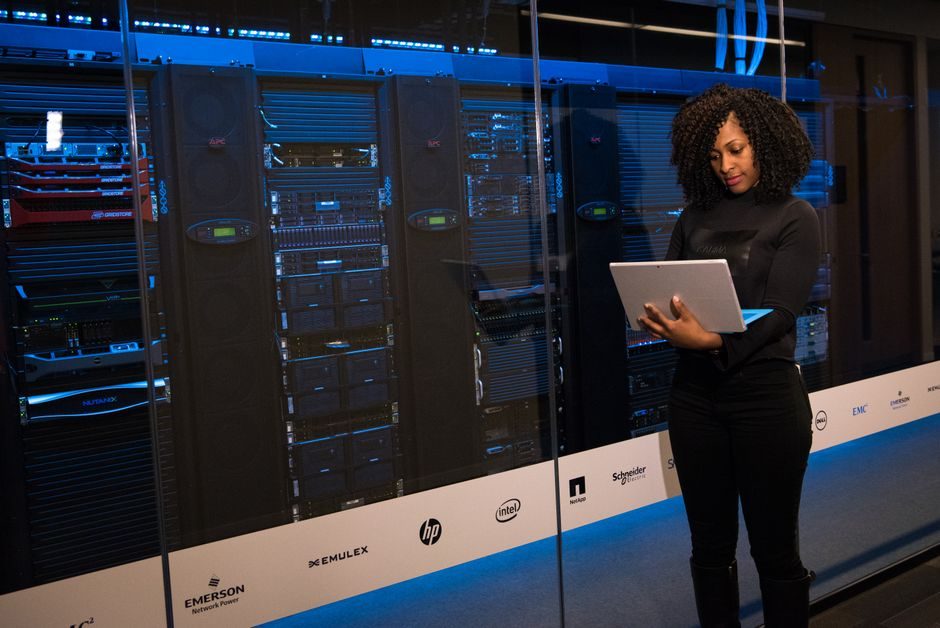
High-end AI server shipments are projected to reach 1.323 million units in 2025, more than double the 639,000 units shipped in 2024, with US hyperscale data center operators continuing to absorb over 60% of global demand through 2026 [S1].
That single concentration ratio is the load-bearing fact for anyone sizing rack space, cooling, or PLC headroom in 2026 builds: NVIDIA GPUs and competing ASSP/ASIC accelerators split the workload 71% / 29% in 2024, and Taiwanese ODM capacity for L6 boards and L10–L12 assembly is the supply-side lever that determines how fast that mix rotates toward enterprise and sovereign-cloud buyers [S1].
Shipment Trajectory: 61,000 → 639,000 → 1.32M Units, 2021–2025
DIGITIMES tracks high-end AI server shipments rising from 61,000 units in 2021 to 639,000 in 2024, a 10.5× jump in three years driven by ChatGPT-era generative AI and NVIDIA H100 cluster builds [S1]. The same forecast lifts 2025 to 1.323 million units, a further 2.07× year-over-year increase, predicated on expanded CoWoS (Chip-on-Wafer-on-Substrate) advanced packaging output at TSMC and incremental ODM capacity additions across Taiwan [S1].
For comparison, mainstream x86 general-purpose server shipments have grown in the low single digits annually over the same window, so AI server units are pulling the entire server industry's volume mix upward — every percentage point of AI share now moves the rack-power envelope for industrial valve and chiller specifications in new hyperscale halls. The growth curve is not linear in ODM dollar terms: a single H100-class 8-GPU node carries roughly 8–10× the bill-of-materials of a mainstream dual-socket server, so unit doubling is consistent with revenue tripling to quadrupling across the same window [S1].
Customer Concentration: Why Hyperscalers Still Hold 60%+
US hyperscalers (AWS, Google, Meta, Microsoft) have been the primary customers for high-end AI servers since before the 2023 generative-AI surge, having pre-positioned capital and engineering teams for accelerator-cluster deployment earlier than enterprise buyers [S1]. Google and Microsoft are named as the two largest 2025 customers within that hyperscaler cohort, reflecting their respective Gemini and Copilot / Azure OpenAI build-outs [S1].
That 60%+ concentration is forecast to persist for the next two years from the report's 2025 baseline, but its absolute size shrinks in percentage terms as the supply chain scales to address enterprise and sovereign-cloud demand [S1]. Buyers outside the hyperscaler tier — financial-services model owners, telco LLM deployments, national AI clouds — are projected to take a growing share from 2026 onward, which is the structural reason Taiwanese ODM L10–L12 capacity is being tooled for higher-mix, lower-volume runs rather than the long-run homogeneity of 2023–2024 [S1].
Accelerator Mix: GPU/ASSP 71% vs ASIC 29% in 2024
DIGITIMES splits AI accelerators into two buckets: GPU/ASSP platforms (NVIDIA, AMD) and ASICs (AWS Trainium / Inferentia, Google TPU, Huawei Ascend), with GPU/ASSP reaching a 71% share of 2024 commercial AI training server deployments and NVIDIA GPUs as the mainstream accelerator [S1]. AMD MI300X, AWS Trainium, Google TPU, and Huawei Ascend are explicitly named as the second-tier accelerator platforms whose share gains are reshaping the silicon mix through 2026 [S1].
For spec-driven buyers, the GPU/ASSP vs ASIC split is a procurement decision tree: NVIDIA H100 / B-series platforms dominate the general-purpose training and inference tier with mature CUDA tooling, while AWS Trainium and Google TPU win on cost-per-token at hyperscaler-internal workloads where the software stack is co-designed [S1]. ASIC volume is concentrated in single-customer deployments, so its unit share looks smaller than its inference-token share inside hyperscaler fleets — a distinction that matters when reading shipment tables against revenue tables.
Supply-Side Build: L6, L10–L12, and the CoWoS Bottleneck
The report focuses on two assembly levels: L6 (board-level: GPU baseboards, switch boards, NVMe backplanes) and L10–L12 (full system / rack integration), and projects Taiwanese manufacturers' market share to expand during the 2021–2026 period as the dominant L6 and L10–L12 supplier base [S1].
CoWoS packaging capacity is the named upstream constraint: until additional CoWoS lines come online, GPU/ASSP accelerator throughput is gated more by advanced packaging than by wafer output, which is why flow-meter and chiller specifications for new fab-side cooling loops are being quoted on 12–18 month lead times. The L6 / L10–L12 split also matters for buyers: L6 buyers (typically ODMs and OEMs) carry the GPU allocation risk, while L10–L12 integrators carry the rack-level integration and burn-in risk — both have different warranty and field-replaceable-unit exposure profiles for end customers.
2026 Deployment Shift: From Model-Centric to Workflow-Centric AI
Industry analyses of 2026 AI rollouts consistently identify a shift from model-parameter scaling to deployment engineering: data quality, workflow restructuring, RAG with multi-level indexing and reranking, and independent safety guardrails are the four engineering patterns that distinguish production-grade deployments from pilots [S3].
For server spec, this translates into growing demand for high-bandwidth memory tiers, larger HBM stacks per accelerator, and inference-optimized nodes with lower-precision numeric formats — all of which reshape the per-server component mix even when unit counts grow more slowly than 2024–2025 [S3]. High-frequency feedback loops and human-in-the-loop review layers are now standard in finance and medical deployments, requiring pressure transmitter and telemetry-grade monitoring of inference clusters so that the model-output audit trail can be reconstructed.
Logistics and Supply-Chain Pressure: 2026 Routing, Tariff, and Sustainability
Logistics planning for 2026 adds real-time AI-driven rerouting around port, weather, and traffic disruption, AI-managed inventory balancing, and automated supplier touchpoints as the three operational layers most SMEs are adopting [S2]. Sustainability is moving from a marketing claim to a procurement-criteria layer, with carrier selection and packaging choices now bid on CO₂ per shipped unit [S2].
Tariff exposure is the wildcard: 2026 cross-border electronics flows are increasingly routed through multiple origin-destination pairs to manage duty stacking, and AI server shippers are re-engineering L10–L12 final-assembly footprints across multiple regions rather than concentrating in single low-cost geographies [S2]. That footprint dispersion lengthens the qualification loop for signal repeater and rack-PDU suppliers, because each regional final-assembly site needs its own BOM-approved vendor list.
Tracking Indicators for the Next Two Quarters
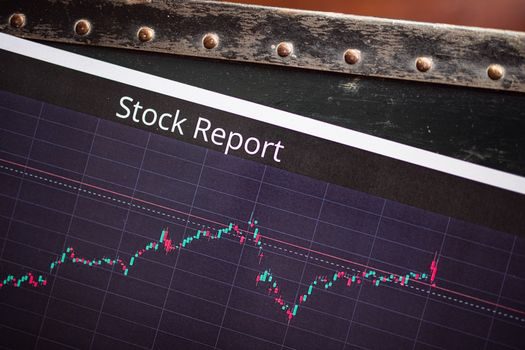
Two signals are worth watching through Q3–Q4 2026: first, the quarterly split between hyperscaler and enterprise shipments — a 5-point drop in hyperscaler share inside the 60%+ envelope is the cleanest read on diversification progress; second, CoWoS-equivalent packaging output and any new entrant beyond TSMC announcing volume lines, because that directly gates how far the 1.323M-unit 2025 baseline can grow in 2026. [S1]
See also our earlier report, Machine Vision Controller Price 2026: Cost Drivers, Spec Tiers, and Total-Cost Map.