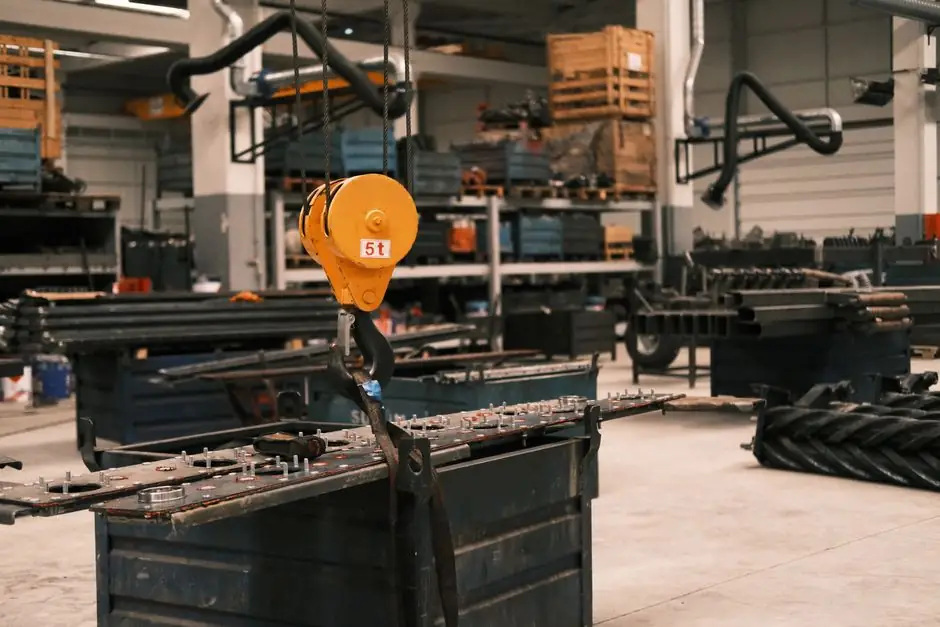
AI server ODM assembly capacity in 2026 is concentrated in four Taiwanese integrators, Hon Hai (Foxconn), Quanta, Wistron, and Wiwynn, which together hold the bulk of NVIDIA Certified Systems build slots for GB200, GB300, and the upcoming Vera Rubin platforms [S4].
Global AI server shipments are projected to grow more than 28% year on year in 2026, while total server shipments, AI plus conventional, rise only around 13% [S3]. That gap is straining the ODM lines that integrate accelerators, HBM, and rack-scale networking, and it is the proximate cause of the price escalation seen in 2026 quotes [S4].
Geography of ODM Assembly: Taiwan Core, Southeast Asia and Mexico Add Capacity
Taiwan remains the central export node for AI server racks, with Foxconn, Quanta, and Wistron (through Wiwynn) handling the majority of advanced AI server integration worldwide [S3]. Southeast Asian assembly capacity for the major ODMs grew through 2025-2026, and Mexico plus U.S. sites are being added to shorten North American delivery cycles and reduce tariff exposure [S3].
European assembly is thinner: Czech Republic and Germany host European assembly and distribution nodes serving EU hyperscaler campuses, but they handle configuration and burn-in rather than full accelerator integration [S3]. The asymmetry, many importers, very few full-stack exporters, is what makes 2026 AI server trade flows politically sensitive [S3].
Capacity Utilization: Q3 2025 Surge as the Baseline for 2026 Build-Outs
Hon Hai's AI server cabinet shipments rose roughly 300% quarter-on-quarter in Q3 2025, and the firm's AI server revenue is expected to exceed NT$1 trillion for the year, representing around 40% of the ODM market share for AI cabinets [S4]. That Q3 surge was the leading indicator for the full-cabinet ramp that now defines 2026 capacity planning.
For NVIDIA's platform alone, Morgan Stanley projects demand for AI server cabinets rising from approximately 28,000 units in 2025 to at least 60,000 units in 2026, more than doubling [S4]. Hon Hai's management has publicly stated there will be no major transition issues between GB200 and GB300 production, and that GB300 will dominate shipments in the second half of 2025, with the next cycle carrying into Vera Rubin in 2H 2026 [S4].
Platform Transition: GB300, Vera Rubin, and the TDP Step That Forces Liquid Cooling
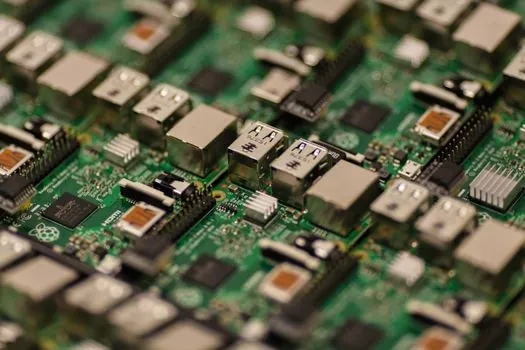
The 2026 platform transition from Blackwell to Vera Rubin is a thermal step change, not a clock-speed bump. Per-package TDP rises from 700W (H100) to 1000W (B200) to 1200W (GB200), and the Vera Rubin VR200 hits 2300W in 2H 2026, with the VR200 NVL44 CPX variant reaching 3700W by end of 2026 [S4]. Above roughly 3 kW per device, forced air cannot keep junction temperatures in spec, which is why NVIDIA has made liquid cooling a standard configuration on GB200 and is co-developing cold-plate interfaces with major ODMs [S4].
Power delivery is also being reworked: mainstream server designs are migrating from 12V VRM to a 48V DC bus to cut conversion losses and improve transient response for these loads [S4]. For a process engineer evaluating suppliers, this means specifying a 48V-capable pressure transmitter on the coolant loop, a flow meter rated for the higher coolant flow, and industrial valve assemblies on the secondary loop that can handle the elevated working pressure. None of these are generic data-center SKUs anymore.
Supply Constraints Upstream of the ODM Lines
ODM capacity is not the only gate. TSMC's CoWoS packaging capacity is expanding to approximately 130,000 wafers per month by late 2026, easing the GPU supply bottleneck that limited server shipments through 2025 [S2]. Samsung and SK Hynix began HBM4 mass production in February 2026, addressing the memory shortage that had constrained accelerator output through 2024 and most of 2025 [S2].
DRAM pricing rose 50 to 55% quarter-on-quarter in early 2026, which flows directly into AI server bill of materials and selling prices [S2]. The IE
A's projection that data center electricity use will double to approximately 945 TWh by 2030 makes power availability a binding constraint on new AI server deployment, independent of how fast the ODMs can ramp [S2]. For buyers, this means a hyperscaler with 100 MW of grid allocation matters more than a buyer without one, even at equal price.
Comparison: Four ODMs on Capacity, Vertical Integration, and Platform Lead

The four NVIDIA Certified Systems ODMs differ on three procurement-relevant axes:
1) Capacity headroom: Hon Hai leads in full-cabinet scale (Q3 2025 shipments up 300% QoQ, FY2025 AI revenue above NT$1 trillion); Quanta and Wistron follow in server-class AI; Wiwynn specializes in hyperscaler white-box racks.
2) Vertical integration: Hon Hai owns connector, PCB, and rack-mechanical sub-assembly; Quanta leans on partner sourcing for power and cooling; Wistron/Wiwynn are the strongest in liquid-cooled hyperscaler racks with in-house cold-plate lines.
3) Platform lead: Hon Hai was the first to mass-produce and deliver GB200 and GB300 full cabinets; Quanta and Wistron followed within one to two quarters; all four are qualified for the Vera Rubin ramp in 2H 2026 [S4].
For buyers, the trade-off is lead time (Hon Hai, longest queue but earliest delivery) versus design flexibility (Wiwynn, deepest in custom white-box).
Market Size and Demand Backdrop for 2026
The global generative AI server market is valued at USD 135.34 billion in 2026, with a forecast CAGR of 34.00% from 2026 to 2035, reaching approximately USD 1,885.25 billion by 2035 [S2]. By server type, AI training servers held 46% market share in 2025; AI inference servers held 31% and are expected to grow at 36.5% CAGR through 2035 [S2]. By process type, GPU-based servers held 67% share in 2025; AI Accelerator-based (ASIC) servers held 18% and are forecast to grow at 38.7% CAGR [S2].
Gartner found only 28% of enterprise AI use cases met ROI expectations in a late 2025 survey, which is shaping how cautiously enterprises now procure AI infrastructure rather than over-ordering [S2]. This is why second-half 2026 quotes are tightening on lead times instead of softening on demand.
Export Nodes, Importing Nations, and the Control Regime

Taiwan and expanding capacity in Mexico and the United States are the export nodes; the Gulf states (UAE, Saudi Arabia), India (Visakhapatnam), and EU member states are the fastest-growing importing nations for 2026 deliveries [S3]. OpenAI is reported to be developing another 4.5 gigawatts of capacity to build AI data centers by 2026, which alone will pull a significant fraction of ODM output [S2].
Every cross-border AI server shipment in 2026 is governed by export controls (U.S. advanced chip rules), tariffs, and the importer-of-record regime of the destination country [S3]. Buyers specifying equipment for AI data-center builds should plan for multi-month customs and license review on advanced GPU rack imports, even from allied-source ODMs. The same cooling-loop monitoring chain, pressure sensor on the rack inlet, flow meter on the return, serial server for Modbus aggregation, is now a controlled-export sub-assembly in its own right when shipped as part of a complete rack.
Sourcing and Specification Implications for 2026
For a buyer writing an RFQ in 2H 2026, three things have changed from 2024 practice: (1) liquid cooling is no longer optional for any GB200-class or newer rack; (2) 48V DC power distribution is replacing 12V VRM at the rack level; (3) lead times on full-cabinet orders at the four Taiwanese ODMs run into multiple quarters, not weeks [S4]. A secondary effect, documented in the four chokepoints piece, is that HBM, CoWoS, advanced packaging, and power become schedule gates ahead of pure ODM throughput.
For buyers who need to commission a rack in 2026, the realistic options are: place a non-cancellable P.O. with Hon Hai or Quanta now and accept Q2-Q3 2026 delivery; buy a GB300 rack on the secondary market at a 20-40% premium; or shift to an AMD Helios MI400-based rack for earlier slot availability [S4]. Cooling-side planning should reference the AI server liquid cooling manifold and hose supply map for sourcing cold plates, manifolds, and quick-disconnect hose assemblies that meet the GB300 interface spec.
Trackable signals for the next 60-90 days: Hon Hai and Quanta monthly revenue prints (the AI server line items specifically), the first Vera Rubin VR200 cold-plate qualification announcements, and any update on the 48V DC bus standard being adopted across ODM reference designs [S4].