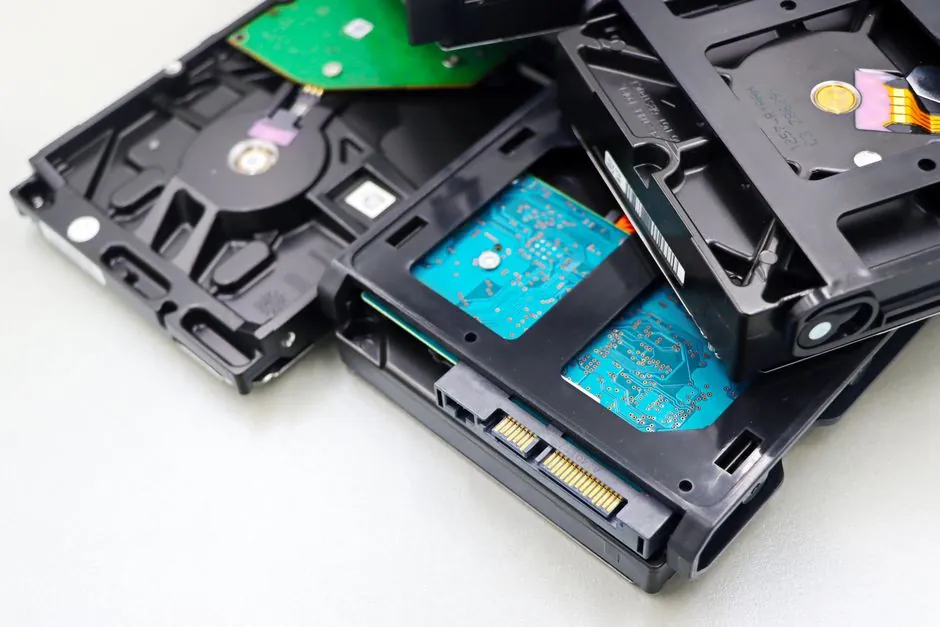
High-density AI server buying in 2026 collapses to four binding constraints: GPU generation tier, rack form factor, memory/fabric generation, and site power+cooling budget. Skipping any one of them produces an under- or over-specified rack that ages into a write-off within 18-36 months [S1][S3].
Survey-led B2B listings as of 2026-08-27 show 1U/2U dual-socket general-purpose AI servers clearing at USD 950-2,900 per unit, while 4U 8-GPU specialised racks with 5th/6th-gen Xeon or EPYC 9004 land at USD 4,500-20,000, with blades and OEM DDR5-5600 dual-socket chassis topping the range [S1]. Treat those numbers as a workable band, not a quote.
Spec gate axis 1: GPU tier and workload mapping
GPU generation is the single most expensive decision and the hardest to reverse: a chassis designed around one accelerator generation cannot accept the next without PCIe retimer and power-rail rework, so procurement specs NVIDIA H100, B200, or AMD MI300 class silicon first and works backwards [S1]. Training clusters on foundation models demand 8-GPU NVLink/NVSwitch topologies in 4U, while inference fleets and RAG serving nodes are typically satisfied by 2U dual-socket racks with 2-4 accelerators and the rest of the budget going to pressure transmitters for the chilled-water loop feeding the rack.
For organisations that do not need top-bin silicon, mainstream dual-socket 1U/2U chassis built on Intel Xeon 5th/6th gen or AMD EPYC 9004 with PCIe 5.0 and DDR5-5600 RDIMM remain the workhorse choice for fine-tuning, vector database hosting, and edge inference; listings price these between roughly USD 1,100 and 5,000 depending on memory depth and NVMe tier [S1].
Spec gate axis 2: rack density and form factor
Density is not a vanity metric: a 4U 8-GPU chassis typically draws 6-10 kW under load, while a 1U dual-socket inference box sits at 0.6-1.2 kW, and the room's flow meter loop plus the CDU pumps must be sized for the worst-case aggregate, not the average [S1].
The marketplace shows three live density tiers worth pricing: 1U dual-socket (R660xs, R6625, FusionServer XH321 V5) for general AI workloads, 2U dual-socket (R750XA, R760XA, SR850 V2, NF5280M5) for GPU-dense inference and small-cluster training, and 4U 8-GPU plus 24-bay storage hybrids (NF5466M5, OEM 64-core R610 G50) for full-stack data centre consolidation [S1]. Matching the wrong tier to the workload is the single most common over-spend error in this category.
Spec gate axis 3: fabric, memory, and storage I/O
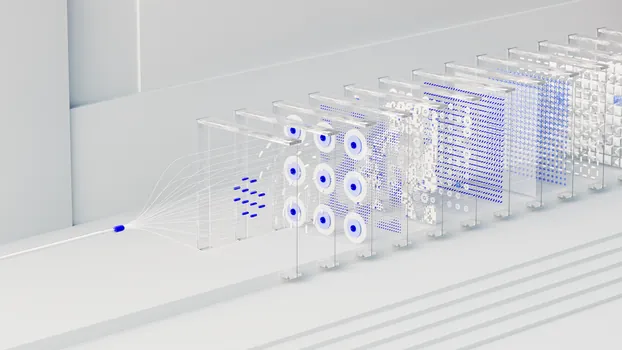
Every 2026 AI server bid should be screened for four fabric facts: DDR5-5600 (or faster) RDIMM support, PCIe 5.0 x16 lanes to each GPU, NVMe Gen4 or Gen5 for the dataset tier, and at least 100 GbE (preferably NDR InfiniBand or 400 GbE) on the network plane [S1]. Missing any one of these is the classic under-spec trap, where a USD 4,500 chassis bottlenecks on PCIe 3.0 and burns the GPU budget on I/O wait.
For data-locality-sensitive jobs, the 4U 24-bay hybrid form factor (NF5466M5 class) is the current sweet spot, with quoted prices around USD 3,600-5,000 per unit and 24x 3.5" HDD bays supporting warm-tier dataset staging without forcing an external JBOD [S1]. For latency-sensitive vector serving, 2U all-NVMe with PCIe 5.0 retimers is the cleaner trade, even at higher per-terabyte cost.
Spec gate axis 4: power, cooling, and room readiness
AI racks are a power-and-cooling problem as much as a compute problem: a single 4U 8-GPU rack at full load draws the same power as 30-40 office workstations, and the room's UPS, busway, and industrial valve array on the chilled-water loop must be audited before, not after, the PO is cut. The same logic drives the broader cooling market, where immersion and two-phase D2C demand is being pulled by exactly this rack profile (see Immersion Cooling Demand 2026-2030). [S2]
Rule of thumb for procurement: leave at least 30% headroom on rack kW, 20% on room cooling tons, and 25% on busway ampacity, because GPU boost, NVLink traffic, and storage rebuilds all stack on top of steady-state load. A rack that meets today's training job at 95% utilisation is a rack that will thermal-throttle the next generation of accelerators within 12-18 months.
Vendor MDM and qualification hygiene
Before any technical scoring, run master data management on the supplier list: assign UNSPSC codes to every SKU, link regional resellers (IBM France, IBM USA, etc.) to a single parent, and tag each record with a DUNS number, or AI-driven spend analytics will silently double-count and mis-rank suppliers [S2].
Qualification should screen for at least four signals per vendor: years on platform, reorder rate where the marketplace exposes it, response time on RFQ, and a documented warranty path for the GPU + PSU + backplane combination. Listings on major B2B platforms show supplier tenure ranging from 1 to 17 years and reorder rates between 16% and 35% for this category, with the older, manufacturer-status vendors clustering at the higher reorder end [S1].
Procurement workflow and common failure modes
The seven-step process (requirement definition, policy, vendor research, RFQ, PO, receipt and inspection, deployment and registration) only works if the final deployment record feeds back into the asset register, otherwise the next cycle starts blind and reproduces the same over- or under-spec error [S3]. For server and data centre procurement specifically, the dominant risk is under-spec on fabric or over-spec on GPU silicon, both of which show up only at runtime.
Three failure modes recur across mid-size buyers: (1) buying 4U 8-GPU chassis for inference workloads that fit 2U dual-socket boxes at 40% the capex, (2) skipping PCIe 5.0 retimer validation and discovering I/O bottlenecks under production load, and (3) cutting room-power audits and discovering the busway cannot deliver the steady-state plus transient envelope. The fix in all three cases is to write the spec gate into the RFQ and reject any bid that does not answer each axis with a verifiable number.
Cost band and final scoring matrix

Across 14 listed configurations surveyed 2026-08-27, the spread runs from USD 459 for entry-level 4U 8-GPU bare chassis to USD 20,000 for HPE XD220v-class 5th-gen Xeon HPC racks, with mainstream 2U dual-socket AI boxes clustering around USD 1,500-5,000 and 1U inference chassis around USD 950-2,900 [S1]. The right bid is the one whose per-GPU-hour amortised cost is lowest over a 36-month horizon, not the one with the lowest sticker.
Trackable signals for the next 90 days: 8-GPU bare-chassis floor price, B200 and MI300X rack-level availability, and any new ATEX/IEC 60079 zone-classified rack SKUs for hazardous-area deployments. Buyers with a 2026-2027 refresh should also pin a meeting with their serial server and IPMI management supplier, because out-of-band management is the silent dependency that breaks when the rack density jumps.