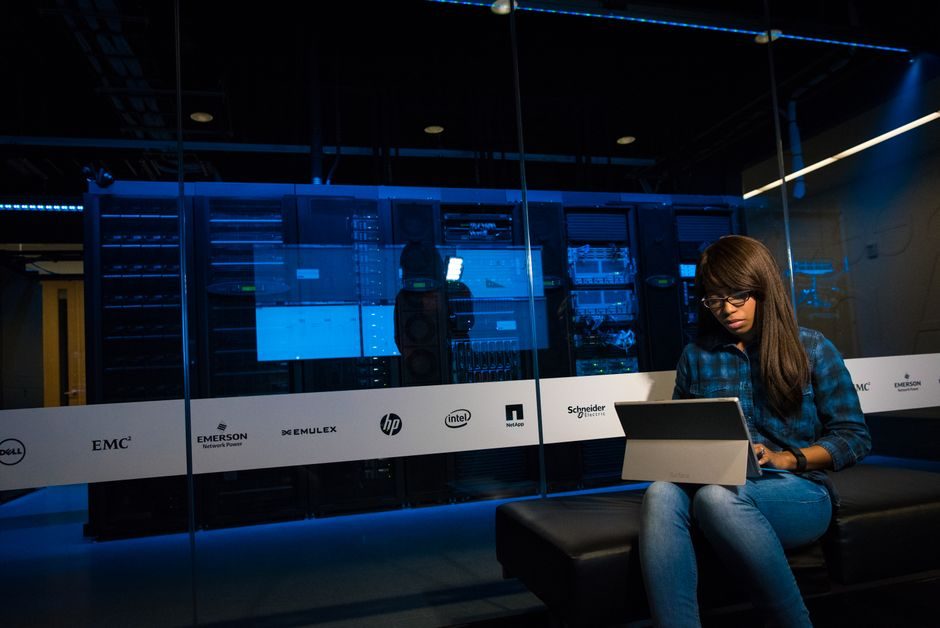
AI server build slots in 2026 are constrained less by GPU wafer output and more by HBM allocation, ultra-low-loss CCL, and high-current MOSFET supply, with TrendForce's 2Q26 datasheet tracking chip shipments, supplier share, and CoWoS packaging alongside memory and liquid-cooling penetration [S2].
The shortage is structural rather than cyclical: HBM demand from hyperscalers is pulling memory fab capacity away from conventional DRAM and NAND, while NVIDIA Blackwell GB300 platforms require 28–34 layer PCBs on M7-grade dielectric and the Vera Rubin generation, expected in H2 2026, is projected to exceed 40 layers on M10-grade material [S3][S6].
Where the Shortage Bites: HBM, DRAM, NAND, and the Wafer Trade-Off
HBM is the binding constraint on AI server throughput in 2026, because one HBM wafer displaces two or more conventional DRAM wafers under current die-size economics, so a constant total wafer-out still produces fewer bits for PCs and smartphones [S3]. Data centers are projected to absorb as much as 70% of high-end memory output in 2026, a sharp inversion from the consumer-led mix that defined 2021–2024 [S3].
DRAM and NAND contract prices are climbing up to 75% in Q2 2026 according to PPSI's electronics supply chain at-a-glance, while the same report flags broad price hikes from analog and power-management leaders [S7]. ReversingLabs' 4th annual SSCS report frames the upstream risk in software terms: malware on open-source platforms is up 73% year-over-year, and AI development pipelines are now an explicit attack surface that complicates firmware and driver validation on every shipped server [S1]. Micron has publicly stated the HBM shortage will extend beyond 2026, which sets a floor under memory contract prices through at least 2027 and pushes OEM planning horizons out by 9–12 months [S5].
PCB, CCL, and the Layer-Count Step-Change
An NVIDIA Blackwell GB300 build needs 28–34 PCB layers with M7-grade ultra-low-loss dielectric, a step up from the 8–12 layer FR-4 stack used in a conventional enterprise server, and the Vera Rubin platform in H2 2026 is projected to push past 40 layers on M10-grade material [S6]. That layer jump drives yield loss, longer lamination cycles, and a CCL supply base that is itself concentrated in a small number of Japanese and Taiwanese mills.
For comparison, the decision trade looks like this across the three main stack categories used in 2026 AI builds:
Standard FR-4, 8–12 layers: lowest cost, suits general-purpose compute and storage sleds, cannot meet GB300 signal-integrity budgets on high-speed SerDes links. Mid-loss CCL, 16–20 layers: workable for some Hopper-class and AMD MI300 carrier boards, still tight margin on 224 Gb/s signalling. Ultra-low-loss M7/M8, 28–34 layers: required for GB300-class designs, long CCL lead time. M10-class, 40+ layers: reserved for Vera Rubin and follow-on platforms, qualification cycle is the gating step, not raw laminate supply [S6].
Power Discrete, Cooling, and Rack-Level Constraints
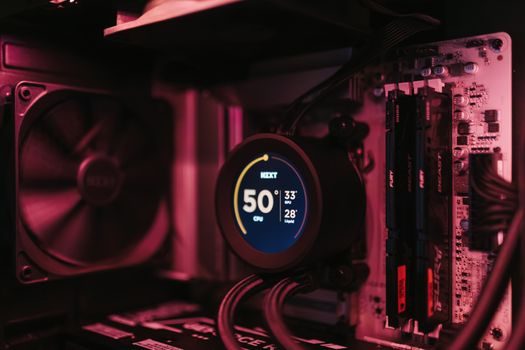
Critical MOSFETs and discretes from suppliers including Infineon and Vishay are routinely exceeding 52-week lead times, which is the figure PPSI's Q2 2026 report uses to flag the segment as the single most fragile sub-tier in the AI server bill of materials [S7]. The same report ties the constraint to helium and bromine availability through the Strait of Hormuz, a reminder that AI server delivery schedules now depend on industrial-gas logistics as well as fab capacity.
Cooling has moved from air to direct-liquid as the default for new AI rack builds, and TrendForce's 2Q26 datasheet tracks liquid-cooling penetration by major AI chip supplier, alongside CoWoS packaging allocation, as separate gating inputs to a server shipment plan [S2]. The reliability implication is concrete: a pressure transmitter on the coolant loop, a flow meter on the CDU return, and a rack-level DC power supply with redundancy are now baseline scope items for any hyperscale AI hall, not optional telemetry.
Software-Side Strain and Supply-Chain Trust
For a buyer, that translates into a server acceptance test that must include SBOM review, binary provenance, and continuous validation rather than a one-time vendor audit.
Geopolitical routing adds a second-order risk layer. EMS footprint shifts, tariff exposure on finished rack imports, and software-side strain are all being tracked together for 2026 in adjacent analysis on the AI server supply chain, which complements the silicon-side picture with the contract-manufacturing and code-side numbers a sourcing team needs in parallel AI Server Supply Chain 2026: EMS Footprint, Tariff Risk, and Software-Side Strain. For the memory side, the 2026 capacity, price-spike, and sourcing-risk picture is mapped in detail alongside the wafer-allocation question every planner hits by Q3 DRAM Supply Shortage 2026: Capacity, Price Spike, and Sourcing Risk.
What Buyers Should Lock Down Before Q4 2026
Three signals to track: TrendForce's next quarterly AI Server Datasheet (next cut late September 2026) for HBM allocation and CoWoS packaging share [S2]; PPSI's Q3 2026 supply-chain update for MOSFET and discrete lead-time trajectory [S7]; and the next DRAM and NAND contract-price datapoints, where a continued climb toward the 75% Q2 2026 print would confirm a multi-quarter shortage rather than a one-quarter spike [S3][S7].