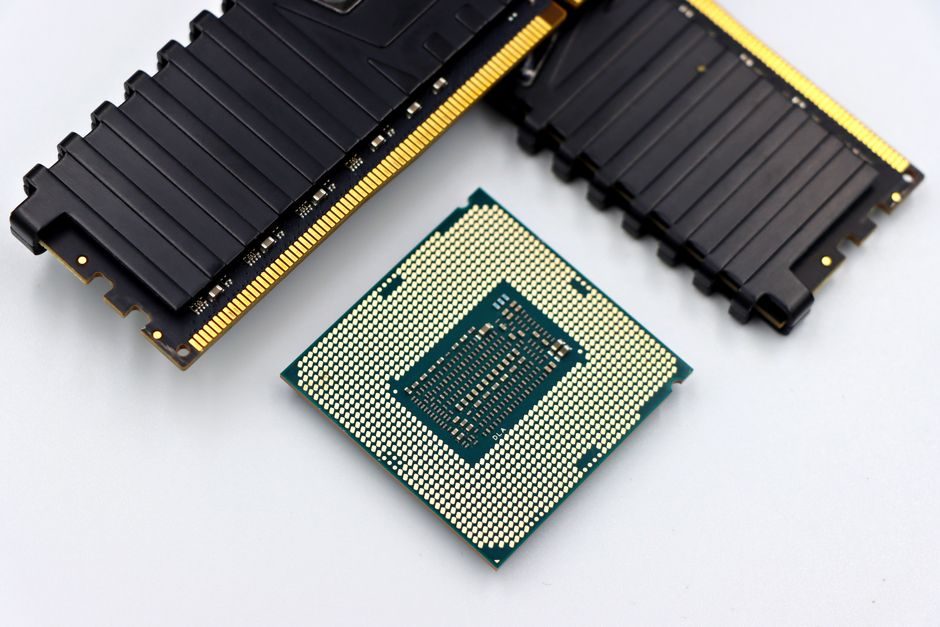
Combined 2026 wafer-out from Samsung, SK Hynix, and Micron is set to reach roughly 18 million 300 mm-equivalent wafers, up about 5% year on year, yet Omdia-tracked demand fulfillment across the three majors sits near 60% and server DRAM below 50% [S3].
Samsung plans to lift its slice count from 7.59 million to 7.93 million via Pyeongtaek releases, SK Hynix from 5.97 million to 6.48 million through Cheongju M15X expansion, while Micron holds around 3.60 million with new capacity not materialising until 2027–2028 [S3]. The structural gap between AI-driven high-bandwidth demand and constrained legacy-node output is the defining 2026 DRAM risk.
Capacity Floor: 18M Wafers Cannot Clear 60% Fill Rate
The three DRAM majors' 2026 capacity ceiling is roughly 18 million wafers, only 5% higher than 2025, while industry-wide demand fulfillment averages 60% and server DRAM drops below 50% because makers pre-allocate advanced-node output to HBM and server-grade parts [S3]. Samsung's transition to its sixth-generation 10 nm DRAM node introduces a temporary yield-curve loss that further trims effective bits in 2026 H1, on top of the planned Pyeongtaek ramp [S3].
Relief capacity from Samsung's Pyeongtaek P4 line is not expected before 2027, which means the supply-demand mismatch in 2026 is not a quarter-end blip but a calendar-year constraint [S3]. For a process engineer budgeting 2026 build-outs, the relevant figure is not the headline wafer count but the ratio of allocatable server-grade bits per rack after HBM draw.
Contract Pricing: 55–60% QoQ in Q1 2026, Server DRAM Above 60%
Q1 2026 commodity DRAM contract prices are projected to rise 55–60% quarter on quarter, NAND Flash 33–38%, and server DRAM above 60%, driven by allocation cuts and AI-led mix shift rather than consumer-PC volume recovery [S3]. PC OEMs are receiving only about half of their requested DRAM allocation in 2026 H1, so the price uplift persists even though end-unit PC demand is weak [S3].
Mobile DRAM continues to rise sharply, adding bill-of-material pressure on smartphone brands whose ASP-to-BOM ratios were already compressed [S3]. The Samsung B-die legacy issue, documented years ago when Samsung ended Samsung B-die DDR4 production in favour of higher densities, is now a cautionary precedent: when a maker drops a legacy die to feed advanced-node demand, downstream tuning inventory disappears overnight [S1].
Why the Shortage Persists: HBM and Server Bit Pull
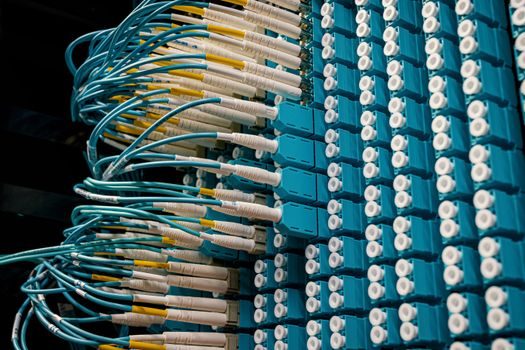
The structural cause is bit reallocation toward HBM and server DRAM, segments where AI training and inference deployments are absorbing advanced-node wafer starts that would historically have flowed to PC and mobile SKUs [S2][S3]. Server DRAM overtook mobile DRAM in the overall bit-supply share around 2023 at 37.6% versus 36.8%, and that lead has widened as data-centre build-outs pulled forward wafer commitments [S2].
TrendForce's earlier view that server DRAM bit share would keep expanding has played out, with the 2026 shortfall essentially a consequence of that mix shift now meeting hyperscaler-scale AI build-outs [S2]. For a 2026 spec author, this means DRAM selection criteria must include allocation-tier and node-class, not just JEDEC speed grade; identical DDR5-5600 RDIMMs can have very different allocation visibility depending on whether the fab is treating the SKU as server- or client-class.
Comparison of Sourcing Levers Under 2026 Allocation
For a 2026 buyer the practical levers are: (1) second-source qualified RDIMM/UDIMM suppliers, including emerging Chinese DDR5 module vendors shipping up to 64 GB UDIMM, SODIMM, and RDIMM families, which can absorb spillover demand from Korean majors [S1]; (2) down-clock to lower-speed JEDEC grades where the application permits, since allocation tightness is most severe on premium bins; (3) shift from high-density server RDIMMs to CXL-attached memory pooling where the chassis supports it, trading latency for effective bits per dollar. Allocation-tier risk is highest for advanced-node server RDIMMs, medium for mobile LPDDR5x, and lowest for older DDR4 and entry DDR5 UDIMMs sourced from the new Chinese entrants [S1][S3].
Industrial Knock-On: Boards, UPS, and Control-Room Memory
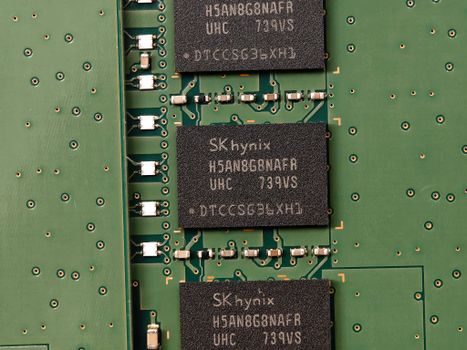
Industrial buyers do not buy DRAM directly in the volumes hyperscalers do, but they inherit the same allocation logic when their embedded board vendors (industrial PCs, industrial UPS controllers, edge gateways) are told the same DRAM allocations that data-centre buyers receive. A 2026 spec sheet that calls for 32 GB DDR5 on an industrial controller should now carry a second-source line, because single-sourced DDR5 with Korean majors carries real 2026 lead-time risk [S3].
For control-room and edge AI inference nodes, the trade-off between a dc power supply-backed server-class RDIMM and a CXL-pooled layout becomes a 2026 cost question, not just a performance one, since the server DRAM price index is climbing above 60% QoQ [S3]. Plants that standardised on Samsung B-die in 2019 already learned that fab-end-of-life for a favoured die is non-negotiable; the 2026 episode is the same lesson at industry scale [S1].
Limits and Failure Modes of the 2026 Plan
The 18 million-wafer aggregate is a nameplate figure; effective bits delivered to non-HBM, non-server customers are lower because three effects compound: Samsung's 1c-node transition yield loss, Micron's delayed new capacity until 2027–2028, and the structural wafer reallocation toward HBM and server SKUs [S3]. PC and mobile buyers receiving only about half of their requested volumes means spot-market reliance rises, which historically diverges from contract pricing by wider margins under supply shocks [S3].
The 2027 Pyeongtaek P4 ramp is the only named near-term capacity add in the research, so any 2026 mitigation plan should assume the shortage window runs through at least Q4 2026, with the first genuine relief signal tied to P4 output rather than to existing-line yield improvements [S3]. Sourcing teams should track Samsung's quarterly node-mix disclosures and the Omdia capacity series as the two leading indicators.
Standards and Sourcing References

JEDEC DDR5 specification compliance remains the baseline for any 2026 RDIMM or UDIMM qualified line, with server modules typically meeting the JEDEC DDR5 server profile and client modules the JEDEC DDR5 client profile; no new revision timing is asserted here. TrendForce bit-share data and Omdia wafer-out figures are the two authoritative public series for 2026 DRAM capacity benchmarking [S2][S3]. Cross-reference the upstream tool-flow picture in the DRAM upstream and downstream chain 2026 map and the HBM supply chain 2026 allocation map to align wafer-tool, CoWoS, and HBM pull assumptions with the DRAM shortage narrative [S1][S2][S3].
Next signals to watch: the 2026 Q2 contract-price print versus the 55–60% QoQ Q1 baseline, any Samsung Pyeongtaek P4 commissioning announcement ahead of the 2027 timeline, and Micron's first 1-gamma node volume disclosure; each is a trackable node that will shift the 2027 outlook.
Spec-level background on the components involved: switching power supply.