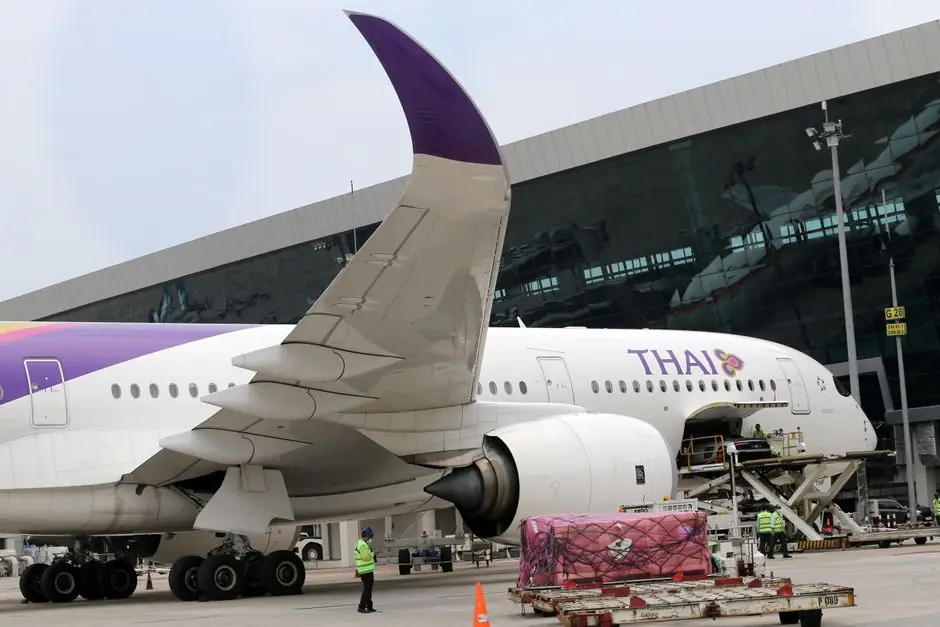
Air-cargo labeling diverges sharply from bottling-line practice: the unit of work is a single tag, a ULD placard, or a pallet-side identification panel rather than a queue of identical bottles, so the machine class that fits is print-and-apply, not the rotary wrap-around labelers common in beverage plants [S3].
For procurement, the spec gates that drive selection are label-stock survival under cargo-hold humidity swings, UDI/IATA variable-data throughput (lot, AWB, serial), and placement accuracy on porous or reflective surfaces, not the cosmetic ±0.1 mm tolerances cited for cosmetic packaging lines [S3][S5].
Container-First Sizing: ULD Tag, Pallet Placard, and Single-Piece Air Waybill
Standard PSL (pressure-sensitive labeler) air-cargo units must accept tag heights of 15-120 mm and diameters of 12-250 mm, matching both small AWB pouches and bulky ULD placards, with today's-machine spec tables showing LM-RP accepting 25-100 mm diameter containers and 30-80 BPM throughput as the entry tier [S4]. A 30-80 BPM unit covers air-cargo tag volume on a single ULD build-up line; a 60-200 BPM LM-MINI class unit covers 24/7 freighter hubs [S4].
Uld-side placards can run 250-300 mm long; the LM-FS class of flat-surface applicators handles label lengths of 25-300 mm, so a single machine covers both pouch tags and full ULD placards without changeover [S4]. For high-volume integrators, the spec envelope for print-and-apply reaches 60-300+ units/min versus 20-60 for semi-automatic systems, a 5-10x labour delta that reshapes the cost argument at hub scale [S6].
Selection Criteria: Variable-Data Throughput, Adhesive System, and Reject Strategy
Print-and-apply systems deliver placement accuracy of about ±0.01 in (~0.25 mm) versus ±0.5 mm for standard PSL, and the gain matters when barcodes, 2D Data Matrix, and human-readable AWB fields must scan at first attempt on reflective or coated surfaces [S5]. The trade-off is data-pipeline risk: print-and-apply requires reliable ERP/MES feeds, and a broken handshake prints correct barcodes against the wrong AWB, the failure mode S5 calls out as more dangerous than a misfeed [S5].
Adhesive choice is the second gate. Cargo-hold dew-point swings and -20°C ground handling kill generic rubber-based adhesives; cold-flow hot-melt (used on wet-glue lines at 100-600+ PPM) is the historical beverage-line answer but requires viscosity control loops that are overkill for tag volumes [S5]. For freighter holds and tarmac exposure, BS 5609 Section 2/3 marine-grade acrylic on polyester facestock is the conservative pick. Web tension on any PSL applicator should sit between 10-15 N/cm² to prevent wrinkling on filmic labels, and silicone applicator rollers specified at Shore A 50±5 carry the temperature resilience (-20°C to 120°C) needed for both cold-chain pharma and summer tarmac [S4].
Comparison: Manual, Semi-Auto, Auto, and Print-and-Apply for Air-Cargo Volume Bands

ZONESUN's tiered comparison shows manual tabletop systems at 10-30 units/min, semi-automatic at 20-60, and inline automatic at 60-300+ units/min, with labour dropping from 1 operator per unit (manual) to monitoring-only at full automation, and capital cost scaling from $100-1,500 (manual) to $5,000-60,000+ (inline) [S6]. For air-cargo, the practical bands are: manual for forwarder offices issuing <50 AWB tags per day, semi-automatic for 50-500, and inline print-and-apply for 500+ at hub scale [S6].
Manual systems are "best for startups, sampling, very low volume"; semi-auto fits "small to mid-scale product businesses"; inline hits "large to enterprise scale" and pairs with conveyors that already feed a screening or build-up line [S6]. The hidden cost is reject verification: the encyclopedia reference makes it clear that a labeler is not a labeler without a reject station, and for cargo, a missed AWB tag is a manifest violation, not a cosmetic defect [S3].
Who This Machine Class Is For, and Who It Is Not For
Print-and-apply is for integrators running a hub screening line where each ULD must carry a freshly printed AWB or security tag tied to a live manifest, and where labour cost of 1 operator per build-up station is the dominant OPEX line item [S5][S6]. It is not for forwarders issuing <100 tags per day; the ERP integration cost and FAT/SAT overhead exceed 5 years of labour savings at that volume [S5][S6].
Inline automatic PSL is for integrators whose air-cargo workload is dominated by ULD placards on flat surfaces, where the LM-FS-class flat applicator with ±0.1 mm placement accuracy covers barcode-grade scanning reliability without the print-and-apply cost stack [S4]. It is not for pharma or dangerous-goods shipments requiring live-printed lot/serial, where PSL alone is a documentation gap and regulators treat a static label as a mislabeled unit [S5].
Drive Architecture: Servo vs Stepper and the Real Speed Number
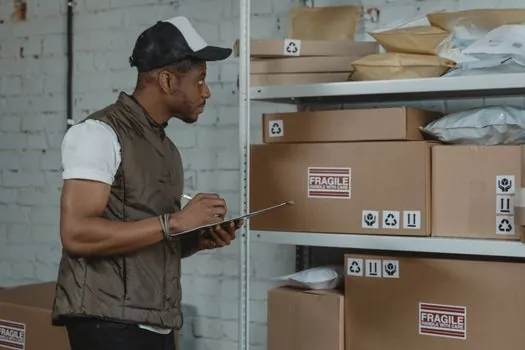
Servo-driven applicators, brushless AC servo motors with 0.02° angular resolution, are the gate that separates an entry system from a production system, because servo synchronization of web speed to conveyor speed is what enables both high BPM and tight placement [S3][S4]. Stepper-driven entry machines can hit 30-80 BPM on round containers; servo-driven production systems cross 200 BPM and hold ±0.1 mm at that rate [S4].
Catalog speed overstates real output by 15-20%, so a 150 BPM rated unit will run 120-125 BPM sustained, and procurement specs should ask for the sustained number, not the peak [S8]. This is not a marketing caveat: in air-cargo, a ULD build-up station paced at 125 BPM but specced for 150 becomes the bottleneck during night sort, and the next station idles [S8].
Integration Constraints: PLC Handshakes, Vision Reject, and the Spare-Parts Stack
Retrofit failure modes on existing cargo lines are mechanical and controls-related: bed-height transitions from roller conveyor to labeler, guarding around moving heads, change parts for each ULD size, and PLC handshakes that must trigger a label dispense from an upstream photo-eye, with encoder-based synchronization to prevent skew at variable line speed [S5]. For air-cargo specifically, the reject station must eject misprinted AWB tags before they enter the screening line, because downstream regulators treat a missing AWB as a manifest violation [S3][S5].
Spare-parts stocking is a line item: 5 µm particulate air filters on a monthly cycle, roller lubrication every 500 hours with NSF H1-grade grease, and timing-belt re-tension calibrated to ±2% on a quarterly cycle, all of which add to lifetime cost beyond the $5,000-60,000+ capital range [S4][S6]. For 24/7 hub operation, this support stack is not optional, and the absence of a regional service footprint is a procurement disqualifier [S4].
Limits and Failure Modes: Where Labelers Disappoint on Air-Cargo
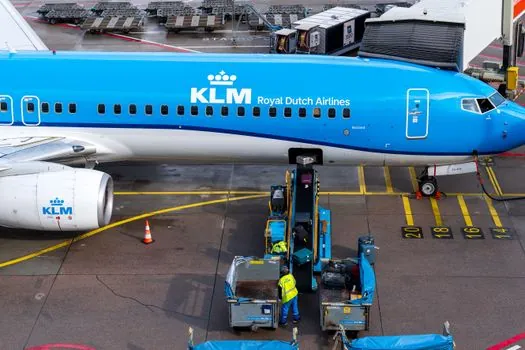
Optical eye-mark sensors misread transparent or foil labels, causing missed or double labels; ultrasonic gap detection is the spec that solves this and should be written into the RFQ for any reflective AWB tag stock [S3]. Harsh tarmac UV, hydraulic-fluid exposure, and -20°C cold-soak degrade rubber-based adhesives within hours; spec BS 5609-tested acrylics or specify hot-melt with viscosity control instead [S4][S5].
Print-and-apply systems also produce a class of error that no vision reject catches: a perfect print of the wrong AWB, caused by an upstream MES desync, is the failure mode Wolf Packing flags as the most expensive per-incident defect on retrofitted lines [S5]. Spec the data path, not just the print head.
Standards and Sourcing Notes
Labeling-machine safety is governed by the EN 415 series under Machinery Directive 2006/42/EC, with risk assessment per EN ISO 12100; published OEM datasheets from HERMA, Krones, and Sidel remain the spec reference set for procurement comparison [S3]. For cargo-hold adhesive survival, BS 5609 Section 2 and Section 3 is the marine-grade benchmark cited for humidity and saltwater exposure on printed labels [S5]. IATA ULD regulations and the corresponding AWB tag format (Resolution 600) govern label content and field placement, though these sit with the shipping documents rather than the machine spec. Always reconcile the rated BPM, the sustained BPM, and the placement tolerance against the upstream conveyor's actual cycle time, not the catalog number [S3][S8].
Next signal to track: standard-machine vendor releases integrating machine-vision barcode verification into the applicator head (single-station reject rather than downstream), and the 2026-08 spec refresh from any of the three reference OEMs (HERMA, Krones, Sidel) on print-and-apply unit throughput under UDI variable-data load. For warehouse-side context on adjacent print-and-apply spec gates, see labeling machine selection for warehouse automation.
Spec-level background on the components involved: labeling machine, air pick, and air impact wrench.