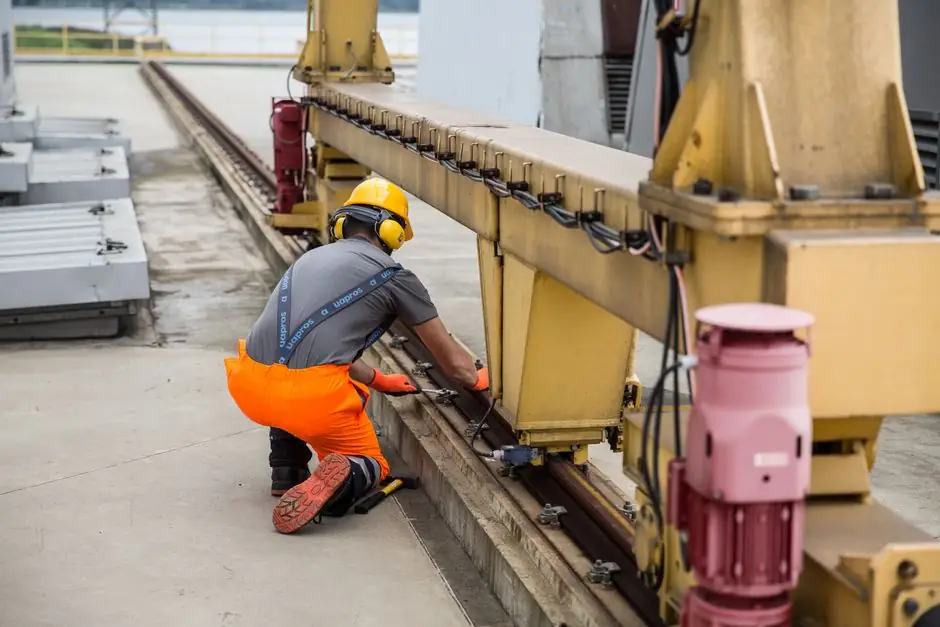
An air impact wrench chosen for demolition must clear three gates in sequence: drive size matched to socket and fastener, nut-busting torque at least 2x the break-away torque of the joint, and air consumption that the on-site compressor can sustain at 90-120 psi (6.2-8.3 bar).
On 2026-08-08, the global market still centres on three drive sizes, with 1/2-inch consumer-grade wrenches, 3/4-inch industrial wrenches, and 1-inch heavy-duty wrenches dominating procurement listings across Alibaba, CENS, and used-tool channels [S1][S3][S5]. Used Husky 1/2-inch 3-speed units trade around US $43.98 on secondary markets, while new 1-inch Taiwan-sourced wrenches ship in master packs of 2 pieces weighing 18.4-20.4 kg per case [S2][S3].
Drive Size as the First Selection Gate
1-inch square-drive air impact wrenches ship in 2-piece master cartons of 18.4 kg and 20.4 kg with a case volume near 1.6 cubic feet, signalling the hammer mechanism, anvil, and housing mass that smaller drives cannot replicate [S3]. For demolition of structural bolts, M27-M42 hex fasteners, and wheel-nut clusters on heavy equipment, the 1-inch drive is the correct floor.
3/4-inch drives occupy the middle band, typically 800-1,200 ft-lb nut-busting torque, and cover truck wheel service, large engine teardown, and structural steel bolt removal where access allows. 1/2-inch drives, with typical peak torque in the 400-600 ft-lb range as listed for CE-certified twin-hammer models priced at US $25-35 FOB, are appropriate for automotive and light-industrial fastening but are routinely overloaded in demolition [S1][S7].
For interior and trim work, lighter 1/4-inch and 3/8-inch ratchet-class wrenches are specified separately; they have no role in demolition because the impact mechanism cannot sustain the inertial loads of seized fasteners. Related guidance for finishing work is covered in Air Impact Wrench Selection for Interior Finishing.
Torque Class and Nut-Busting Reserve
Demolition-grade air impact wrenches are specified by nut-busting torque, not fastener-tightening torque, because the design load is the reverse direction against a corroded or thread-locked joint. A 2:1 safety margin between nut-busting rating and the highest break-away torque expected on site is the working rule; a 1,000 ft-lb wrench therefore handles joints up to roughly 500 ft-lb break-away resistance. [S3]
Twin-hammer mechanisms are the dominant internal design in CE-certified 1/2-inch models from Zhejiang East Pneumatic, where product listings reference a "twin-hammer" mechanism for heavy-duty pneumatic air impact wrenches priced at US $25-30 per unit at 100-piece MOQ [S1]. The twin-hammer layout delivers two impacts per revolution, balancing pulse frequency and peak energy more evenly than single-hammer (pin-clutch) designs used in older 3/4-inch and 1-inch wrenches.
For sustained demolition, the practical torque tiers are: 1/2-inch up to ~600 ft-lb, 3/4-inch 800-1,200 ft-lb, and 1-inch 1,500-2,000+ ft-lb. Below 800 ft-lb, expect stalled anvil, overheated motor housing, and accelerated hammer-pin wear on corroded fasteners.
Air Consumption, Hose Size, and Compressor Matching
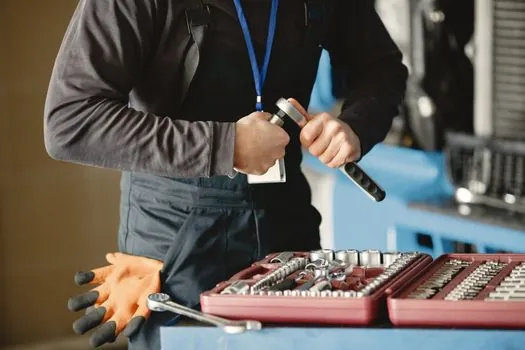
Air impact wrenches in the demolition class draw 4-10 CFM at 90 psi under load, and the hose and compressor must be sized to that peak draw, not the nameplate average. A 1-inch-drive wrench rated at 1,800 ft-lb typically requires a 3/4-inch ID hose at 50 ft or shorter, and a compressor with at least a 20-25 CFM receiver to avoid duty-cycle starvation. [S1]
On 2026-07-17, CENS-listed 1-inch air impact wrenches were still shipping in 18.4-20.4 kg twin-pack configurations, reflecting the mass of the air motor and hammer case required to sustain the higher torque class [S3]. A compressor sized only for finish-nail or spray-gun duty (5-8 CFM) will pressure-drop and overheat when driving a 1-inch wrench against a seized bolt; this is the most common on-site failure mode, not tool breakage.
Regulator setting matters: 90-100 psi at the tool inlet is the working band. Pressure above 120 psi does not increase torque proportionally and accelerates hammer fatigue; pressure below 80 psi causes the anvil to stall on the first strike, baking heat into the housing.
Hammer Mechanism Comparison: Twin-Hammer vs Single-Hammer vs Pin-Clutch
Three internal mechanisms dominate demolition-class wrenches. Twin-hammer (used in current 1/2-inch CE models and most modern 3/4-inch) gives balanced pulse frequency and good cold-start performance. Single-hammer (older 1-inch and some 3/4-inch) delivers a single, harder impact per revolution, useful on stuck fasteners but harder on the operator's wrist and on the anvil pin. [S1]
Pin-clutch mechanisms appear in low-cost 1/2-inch consumer wrenches and are the least suited to demolition, because the clutch pins shear under sustained high-inertia load rather than transferring torque smoothly. For demolition, twin-hammer and single-hammer are acceptable, pin-clutch is a false economy.
A practical comparison: twin-hammer 1/2-inch at 600 ft-lb suits automotive-class demolition; single-hammer 3/4-inch at 1,000 ft-lb suits heavy-equipment wheel and engine work; single-hammer 1-inch at 1,800 ft-lb suits structural steel and rail. Cross-class substitution (e.g. a 1/2-inch used on a 1-inch-class joint) consistently produces tool damage within hours, not days.
Demolition vs Concrete Fastening: Why the Same Wrench Will Not Do Both

Demolition and concrete fastening are different duty cycles. Concrete fastening work (anchor bolt setting, wedge-anchor driving) requires controlled, repeatable torque in a narrower band, not the high-energy reverse pulses of demolition. Specifying a demolition-class wrench for concrete anchor setting over-torques anchors and risks pull-out or substrate spalling. [S1]
Specialised impact wrenches for concrete fastening are typically 3/4-inch or 1-inch units with torque-limiting clutches and lower nut-busting ratings; the underlying mechanisms share parts with demolition wrenches but the operating envelope is the opposite. The misuse boundary is detailed in Air Impact Wrench vs Concrete Fastening, which is required reading before redeploying a demolition wrench onto anchor work.
The reverse mistake is also costly: a low-torque 1/2-inch wrench (the US $25-35 FOB tier) used on a seized M30 truck wheel nut will stall, overheat the motor, and wear the hammer pins in a single shift. Match the class to the duty, do not cross them.
Standards, Certification, and Sourcing Reality
CE marking is the baseline certification appearing on most 2026 OEM 1/2-inch air impact wrench listings from Chinese and Taiwanese suppliers, including the EP252 twin-hammer range priced at US $25-35 per unit at 100-piece MOQ [S1]. For North American oil-and-gas and mining sites, additional compliance may be required (CSA, MSHA underground approvals), but for general construction demolition, CE plus a documented CFM/psi spec is the procurement gate.
Supplier landscape on 2026-08-08 spans Zhejiang East Pneumatic Machinery (12 years on Alibaba, CE-certified twin-hammer 1/2-inch), Sumlin Industrial Co. (multi-category air-tool supplier, no published torque tiers), and Taiwan-based CENS-listed 1-inch wrench exporters shipping 18.4-20.4 kg twin-pack cases [S1][S3][S5]. MOQs of 1,000 pieces at US $1-2 FOB appear on the deep-discount end of made-in-china listings, but torque specs are not always published; absent a CFM and nut-busting figure, treat the spec sheet as incomplete.
Used-tool channels (eBay, surplus dealers) carry older Husky 1/2-inch 3-speed wrenches around US $43.98, which are appropriate for light garage-class work but rarely documented for sustained demolition hours [S2]. A 1-year/2,000-hour rebuild cycle is typical for demolition wrenches; track the serial and service hours to keep the site audit clean.
Selection Checklist and Verifiable Next Signals
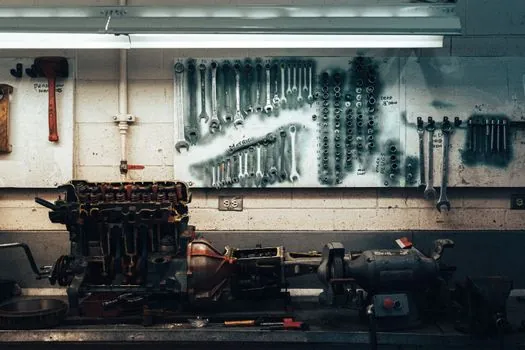
Specify the air impact wrench for demolition using four verifiable inputs: drive size (1/2, 3/4, or 1 inch), nut-busting torque in ft-lb or N-m, air consumption in CFM at 90 psi, and weight in kg. Reject any listing that omits the CFM figure or the nut-busting figure; both are mandatory for matching the compressor and the joint. [S1]
For procurement on or after 2026-08-08, watch for two trackable signals: (a) Sumlin Industrial's published OEM/ODM torque-tier catalog, which as of 2026-07-09 still lacks detailed nut-busting data [S5]; (b) CENS-listed 1-inch export wrenches moving below the 18 kg-per-piece shipping weight, which would indicate a thinner hammer case and a torque-class demotion to watch out for [S3]. Either change would shift the floor on the demolition-class specification, and either can be verified against the source listing within a procurement cycle.
Spec-level background on the components involved: demolition hammer, and impact drill.