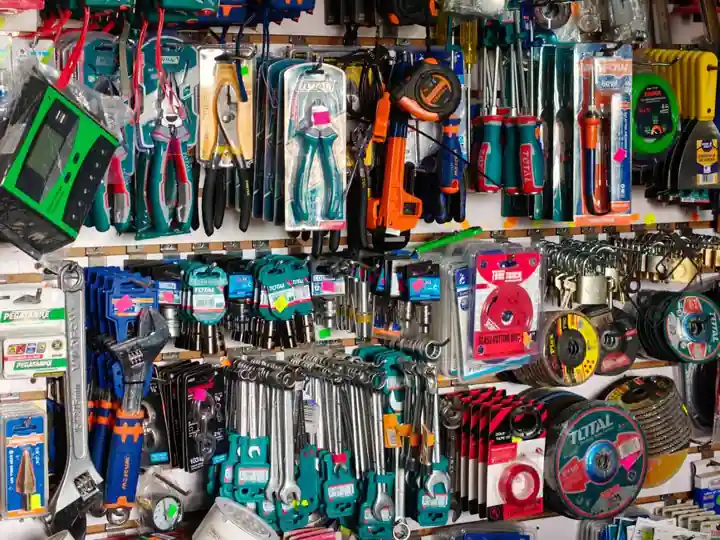
For interior finishing tasks (cabinet assembly, drywall track fastening, door hardware, decorative metal trim) the working sweet spot is a 3/8" or 1/2" drive air impact wrench in the 340-1,500 Nm maximum torque band, weighing roughly 1.2-2.5 kg, as listed in current pneumatic tool catalogs [S2][S5].
Larger 1-1/2" drive units at 14.5-16.0 kg per piece, such as the FW-2700 with 2" anvil, are designed for heavy equipment and structural work, not for interior finishing where a tradesperson holds the tool overhead for hundreds of cycles per shift [S6].
Drive Size and Torque: Why 3/8" and 1/2" Dominate Finishing Work
Catalog data for pneumatic hand tools segments air impact wrenches by square drive and maximum loosening torque, with 3/8" units typically rated in the 270-450 Nm band and 1/2" units spanning roughly 610-1,500 Nm [S5]. The composite-housing AP04 from the Fervi Pro series is offered as a professional 3/8"-class tool with one-hand rotation/speed change, shockproof rubber head and handle, sized for general assembly rather than structural bolting [S2].
For M6-M12 fastener work, the rule of thumb used by shop-floor engineers is that max torque should sit at roughly 1.3-1.5x the target tightening torque, which keeps the operator below stall and reduces cam-out on small fasteners. Going above 2,000 Nm on a 3/4" or 1" drive (typical of truck and rig work) on a finishing line routinely strips screw heads and over-torques cabinet cams. The reference set in our air impact wrench encyclopedia entry groups the categories by exactly this torque-and-drive envelope, which mirrors the catalog segmentation seen in [S1].
Weight, Vibration, and Overhead Workload
Tool body mass is the second hard constraint on a finishing site. The 3/8" composite AP04 ships in the roughly 1.2-1.8 kg class with rubber overmoulds to damp transmitted vibration during overhead or horizontal-reach work [S2]. A 1/2" professional unit typically lands in the 1.8-2.5 kg window; 3/4" and 1" models push past 3.5 kg and become single-shift fatigue liabilities when used on a fit-out [S1][S5].
Hand-arm vibration exposure on interior finishing is governed by the same daily A(8) action limit framework that applies to any pneumatic hand tool, and OSHA/NIOSH-style guidance points operators toward composite-body, rubber-sleeved designs to keep 8-hour equivalent vibration below the threshold. For a side-by-side method, the torque wrench tester reference explains why controlled torque (not raw impact energy) is what protects a finished surface. Many procurement teams are pairing finishing wrenches with a digital torque tester for any joint where a cabinet-maker warranty is on the line.
Air Consumption, Hose Size, and Compressor Sizing
Most 3/8" and 1/2" air impact wrenches in the 340-1,500 Nm range consume 100-130 l/min (3.5-4.6 cfm) of free air at 6.2 bar (90 psi) working pressure, while a 1" industrial gun can draw 240-450 l/min [S1]. A finishing contractor running two guns simultaneously needs a receiver tank of at least 100-150 L to avoid pressure sag between cycles.
Recommended supply is 3/8" ID hose for the small-drive class, stepping to 1/2" ID for 1/2" drive guns above ~1,000 Nm; undersized hose is the single most common cause of sluggish impact performance on site. The smaller drive class also lets the crew run on a portable electric-driven compressor, which matters on retro-fit jobs where a diesel unit cannot be staged inside a finished lobby.
Noise, Oiling, and Indoor Air Quality
Pneumatic hand tools in finishing environments carry an indoor air-quality burden beyond raw torque: exhaust oil aerosol and noise. Free-air exhaust from impact wrenches typically measures 85-95 dB(A) at the operator, which is the same band flagged in [S5] for general pneumatic hand tools; finishing crews should plan for hearing protection above the lower figure and should not deploy unported exhaust indoors without an extraction hose.
Inline lubricators and low-fog pneumatic oil are now standard for most 3/8" and 1/2" pro units [S2]. For occupied interior work during fit-out, the practical mitigation is a filtered regulator (FRL), a water separator, and an exhaust muffler, plus an air quality monitor on site if any final finishes (lacquers, low-VOC paints) are being applied in adjacent rooms. Mist-laden exhaust will fisheye a fresh clear-coat within minutes, so production managers typically seal finishing rooms and run pneumatic tools in a separate zone.
Comparison: Drive-Size Categories Against Finishing Use

Three drive categories cover the realistic finishing-tool spectrum. The 3/8" composite professional class (roughly 270-450 Nm, 1.2-1.8 kg) suits cabinet hardware, furniture assembly, and small-bolt trim on drywall track. The 1/2" pro class (610-1,500 Nm, 1.8-2.5 kg) handles M10-M16 anchors, door-frame fixings, and light structural connections during fit-out; this is the most commonly specified size for interior MEP bracketry. The 3/4" and 1" industrial class (above 2,000 Nm, 4-16 kg) belongs on steel-structure bolting and heavy-vehicle work, exemplified by the 1-1/2" drive 14.5-16.0 kg FW-2700 [S6], and should not be carried onto a finishing line.
China-made rechargeable and pneumatic air impact wrenches on Made-in-China.com in 2026 list max torque from 500 Nm up to 5,000 Nm across 1/2" and larger drive bodies [S4], confirming that the finishing-appropriate 340-1,500 Nm band is in the lower third of the commercial supply range, not the upper end. Buyers who default to "bigger is better" routinely overpay, over-torque fasteners, and fatigue the operator on finishing work.
Standards, Selection Cues, and Procurement Checklist
Specifying an air impact wrench for interior finishing should lock down four numbers before brand selection: drive size (3/8" or 1/2"), max loosening torque (340-1,500 Nm), body weight under 2.5 kg, and air consumption below 130 l/min. The matched reference is the pneumatic hand tool family in [S1], which lists impact wrenches, air ratchet wrenches, air sanders, and air spray guns as the four product groups a finishing crew typically needs on one shift.
Air ratchet wrenches deserve a specific callout for finishing: the air ratchet wrench family (in this context, the low-torque pneumatic ratchet) covers the 30-90 Nm range where an impact wrench is too aggressive, for example on pre-assembled cabinet cam bolts and final electrical panel fix-downs [S7]. Specs should therefore include at least one ratchet and one impact gun on the finishing cart, not two impact guns. For surface-prep work between trades, a finisher's cart also pairs an impact drill for pilot holes and a sander category, both of which overlap the same compressor supply spec.
Finally, the finishing-appropriate hush kit is now table-stakes: most pro 3/8" and 1/2" composite guns in 2026 are offered with a rear exhaust deflector or an integrated muffler, and the better procurement specs (mirroring the Fervi AP04 description [S2]) call for "composite material, handle and head in shockproof rubber" so the tool can be used for full-shift interior work without crushing fatigue. For a related reference on structural steel bolting, the steel section selection for high-rise buildings spec map and the welded steel mesh selection for commercial buildings guide sit one level up the structural chain, useful when a finishing contractor's bolts tie back to primary steel rather than to cabinetry. The next procurement decision after torque-and-drive is therefore whether to pair the wrench with a calibrated torque wrench tester for warranty-bearing joints, a question that becomes binary on hotel, healthcare, and data-center fit-out specs.