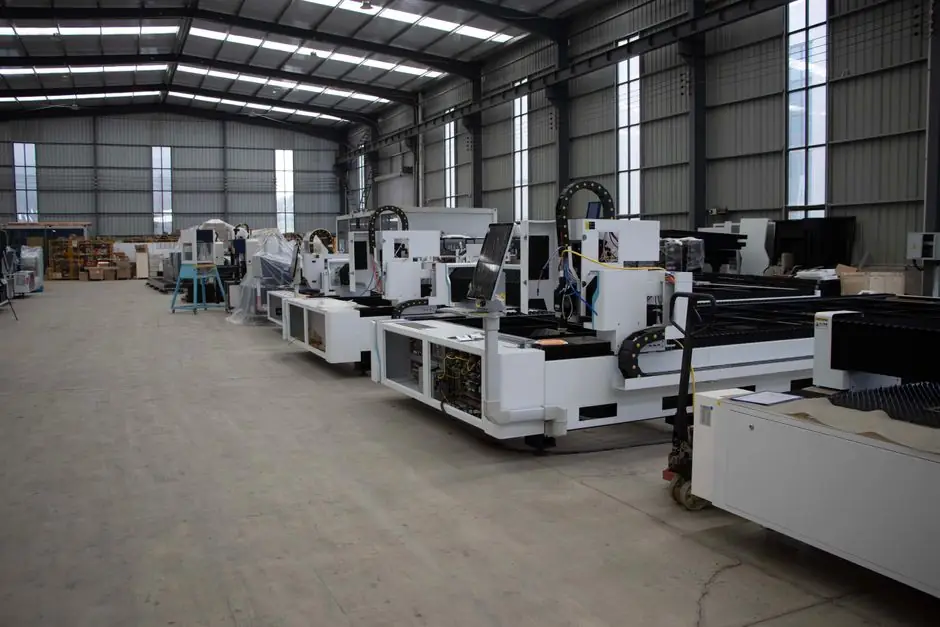
Air quality monitors mounted on machine-guarding frames serve a different duty than benchtop indoor-air units: they must survive coolant mist, weld fume, oil aerosol, and impact from adjacent moving parts, while still returning a usable signal to the safety PLC or SCADA.
Five specs decide whether a given monitor survives that duty: target pollutant class (PM1/PM2.5/PM10, TVOC, CO, NO2, O3), minimum ingress rating of IP54 for shop-floor enclosures, sensor full-scale range versus the worst credible excursion, output protocol compatible with the guarding controller (4-20 mA, Modbus RTU, or Modbus TCP), and a mechanical interface that mates to the frame profile without creating a snag point for the operator.
Pollutant class versus machining process
Weld cells generate sub-micron metallic fume that PM10 heads under-read by a factor of three to ten relative to real alveolar dose, which is why laser-scatter PM sensors with a 0.3-10 micrometre bin map are the typical 2026 reference for weld-cell guarding monitors [S1].
CNC coolant-mist cells produce a different signature: a coarse 1-10 micrometre droplet population with high mass loading, where a 0-20 mg/m3 PM2.5 channel with a heated inlet to evaporate carrier liquid is the conservative choice. Dylos DC1100 PRO units at USD 260.99 and DC1700-PM PM2.5/PM10 units at USD 475.00 are documented at the consumer-grade end of this scale, with the DC1700-PM adding a PM2.5/PM10 split channel that suits cell-level trend logging rather than safety interlocks [S2].
IP rating, enclosure, and frame integration
Machine-guarding frames introduce three mechanical hazards: direct coolant spray, weld spatter at temperatures above 1000 degrees Celsius, and operator impact on the guard face. A bare sensor head rated only IP41, such as the Aeroqual IP41 Remote Sensor Kit, requires an additional industrial enclosure to reach the IP54 floor typical of guarding-side mounting [S1].
Aeroqual publishes an Industrial Enclosure for Air Quality Monitors as a catalog accessory for the AQS 1 and Dust Sentry product lines, which shortens the integration path for panel builders retrofitting monitors onto standard 40x40 mm or 45x45 mm T-slot guard framing [S1]. A winterization kit, also in the same accessory line, extends the lower operating limit for unheated cells where condensate would otherwise foul the inlet.
Sensor range, response time, and safety-PLC interface
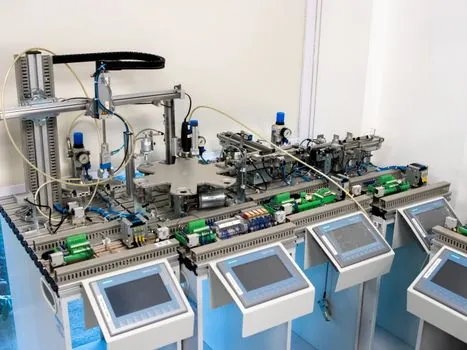
For interlocked guarding, the monitor's 4-20 mA loop must drive a safety relay or safety PLC input within the guarding reaction time, which on most category 3 / PL d cells sits in the 100-500 millisecond window; pick a sensor head whose T90 step response is comfortably below this floor. [S2]
Modbus RTU over RS-485 is the most common 2026 frame-side bus because it shares cable with guarding I/O blocks, and a single 4-20 mA spare channel is widely used as a fallback when the safety PLC lacks a serial port. HART, which is FSK superimposed on a 4-20 mA analog loop, is NOT directly compatible with FOUNDATION Fieldbus or PROFIBUS PA segments, so do not specify a HART-only monitor for a PROFIsafe segment without a dedicated HART-to-serial gateway. For guarding retrofits where only an analog input is free, a 4-20 mA output scaled to the chosen full-scale is the safe default.
Comparison of monitor families for guarding duty
Three families cover most frame-mount selections in 2026: low-cost laser-scatter PM counters (Dylos DC1100 PRO at USD 260.99, DC1700-PM at USD 475.00), fixed multi-gas heads with PM module (Aeroqual AQS 1 and Dust Sentry with the Airmar 200WX wind sensor, Gill ultrasonic wind sensor, and Cirrus MK427 noise sensor as catalog accessories) [S1][S2], and guarding-dedicated safety instruments that combine a particulate channel with a 4-20 mA safety output.
Against four decision criteria, the picture sorts cleanly. On target pollutant class, low-cost PM counters cover PM2.5/PM10, Aeroqual AQS 1 extends to gases (O3, NO2, CO, TVOC), and safety-dedicated units add a redundant particulate channel. On IP rating out of the box, PM counters ship near IP40, Aeroqual AQS 1 requires the Industrial Enclosure to reach IP54, safety-dedicated units typically ship at IP65. On safety-PLC interface, PM counters are USB/serial, Aeroqual offers 4-20 mA and Modbus, safety-dedicated units offer a SIL-rated 4-20 mA or PROFIsafe. On frame-mount mechanical integration, PM counters need a custom bracket, Aeroqual uses a documented enclosure pattern, and safety-dedicated units use a standard 40 mm pipe-mount or T-slot clamp.
Who should NOT pick a low-cost indoor unit
Low-cost indoor units such as the Dylos DC1100 at USD 199.99 are not appropriate for interlocked guarding: their enclosure is not rated for coolant or weld spatter, they lack a documented 4-20 mA safety output, and their particulate channel saturates above 10 mg/m3 which is below the peak loading of an unscreened weld cell [S2].
Forced pick of a low-cost unit in this duty typically fails the safety validation on two grounds: the response time exceeds the guarding reaction time when the head auto-ranges, and the analog output is not safety-rated, so a single drift event is indistinguishable from a real alarm. The right substitute for prototype work is a non-interlocked trend monitor plus a separate hard-wired smoke or spark detector that owns the safety stop function.
Calibration, airflow accessories, and guarding-side noise
Guarding-side monitors need on-site calibration at the chosen inspection interval; Aeroqual publishes the AirCal 1000 portable calibrator and the Aeroqual Service Kit in the same accessory line as the monitors, which is the documented path for keeping a frame-mounted unit in spec without removing it from the guard [S1].
Sample handling is often the weak link: a 1-2 m sample line to an external pump introduces lag, and a rain cap or inlet filter is required wherever the monitor sits outside the guard envelope. The Cirrus MK427 noise sensor in the same catalog lets the same enclosure carry an acoustic channel for guarding cells where the operator noise dose is also a compliance concern, and a flowmeter on the inlet line is a low-cost way to detect filter loading before the readings drift.
Sourcing, standards, and frame-side compliance
Air quality monitors on machine-guarding frames do not fall under aviation safeguarding rules such as Australia's National Airports Safeguarding Framework implementation review, which is referenced here only as a parallel governance example for environmental monitoring governance around operational assets [S3]. For shop-floor machine guarding the governing documents are ISO 13849-1 for the safety-related parts of the control system and IEC 61496-1 for electro-sensitive protective equipment; the air monitor itself sits outside the safety function unless it is explicitly wired to a stop signal, in which case its interface must meet the same performance level as the rest of the guarding chain.
For process engineers cross-referencing bench-grade instruments in adjacent cells, the thermocouple probe selection guide for type, sheath, and termination covers temperature channels that are commonly co-located with a frame-mounted air monitor, and the benchtop conductivity meter selection criteria for laboratory QA benches covers the wet-side instrumentation that may share a panel. The air quality monitor encyclopedia entry gives a baseline glossary for non-specialists on the spec sheet, while the electrical fire monitor reference covers the parallel class of guarding-side fire and smoke detectors that often pair with an air monitor on the same frame.
Next nodes: confirm the monitor's published T90 step response against the guarding reaction time, validate the analog output SIL capability with the manufacturer's declaration of conformity, and check the calibration interval against the planned maintenance route before issuing the panel drawing.
For the relevant spec sheets and selection criteria, see power quality analyzer.