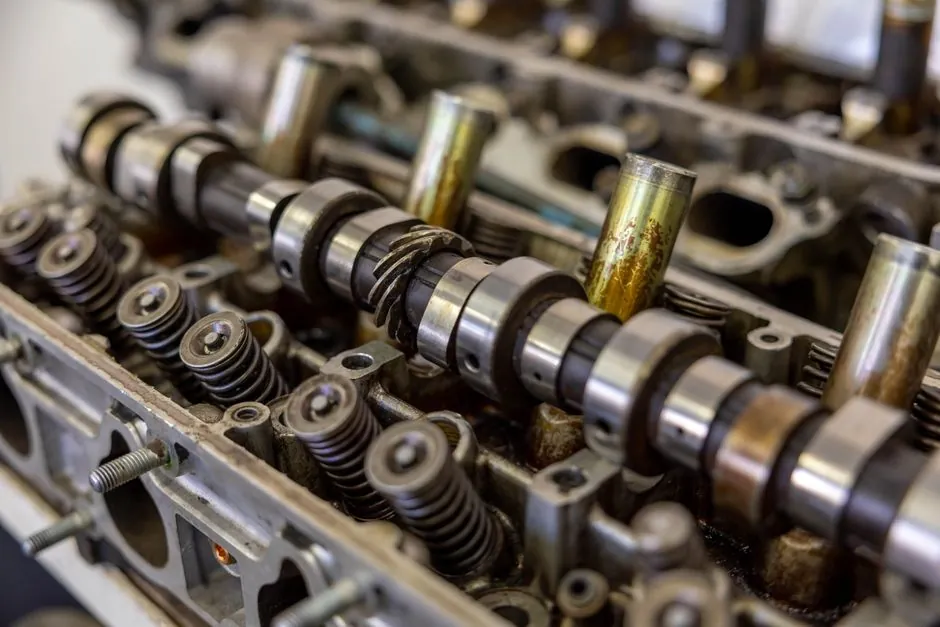
Specifying an air solenoid valve for a compressed-air line is a five-step calculation: confirm media, set the required Kv (Cv), match the operating pressure window to the valve's actuation mode, verify port size, then check the solenoid coil insulation class and duty cycle [S1].
The category spans 2-way and 3-way bodies, direct-acting, pilot-operated diaphragm, and pilot-operated piston constructions, with general-purpose series such as ZS, SLP, DF, 2W, miniature SWGM/SWLF, high-pressure SLG/SLZ, and approved EX-PROOF, UL, NSF, and WRAS variants all available on a single OEM catalog [S1]. For air service specifically, the spec map below is the practical decision gate most plant engineers end up using on a new build or retrofit.
Kv/Cv, Port Size, and the 1.2× Margin Rule
Kv (metric, m³/h at 1 bar Δp) or Cv (US gal/min at 1 psi Δp) is the first hard number to lock in, because a valve running at >80% of its rated flow is the most common source of seat wear, coil overheating, and slow actuation [S1]. A practical spec margin is to size the valve so the calculated required flow does not exceed roughly 80% of rated Kv; that gives headroom for filter clogging, temperature drift, and the pressure drop the line will see under peak load.
Port size follows from line size and required flow, not the other way around. For shop-air service at 6–8 bar (87–116 psi), 1/4-inch NPT or G-port bodies are common on 1/4-inch tubing, 3/8-inch and 1/2-inch scale to manifolds and larger actuators, and 3/4-inch to 1-inch is the typical ceiling for pilot-operated diaphragm valves before stepping up to an air-operated valve. A pilot-operated diaphragm unit will outlast a direct-acting valve of equal port size in the same compressed-air loop, because the diaphragm multiplies the magnetic force into a larger seat area [S1].
Direct-Acting vs Pilot-Operated: When Each One Wins
A direct-acting solenoid valve uses the magnetic force of the coil alone to lift the plunger off the seat, so it tolerates zero differential pressure and stays reliable on vacuum or low-pressure air, but it is physically limited in orifice size by what a single coil can pull. Pilot-operated valves bleed a small amount of media above or below a diaphragm or piston; that pressure differential does the heavy lifting, so the same coil class can open 1/2-inch and larger orifices that no direct-acting coil could lift directly [S1].
The trade is clear: choose direct-acting for vacuum lines, very low pressure differential, or miniature size (SLW, S10, S15, SWGM, SWLF series, with SLM often called out as both miniature and general-purpose) [S1]. Choose pilot-operated diaphragm for general shop-air and pneumatic panel work up to roughly 1/2-inch; choose pilot-operated piston for high-pressure air, water, oil, and steam-adjacent duties where a diaphragm would creep (the ZCZ, SLQF, and ZCT steam-series are the typical crossover, with SLG/SLGA and SMG/SMZ noted on the high-pressure tier) [S1]. A 3/2 or 5/2 way body (SLV, SLT, SLVM, SWXV series) is the right pick when the next stage is a pneumatic cylinder or actuator that needs spring-return or double-solenoid control [S1].
Pressure Window, Temperature, and Media Compatibility

Air solenoid valves are routinely rated 0–10 bar (0–150 psi) on the body for general-purpose series, with high-pressure options extending to 50 bar and beyond on the SLG/SLGA and SMG/SMZ lines [S1]. The pressure window matters as a minimum-differential number for pilot-operated types: if the supply pressure can drop below roughly 0.5 bar, a pilot-operated valve may stay closed even with the coil energized, because the bleed hole can no longer build the differential that opens the diaphragm.
For media compatibility, dry, filtered compressed air below roughly 80 °C is the friendly zone; above that, the seat material and body seals drive the call. NBR (nitrile) is the default for air at ambient; EPDM and FKM (Viton) are specified where oil-contaminated or elevated-temperature air is present. OEM approved-series options (UL for North America, NSF for potable-water-adjacent service, WRAS for UK water, and EX-PROOF for hazardous areas) are listed as distinct catalog tracks, not as upgrades, and the certification mark is what the inspector reads first, not the model code [S1].
Coil Class, Duty Cycle, and Electrical Interface
Coil insulation class is the line that decides whether a valve can run continuous duty, because an F-class (155 °C) or H-class (180 °C) coil will outlast a B-class (130 °C) coil in a panel that sits at 50 °C ambient for months. Continuous-duty coils (100% ED) are the default on most of the general-purpose and miniature series; latching or pulse coils (SLPM series) are specified where holding current is a problem, such as battery-powered or remote telemetry panels where a held coil would drain the supply [S1].
Voltage is a 24 VDC / 24 VAC / 110 VAC / 220 VAC choice; the practical rule is to standardize one DC voltage on a panel and one AC voltage for line-powered enclosures to keep spares simple. DIN-connector coils, flying leads, and conduit entries are the three electrical interface options most catalog sheets expose, and that choice is mechanical, not electrical, so it follows the cabinet layout. Proportional variants (STJF and SBLF series) and timer-equipped coils (SLX TIMMER) are the in-line upgrades when the application wants variable flow rather than simple on/off [S1].
What an Air Solenoid Valve is NOT the Right Tool For
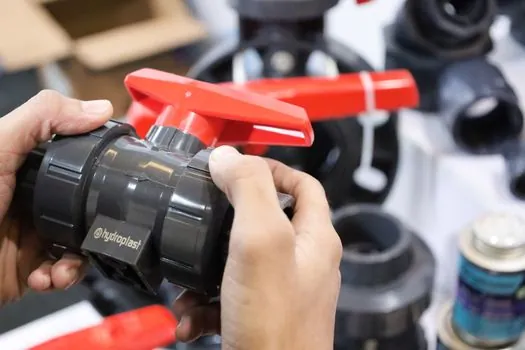
An air solenoid valve is the wrong pick on three common duties: very high cycle counts above roughly 200 cycles per minute, where a pneumatic or mechanical valve is more durable; clean-in-place or sterile pharmaceutical service, where a sanitary diaphragm or pinch valve is required and the solenoid body becomes a harbor; and hazardous-area service without an EX-PROOF certification, where the coil housing itself is a documented ignition source [S1]. High-pressure air over roughly 10 bar in a continuous-on application also sits in a gray zone, because pilot-operated diaphragms will fatigue the diaphragm faster than a piston or directly rated high-pressure body.
Another common mismatch is using a 2-way normally-open valve where a 3-way body is needed to vent the downstream side of a single-acting cylinder. A 2/2 valve holds pressure on the cylinder when closed and vents only when energized; a 3/2 valve can dump cylinder pressure to exhaust in the de-energized state, which is what most fail-safe pneumatic circuits require. Picking the wrong way-count wastes power and slowly damages actuators over time.
Real Use Cases: Compressed-Air Panels, OEM Equipment, and Field Service
On a typical factory compressed-air panel, a 1/2-inch pilot-operated diaphragm valve such as the 2W or DF series is the default block-and-bleed shutoff for a machine island; the 3/2 variants go on each single-acting cylinder, and a 5/2 body drives double-acting cylinders with spring return or double-solenoid [S1]. On OEM skids such as an RO water unit, the SLC series is the documented catalog call-out, and the approved NSF and WRAS lines are what carries the food-and-beverage or potable-water approval [S1].
In mobile-equipment service, the solenoid valve frequently sits inside a hydraulic main-control block on a Komatsu PC270LC-8 or PC450LC-7 excavator, where the valve is a serviceable component within the cooling, fuel-line, and main-control-valve assemblies rather than a discrete in-line item [S2][S3]. The same logic drives specifier caution on pneumatic tooling and air picks, where the operating-air spec on the tool datasheet is the only authoritative source for the solenoid upstream of it, as noted in the field-engineering guide on air pick selection for electrical installation work.
Sourcing, Standards, and the Shortlist Logic

The OEM published catalog is the most efficient starting point for sourcing, with general-purpose, high-pressure, miniature, cryogenic, air-operated, 3-way, RO, acid/alkaline, underwater, gas, axial, irrigation, vacuum, proportional, latching, and dusty series all documented as distinct code tracks on a single site [S1]. The first-pass shortlist is therefore: pick the construction family (direct-acting, pilot-diaphragm, pilot-piston, or 3-way), pick the port size from the line size, set the minimum Kv at 1.2× to 1.25× the calculated required flow, pick the body material and seat material from the media table, then pick the coil class and approved-series mark from the certification the inspector will check.
Trackable signals to watch over the next 6 to 12 months: the rollout of EX-PROOF approvals on miniature bodies for hazardous-area retrofits, more proportional and IO-Link-capable valve manifolds replacing discrete wiring, and the migration of 24 VDC latching coils into battery-backed remote pneumatic panels. For specifiers cross-shopping flow-meter decisions alongside valve decisions on the same skid, the same voltage-class and certification discipline applies.