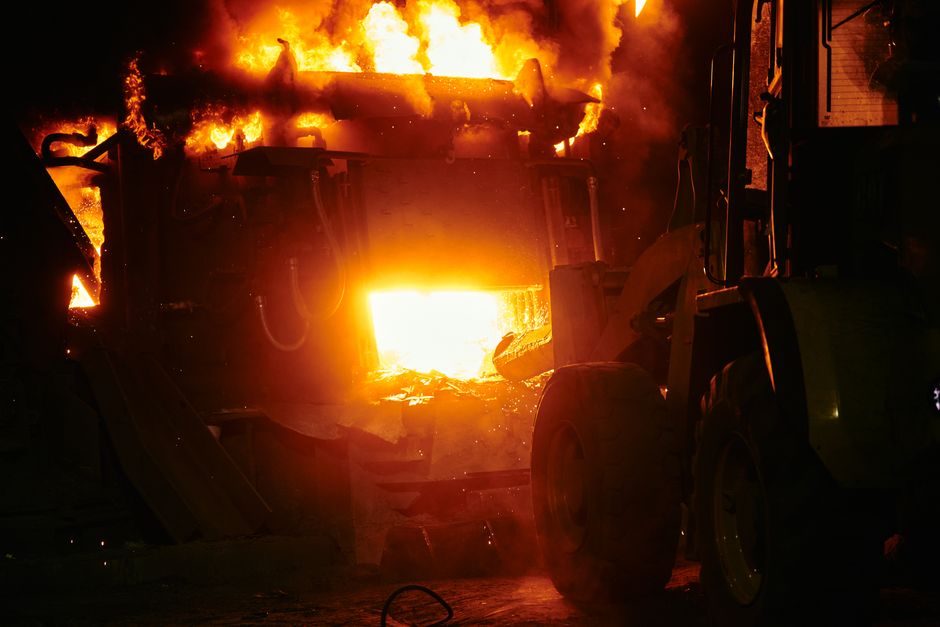
Energy equipment — fired heaters, HP steam piping, hydrocracker reactors, compressor cylinders, sour-service flowlines — runs across temperature bands from sub-zero LNG (-196°C) to 650°C superheater tubes, and alloy steel is the dominant metallic class specified across that envelope [S2][S6]. Selection is driven by three decision axes: temperature-strength (creep), corrosion/SSC resistance, and fabricability (weldability, availability in pipe/plate/forging) [S4].
Unlike carbon steel, alloy steel adds deliberate amounts of Cr, Mo, Ni, V, or B to push strength, hardenability, or corrosion performance well beyond plain C-Mn [S4]. For an engineer writing a piping or pressure-vessel spec, the practical question is which family of alloy — and which ASTM/ASME product form — fits the service window.
Cr-Mo Pipe and Forging Steels for High-Temperature Service (400-650°C)
ASTM A335 P11 (1.25Cr-0.5Mo), P22 (2.25Cr-1Mo), and P91 (9Cr-1Mo-V) remain the dominant alloy-steel designations for HP steam, superheater tubes, and hydroprocessing reactor shells operating above 400°C [S2][S6]. A335 P11 typically covers 1.25Cr-0.5Mo pipe in the 1/2"-26" range with wall thicknesses to XXS, while A335 P91 (9Cr-1Mo-V) is the modern workhorse for new ultra-supercritical units because of its roughly 10× higher creep rupture strength than P22 at 600°C [S6].
For matching fittings and flanges, ASTM A182 F11, F22, and F91 forging grades are specified to match the pipe, ensuring weld-procedure and hardness-control consistency across the joint [S2]. Baochang lists long-welding-neck, orifice, and lap-joint flange forms in these alloy grades as stock items for refinery and power-plant use [S2]. For sub-400°C systems, ASTM A335 P5 (5Cr-0.5Mo) and P9 (9Cr-1Mo) fill the gap where higher creep strength than P22 is unnecessary but better sulfidation resistance than carbon steel is required [S6].
Low-Alloy Engineering Steels for Rotating and Valve Equipment
Below 400°C, AISI 4130 and 4140 chromoly — covered under ASTM A29 for bar, A519 for mechanical tubing, and AISI/SAE grade specifications — dominate pump shafts, compressor rotor forgings, valve bodies, and high-pressure fittings where through-hardening and tensile strength in the 90-125 ksi range are required [S7]. Alloy Steel International's product scope confirms these grades as the engineering baseline for mining and process rotating equipment, with heat-treatment (quench-and-temper) used to reach the required UTS/YS/elongation combination [S7].
4140 in the Q&T condition typically delivers 125-150 ksi UTS with 14-17% elongation in sections up to ~100 mm, while 4130 — with lower carbon (0.28-0.33% vs 0.38-0.43%) — retains better weldability and impact toughness for thin-wall pressure housings and instrument tubing [S7]. For sour-service (H₂S-containing) wellhead and flowline components, NACE MR0175 / ISO 15156 restricts the hardness envelope of low-alloy steels to a maximum of 22 HRC (per the standard's environmental severity table), and qualifying a 4130/4140 forging to that limit is a routine metallurgical step rather than a special order [S7].
Sour-Service, Corrosion, and Material-Option Comparison
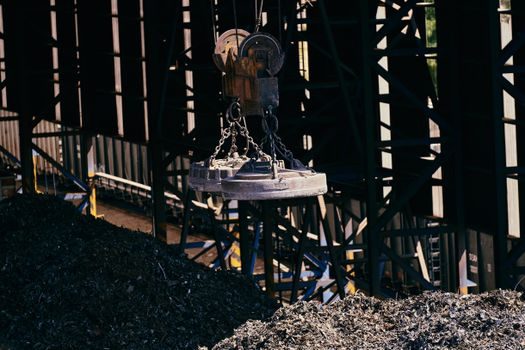
Energy Equipment LLC, formed in 2001 as a manufacturer's representative for natural gas, power generation, and refinery markets, distributes the equipment — valves, actuators, filtration, measurement — into which these alloy-steel components are welded or machined [S3]. Their vendor stack (Limitorque actuators, SOR measurement, Keckley filtration) is representative of the type of equipment where the alloy decision lives downstream: the valve body is often A216 WCB or A352 LCC carbon steel, but the trim, stem, and seat ring are 410 SS, 17-4 PH, or 4130/4140 alloy-steel hard-faced inserts [S3].
A direct criteria-based comparison for the three common alloy choices on a 50 MPa, 350°C, mildly sour gas service:
1) AISI 4130 (Q&T, ≤22 HRC): lowest cost, good availability, weldable, limited above 400°C.<br>2) A335 P22 (2.25Cr-1Mo): higher temperature ceiling (~600°C creep-rated), good oxidation/sulfidation resistance, requires preheat/PWHT for welding.<br>3) A182 F91 (9Cr-1Mo-V): highest allowable stress at 600°C, used in new USC boilers; expensive, requires严格的 preheat (≥200°C) and PWHT control.
For pressure-vessel and piping weld procedure qualification, ASME Section IX governs the procedure, while ASME B31.1 (power piping) and B31.3 (process piping) set the design stress — each cross-references the same material spec but with different allowable-stress tables [S6]. Chromium-molybdenum pipe suppliers such as the chrome-moly-pipe.com operation carry the full A335 P1/P5/P9/P11/P12/P22/P91/P92 family alongside LTCS, duplex, and stainless lines for one-stop procurement [S6].
Selection Criteria and Decision Map for Spec Writers
Four criteria, in order of weight, normally decide the grade: (1) design temperature and required creep strength, (2) corrosion/SSC environment including H₂S partial pressure and chloride content, (3) required product form (pipe, plate, forging, bar) and the matching ASTM/ASME spec, (4) fabricability — preheat, PWHT, and post-weld hardness control. ASME Section II Part A and Part D respectively list the allowable-stress and physical-property values used in the design calculation. [S1]
For upstream wellhead equipment operating in sweet or mildly sour service at <200°C, low-alloy 4130/4140 in the Q&T condition remains the default because of cost and lead time [S7]. For fired-equipment and power-plant service in the 400-650°C window, the Cr-Mo family (P11/P22/P91) is mandatory because carbon and low-alloy steels lose their creep margin [S2][S6]. For high-H₂S or chloride-laden refinery and gas-processing service, the alloy-steel solution is often replaced by stainless or nickel-alloy alternatives — but where alloy steel remains selected, hardness control per NACE MR0175 is the controlling spec. A related engineering case where alloy selection drives equipment geometry is the die-casting of housings; the Die Casting Machine Selection for Energy Equipment: Alloy, Tonnage, and Shot-Weight Spec reference maps the same alloy families onto machine clamping force and shot weight, which is useful when the energy-equipment component is cast rather than forged.
Limitations, Failure Modes, and Where Alloy Steel Stops Being the Answer
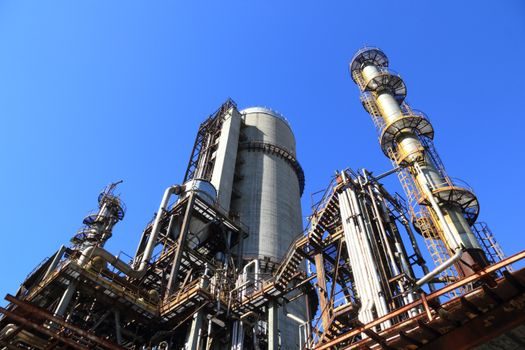
Alloy steel has three structural weaknesses in energy service. First, above 650°C even P91 enters the creep-acceleration zone and oxidation rates climb sharply; austenitic stainless or nickel alloys are then specified. Second, in wet-sour or chloride-rich service, low-alloy steels are vulnerable to SSC and chloride-assisted stress-corrosion cracking even when hardness is held below 22 HRC, and the project standard typically escalates to 410 SS, duplex, or Inconel cladding. Third, P91's creep strength depends on a fine MX-type precipitate that coarsens above 600°C, and weld HAZ softening is a documented failure mode that requires严格的 PWHT temperature control (typically 760 ± 15°C). [S6]
At the other end, austenitic stainless becomes brittle below -196°C, and alloy steel (particularly 9%Ni) bridges the LNG storage window [S5]. Titanium-alloy deep-diving pressure-hull research from the Chinese Academy of Engineering documents the equivalent low-temperature material map, where Ti-6Al-4V ELI replaces steel below -60°C for pressure-resistant structures [S5]. In the broader material-selector's view, aluminum-alloy is the alternative for lightweight low-pressure housings, and energy-meter enclosures and instrument housings on energy skids are increasingly specified in 316L stainless or aluminum rather than painted alloy steel for corrosion life.
Sourcing, Standards, and Trackable Signals
The dominant standards governing alloy-steel selection for energy equipment are: ASTM A335 (seamless ferritic alloy-steel pipe for high-temperature service), ASTM A182 (forged or rolled alloy-steel pipe flanges, valves, and fittings), ASTM A387 (pressure-vessel plates for elevated temperature), ASME B31.1/B31.3 (power and process piping design), and ASME Section II Part D (allowable-stress tables). Sour-service restrictions sit in NACE MR0175 / ISO 15156, and weld procedure qualification sits in ASME Section IX [S2][S6][S7].
Trackable signals for an engineer watching the 6-month spec landscape: (1) the number of stock suppliers carrying A335 P92 (9Cr-2W) for new USC projects is rising in the China-EU supplier base, indicating a substitution push from P91 [S6]; (2) inventory depth in P22 and F22 remains the broadest across flange, pipe, and fittings distributors, keeping P22 the default retrofit grade for legacy units [S2]; (3) 4130/4140 Q&T bar stock lead times at engineering-steel distributors continue to dominate pump-shaft and valve-trim sourcing decisions for greenfield refinery and gas-plant builds [S7].