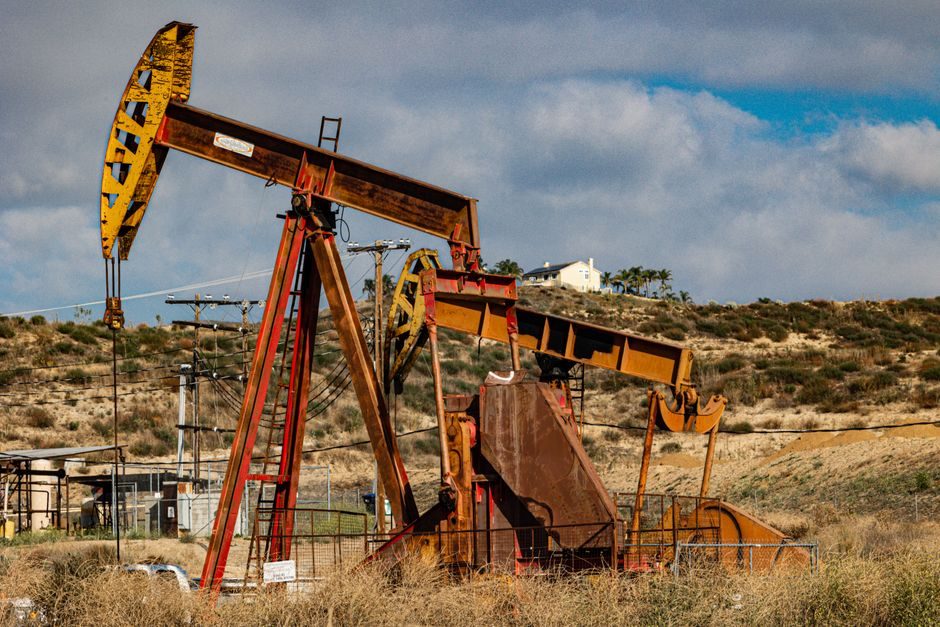
Low-alloy steels (typically <8% total alloying content) carry the bulk of upstream gathering, flowline, and transmission pipe in oil and gas, while corrosion-resistant alloys (CRAs) — including 13Cr, 22Cr/25Cr super duplex, Alloy 825, and Alloy 625 — are reserved for wells where CO2, H2S, chlorides, or temperatures push carbon and low-alloy grades past their corrosion or SSC limits [S3][S4].
The selection question is rarely "alloy vs. carbon"; it is which alloy family matches the pH2S / pCO2 / chloride / temperature window defined by NACE MR0175 / ISO 15156 and the operating pressure class (typically API 5L X65–X80 for linepipe, with sour-service derivatives such as X65QS noted by major mills) [S1][S4].
Where Low-Alloy Steel Still Earns the Spec
For sweet service (H2S partial pressure below the NACE sour threshold) and moderate temperatures, low-alloy steels remain the default: the Springer study on 06X1-Y low-alloy pipe blanks demonstrated that controlled forge-rolling plus a double short-term high-tempering heat treatment yields a fine-grained ferrite-pearlitic structure with up to 23% special low-angle α–α and α–γ grain boundaries, giving sulfide stress cracking resistance σ_gr ≥ 0.85·σ_0.2 and an API 5L strength grade of X56 — outperforming plain 20-grade carbon steel in both SSCC and hydrogen-induced cracking tests [S1].
That same paper documents hydrogen-charging tests in 1 N H2SO4 + 1.5 g/L thiourea, which is the type of laboratory screen used to qualify low-alloy pipe for mildly sour gathering systems where full CRA cladding would be uneconomic [S1]. The decision is essentially an SCC/HIC trade: if the operating envelope keeps pH2S low and chloride cool, low-alloy at API 5L X56–X65 is the rational choice.
Where Carbon Steel Must Be Replaced: CRA Clad and Solid CRAs
Once the well goes truly sour, hot, or chloride-rich, low-alloy no longer qualifies regardless of heat treatment. Industeel (ArcelorMittal) supplies stainless steel grades explicitly for "harsh oil and gas environments" including gas processing, gas liquefaction trains, and LNG storage tanks — covering 13Cr, super 13Cr, 22Cr/25Cr duplex-super duplex, and austenitic grades 825/625 [S4]. The Anjung Gas Development case study in the literature describes an 18-in. diameter × 8 km Corrosion Resistant Alloy (CRA) full wellhead flowline installation built for HPHT service, with installation-engineering mitigations (handling, lifting, welding windows) tied to the CRA selection [S6].
The two most common CRA routes are (a) solid CRA pipe (L450 / 13Cr-95 / 22Cr-110 / 25Cr-125 per ISO 13680 / API 5CRA), used when scale, hot-spot H2S, and chloride deposition all align to make clad economics unfavourable, and (b) CRA-clad carbon steel (mechanical clad or metallurgically bonded, e.g. 316L / 825 / 625 over API 5L X65/X70 pipe body), used for long flowlines and trunk lines where carbon steel carries the pressure and only the wetted surface needs to be corrosion-resistant [S4][S6].
Selection Criteria and the Four-Option Comparison
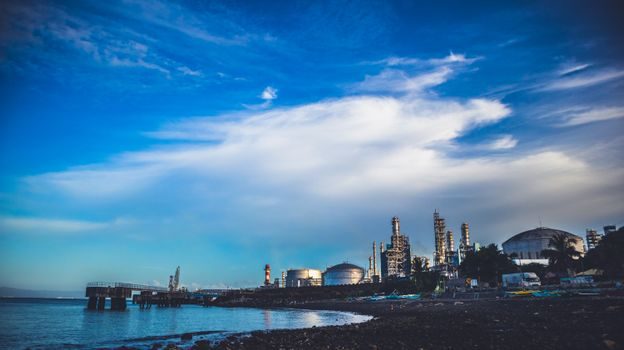
Four practical alloy families dominate oil-and-gas spec sheets, and the right choice falls out of four operating criteria: H2S sour service (NACE MR0175), temperature, chloride / CO2, and pressure. Compared side-by-side, the trade looks like this: (1) Low-alloy (e.g. 06X1-Y, X56–X65) — low cost, good weldability, limited to sweet or very mildly sour service and temperatures below roughly 60–80 °C; (2) 13Cr / super 13Cr martensitic — handles CO2-rich sweet-to-borderline sour wells to ~150 °C, but is sensitive to H2S and sweet SSC at higher hardness; (3) 22Cr / 25Cr duplex-super duplex — handles chlorides, moderate H2S, and temperatures up to ~250 °C, at higher cost and with stricter welding PWHT discipline; (4) Ni-base Alloy 825 / 625 (Inconel 625) — handles hot, sour, chloridic HPHT wells, premium cost, used when 25Cr is at its limit [S1][S4][S6].
Two operational details drive the line between options 2 and 3: chloride content (above ~50,000–60,000 mg/L, martensitic 13Cr tends to pit and crevice corrode) and in-situ pH (low-pH sour service at high hardness pushes 13Cr into environmental cracking). At that point, super duplex 25Cr or austenitic 825/625 is the engineered answer, and the pressure envelope is what tells you whether you can use clad versus full solid CRA [S4][S6].
Form, Fit, and the Downstream Fittings / Flanges Stack
Once pipe grade is fixed, fittings and flanges have to match — and this is where most procurement mismatches occur. Indian mill suppliers such as Prashaant Steel, Pearls Metals, and Doshi Impex list alloy-steel pipe fittings and flanges manufactured to ASME B16.5 (flanges) and ASME B16.9 (butt-weld fittings), with Pearls Metals also carrying IBR approval and certification to ISO 9001:2015, ISO 14001:2015, ISO 45001:2018, and European Directive 2014/68/EU (PED) for pressure equipment [S2][S7][S9].
Pearls Metals specifically pairs carbon-steel and alloy-steel fittings/flanges with IBR-approved pipe — relevant for upstream gathering where Indian Boiler Regulations apply — and the company's documentation set includes seamless and welded pipe products in carbon steel, alloy steel, stainless steel, Inconel, Monel, Hastelloy, and nickel alloy grades, which is the full upstream-to-midstream alloy ladder [S7][S8]. For sour service, the same vendor stack typically needs to be re-specified to ASTM A182 (forged fittings/flanges) F51/F55/F60 duplex-super duplex or N06625 / N08825 for the hot ends, with the pipe body still on API 5L X65/X70 [S8].
Common Failure Modes the Spec Has to Pre-empt
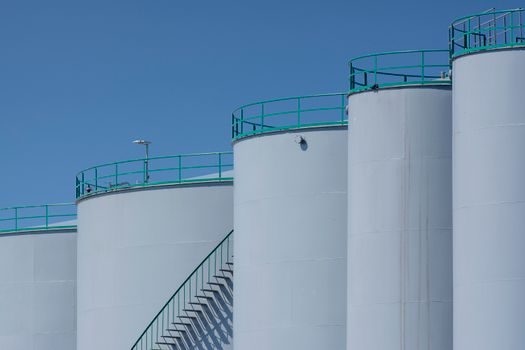
Three failure families dominate alloy-steel service in oil and gas, and each is mapped to a specific spec lever. Sulfide stress cracking (SSC) is controlled by NACE MR0175 / ISO 15156 environment severity (Region 0–III) plus hardness cap (typically HRC 22 / HRC 32 depending on region and material class); hydrogen-induced cracking (HIC) in low-alloy pipe is controlled by cleanliness, inclusion shape control, and the controlled-rolling route documented for 06X1-Y [S1]. CO2 corrosion ("sweet corrosion") in carbon and low-alloy steels follows the well-known CO2 partial pressure / temperature envelope, which is why 13Cr or higher-Cr grades are the default for wet-CO2 producers above roughly 80 °C [S4].
Cl pitting and crevice corrosion in CRAs is controlled by PREN (Pitting Resistance Equivalent Number = Cr + 3.3·Mo + 16·N) — super 25Cr duplex typically clears PREN ≥ 40, while Alloy 625 goes well above that — and by ensuring welded joints do not drop the parent-metal PREN through improper filler selection. In CRA-clad pipe, the third failure mode specific to that form is bond-line integrity and clad-side HIC/SSC after hot bending, which is why NACE MR0175 Part 2 (CRAs) and Part 3 (clad linepipe) are read together when the procurement sheet is written [S4][S6].
Standards, Specifications, and the Procurement Shortlist
The standards backbone of any alloy-steel procurement for oil and gas reads roughly as follows: API 5L for linepipe (X56–X80, including sour-service and CRA-clad annexes), API 5CRA / ISO 13680 for solid CRA pipe, ASTM A182 / A234 for forged fittings and butt-weld fittings, ASME B16.5 / B16.9 for flanges and fittings geometry, NACE MR0175 / ISO 15156 for sour-service material selection, and PED 2014/68/EU when the assembly ships into the EU [S2][S7]. Pearls Metals documents its compliance against that exact stack — ISO 9001:2015 quality, ISO 14001:2015 environment, ISO 45001:2018 safety, and PED 2014/68/EU — alongside IBR approval for the Indian market [S7].
For sour-service CRA procurement, the practical shortlist is: API 5L X65QS / X70QS (sour linepipe), L415 / L450 13Cr-95, L415 / L450 22Cr-110, L450 / L485 25Cr-125 / 25Cr-130 super duplex, and N08825 / N06625 solid for the hot, high-chloride, high-H2S end of the envelope. Vendors stocking the full ladder — Pearls Metals, Prashaant Steel, Doshi Impex, and Steel India Co. all publish material ranges that span this list [S2][S7][S8][S9]. The two next signals worth tracking are revisions to NACE MR0175 / ISO 15156 (which periodically tighten Region III limits) and any mill announcements extending X80 sour-service availability into gathering systems, where X65QS has historically been the practical ceiling. For adjacent selection work outside the metallurgical stack — for example, matching on-site gas monitoring when welding or hot-tapping alloy piping — the spec map at fixed gas detector guidance is a useful parallel reference.
Component reference pages worth checking: oil seal, gas analyzer, and gas chromatograph.