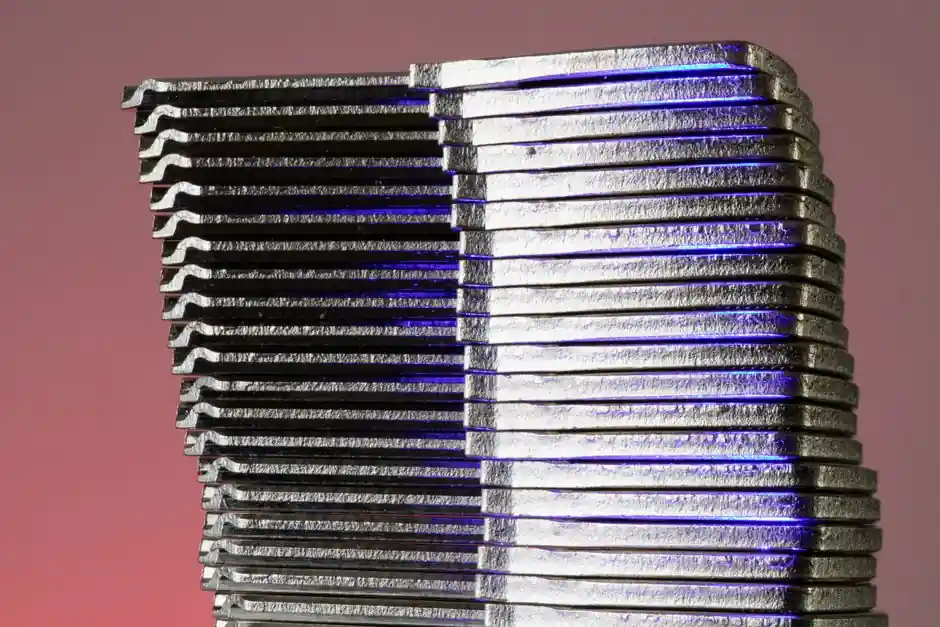
AlNiCo magnets retain usable magnetic flux at continuous service temperatures of 500-540°C, whereas standard ferrite (ceramic) magnets show reversible flux loss starting around 80°C and irreversible demagnetization above roughly 250°C [S7][S8]. On cost, ferrite is consistently the lowest-price permanent magnet family, with AlNiCo typically 3-10x more expensive per piece at equivalent volume [S1][S2][S6].
The two materials serve very different design windows. AlNiCo is the right pick when the magnetic circuit is stable, the geometry tolerates a longer magnet, and ambient or self-heating temperatures exceed ferrite's comfort zone. Ferrite dominates when cost, corrosion resistance, and volume manufacturability outweigh the need for compact high-energy output [S1][S6].
Temperature Stability: Reversible vs Irreversible Behavior
AlNiCo's reversible temperature coefficient of remanence is small (roughly -0.02%/°C), and several AlNiCo grades hold magnetic properties at 500°C or more, with some specialty grades rated to 540°C [S7][S8]. Standard neodymium, by contrast, is rated only to about 80°C, with special high-temp grades pushing toward 200°C [S4][S8]. AlNiCo's high Curie temperature (above 700°C) is the underlying reason it keeps working where rare-earth magnets quit [S7].
Ferrite's behavior is the opposite end of the curve. The material is highly resistant to corrosion and to demagnetization from external fields, but its flux density drops predictably with temperature and is reversible only up to roughly 250°C; beyond that, irreversible losses begin [S1][S2][S3]. For most industrial ferrite grades the practical operating ceiling sits between 80°C and 250°C depending on grade and loading [S4]. The reversible nature of ferrite's low-temperature loss means the magnet recovers when cooled, which is useful in intermittent-duty applications but a real limitation in continuously hot environments [S3].
Cost Structure and Material Economics
Ferrite magnets are made from iron oxide combined with strontium, barium, or lead, and that raw-material base is what keeps the per-part cost low [S2]. In buyer-oriented comparisons, ferrite is consistently labeled the lowest-cost permanent magnet option, and AlNiCo is positioned as medium-to-high cost, typically 3-10x ferrite's price at similar dimensions [S1][S6]. Samarium cobalt sits above AlNiCo and is the most expensive of the four mainstream families [S1][S2].
AlNiCo's higher price comes from the aluminum-nickel-cobalt alloy plus the casting or sintering process, and from the fact that AlNiCo requires a defined magnetic circuit (often a soft-iron return path) to deliver its full flux because of its low coercivity [S1]. Ferrite, in contrast, has high coercivity and works in open circuits, which simplifies fixturing and reduces total system cost in motors, speakers, and holding assemblies [S2][S5]. For high-volume molded ferrite parts, tooling amortization and short cycle times push unit cost down further, which is why ferrite still owns most consumer loudspeakers, refrigerator magnets, and small DC motors [S2].
Magnetic Strength and Geometry Tradeoff
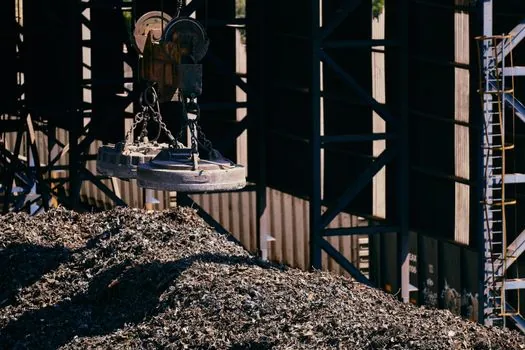
AlNiCo delivers higher magnetic flux density per unit volume than ferrite, but its intrinsic coercivity is low, meaning it can be partially demagnetized by external stray fields, mechanical shock, or improper assembly [S1][S9]. A well-designed AlNiCo circuit therefore needs a defined flux path and often a magnet length-to-cross-section ratio that ferrite parts can match at a larger size and lower cost [S1][S9].
Ferrite's magnetic output is moderate, typically a fraction of neodymium's, so for a given force target the ferrite magnet must be physically larger [S1][S4]. That size penalty is acceptable in speakers, separator drums, refrigerator door gaskets, and many motor housings, where the volume is already available and the part cost matters more than compactness [S2][S6]. Where compactness is mandatory, the trade usually shifts to neodymium, not AlNiCo, because neodymium's energy product beats AlNiCo while costing less than SmCo [S1].
Application Fit: When Each Material Earns Its Slot
AlNiCo is specified in pickups, certain high-temperature sensors, watt-hour meter components, and legacy guitar and instrument speakers where the combination of tonal character and heat tolerance matters [S5][S7]. It is also the material of choice where operating temperatures exceed 300°C continuously, in instruments that must hold calibration across wide thermal swings, and in some magnetic couplings exposed to engine bay or industrial-oven heat [S7][S8].
Ferrite is the workhorse in low-cost DC motors, loudspeakers, magnetic separators, refrigerator magnets, craft and consumer assemblies, and any outdoor application where corrosion resistance is required without metallic plating [S2][S6]. Its high coercivity makes it stable in adverse electrical and mechanical environments, and its low cost lets designers oversize the magnet to meet flux targets without breaking the bill of materials [S2]. For temperature-sensitive measurement chains that pair magnets with sensors, see the temperature measurement instrumentation guide for how flux drift interacts with upstream signal conditioning.
Limitations, Failure Modes, and Selection Pitfalls
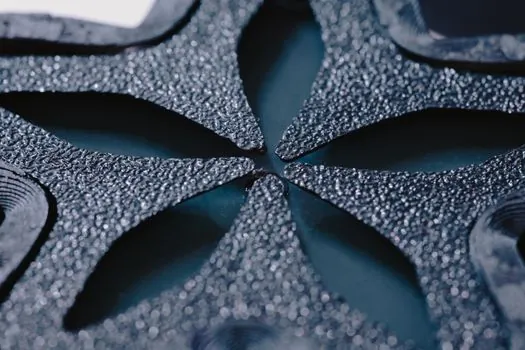
AlNiCo's low coercivity is its main failure mode: a stray field from a nearby energized coil, a sharp mechanical impact, or a poorly designed return path can partially demagnetize the part, and the loss is irreversible without remagnetization [S1][S5]. AlNiCo parts are also brittle and chip easily during press-fitting, so handling and assembly fixturing deserve design attention [S2].
Ferrite's failure modes are different. It is brittle and chips under impact, its flux drops reversibly with temperature, and in high-vibration or high-shock environments the ceramic can crack if not potted or supported [S2][S3]. Ferrite also has a much lower energy product than neodymium or SmCo, so a designer who tries to shrink a ferrite assembly to neodymium dimensions will end up under-powered at best and demagnetized at worst [S1][S4]. For facilities that monitor thermal performance of magnet-bearing assemblies, the construction machinery and equipment reference covers vibration and load profiles common in those installations.
Decision Matrix: Picking Between AlNiCo and Ferrite
On four common decision criteria, the spread is clear. Continuous operating temperature: AlNiCo wins, with 500-540°C capability versus ferrite's practical 80-250°C ceiling [S4][S7][S8]. Cost per part: ferrite wins, typically 3-10x cheaper than AlNiCo at equivalent volume [S1][S2][S6]. Corrosion resistance: ferrite wins, holding up outdoors without plating while AlNiCo needs a defined circuit and is more sensitive to surface handling [S1][S2]. Coercivity and open-circuit stability: ferrite wins again, because its high intrinsic coercivity tolerates stray fields and shock far better than AlNiCo's low-coercivity alloy [S1][S5]. The trade is size and weight: AlNiCo gives more flux per unit volume, so if the envelope is fixed and the temperature is high, AlNiCo earns its higher price [S1][S9].
For procurement and supply-chain planning, watch two signals through 2026. First, the published comparison tables from major magnet vendors (Apex, Radial, Stanford, Mainrich) continue to converge on the same AlNiCo 500-540°C and ferrite 80-250°C operating windows, which means thermal-stability claims can be cross-checked against any vendor datasheet [S1][S2][S7][S8]. Second, ferrite's cost advantage is reinforced by raw-material availability (iron oxide, strontium, barium) versus AlNiCo's cobalt and nickel content, so the price gap is unlikely to flip without a major metals-market shift [S2][S6]. For test and metrology fixtures that depend on stable magnetic fields, the checking and testing apparatus reference outlines calibration environments where AlNiCo's thermal stability justifies its premium.
See also our earlier report, Busbar and Breaker Temperature Monitoring: Sensors, Standards, and 2026 Field Data.