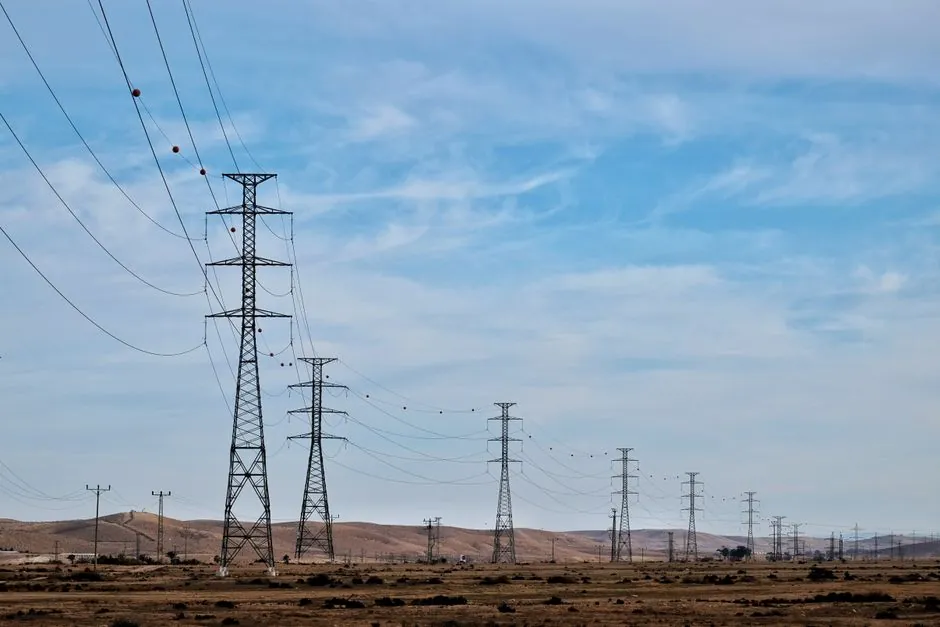
A 380 V, 50 Hz, 3150 A low-voltage distribution cabinet (GGD-class) with integrated isolator switch and flexible copper busbar is the baseline specification for new power-generation builds in 2026, per GRL's GGD product brief [S2].
For generation assets, the cabinet sits downstream of medium-voltage switchgear and upstream of final branch circuits, so its short-circuit rating, selective coordination, and ingress protection are the three specs that determine uptime, not its enclosure color or brand badge.
Definition and Scope: What Counts as a Generation-Grade Cabinet
A power-generation distribution cabinet is the low-voltage assembly that receives stepped-down power from the medium-voltage side (typical 6–35 kV class metal-clad or arc-resistant switchgear) and distributes it at 380/400 V to station service loads such as lighting, MCC feeders, HVAC controls, battery chargers, and auxiliary plant equipment [S1].
Generation-grade units differ from commercial building panels in three ways: (1) busbar bracing rated for the full available fault current at the service entrance, often 50–100 kA short-circuit withstand; (2) selective coordination between upstream medium-voltage relays and downstream LV breakers so a fault trips the smallest possible block; and (3) the ability to operate continuously at 3150 A with derating curves published for ambients above 40 °C [S2].
For outdoor substations, switchyard auxiliary rooms, and wind-farm pad-mount step-ups, an IP54 enclosure is the practical minimum, and a 2.0–3.0 mm cold-rolled steel housing with powder coating is the dominant construction in the GGD family [S2].
Selection Criteria: Seven Specs That Decide the Bid
Specifying engineers should score candidates on (1) rated voltage and frequency, (2) maximum bus current, (3) short-circuit withstand (Icw, kA/1s), (4) ingress protection, (5) protection relay coordination class, (6) busbar material and cross-section, and (7) compliance to the governing standards stack (NEC, NFPA 70E, IEEE 1584, UL 891, IEC 61439) [S1].
GGD-type cabinets specifically cover AC 50 Hz, 380 V rated, up to 3150 A main bus, with isolator switch and flexible copper busbar as the standard internal architecture; optional capacitor banks deliver reactive power compensation, lifting power factor and cutting line losses in the station-service feed [S2].
For thermal management of standby generators paired with the cabinet, electric process air heaters, enclosure heaters, and flexible surface heaters (polyimide, silicone rubber, mica) are the typical conditioning elements, sized to keep fuel systems, engine blocks, and air intake within their cold-start temperature window [S4].
Who It Is For and Who It Is Not
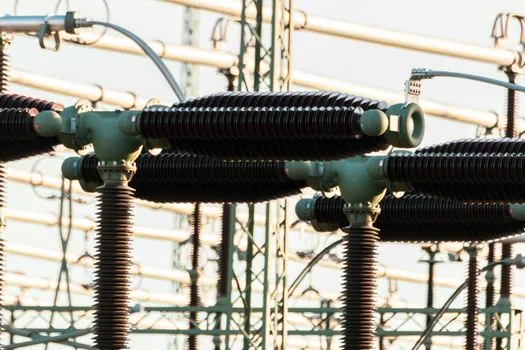
This cabinet class is for utility-scale power plants, substations, industrial cogeneration sites, wind and solar plant switchyards, and distributed-generation (DG) installations that need a 380/400 V auxiliary service bus with documented short-circuit and coordination performance [S2][S5].
It is NOT the right product for residential service panels, light-commercial tenant metering, or any single-phase 120/240 V application. For those, a smaller DIN-rail consumer unit or NEMA 1 indoor panel is the correct, lower-cost choice. Buyers sourcing a portable power distribution box for live events should also look elsewhere, since concert distro prioritises 100–400 A stage feeders with cam-lok or twist-lock connectors and a 30 mA RCD per branch, not 3150 A fixed busbar assemblies [S3].
Comparison: Main Cabinet Options for Generation Duty
Three cabinet families dominate the 2026 generation-station market. The table-style comparison below lines them up against the four criteria that actually drive a purchasing decision.
GGD-type LV cabinet (380 V, up to 3150 A): integrated isolator, flexible copper busbar, IP54 outdoor option, integrated reactive-power compensation, lowest cost per ampere for fixed indoor/substation installs [S2]. MCC cabinet (motor control centre, 380/400 V, typically 630–1600 A vertical bus): optimised for frequent motor starts and variable-frequency-drive feeders; better for plant auxiliaries than for the main station-service bus. See MCC cabinet for the architecture trade-offs.
Explosion-proof distribution cabinet (380/400 V, Ex d IIB or IIB+H2, IP65): mandatory in hydrogen-rich, fuel-handling, or paint-booth zones inside a generation plant, with a 30–50% cost premium over the GGD baseline; reference explosion-proof distribution for zone mapping.
For the broader taxonomy, power distribution frames the upstream medium-voltage switchgear question, distribution cabinet covers the enclosure and busbar choices, and cable distribution cabinet covers the cable entry and termination geometry. Each option hits different criteria: GGD wins on cost-per-amp and ease of customisation; MCC wins on motor starting and withdrawable functional units; explosion-proof wins on hazardous-area compliance.
Real Use Cases in 2026 Power-Generation Projects

Data-centre-adjacent gas-turbine peaker plants now specify 380 V GGD cabinets as the station-service backbone, with battery energy storage system (BESS) cabinets conditioned by flexible surface heaters to hold lithium-ion modules inside a 15–35 °C window [S4].
Distributed-generation optimisation studies published in 2026 confirm that DG-I (real-power only) and DG-II (real + reactive) units, when paired with switched capacitor banks, reduce line losses, improve voltage stability, and shave peak load on radial distribution feeders, which is exactly the operating envelope a GGD with reactive-power compensation targets [S5].
For AI-buildout data centres, hospital co-generation, and military microgrids, the standby generator block is thermally conditioned with process air heaters and enclosure heaters sized for cold-start reliability below 0 °C, and the cabinet that feeds those loads needs the same Icw and coordination headroom [S4].
Limitations, Failure Modes, and Standards to Watch
The most common failure in a 3150 A LV cabinet is busbar joint loosening under thermal cycling, which the flexible copper busbar design addresses, but only if torque is re-checked at the 6-month and 12-month service intervals [S2]. Arc-flash incident energy above 40 cal/cm² is a recurring finding when selective coordination is not actually calculated, only assumed; IEEE 1584-2018 is the current method for that calculation, while NFPA 70E governs the PPE outcome [S1].
For outdoor substations, the practical ingress floor is IP54, but coastal or desert sites should specify IP65 and 316L stainless hardware to keep the enclosure rating honest past year three. Quote from the S1 reference, on the architecture frame: "Effective power distribution system designs within critical facilities require more than standard electrical distribution … they demand engineered redundancy, selective coordination, robust protection schemes, and integrated monitoring systems" [S1].
Sourcing, Standards, and a Trackable Signal

Buyers should confirm: (a) busbar current rating at the actual installed ambient, not the lab 25 °C number; (b) Icw test certificate (kA for 1 s) traceable to a third-party lab; (c) compliance to IEC 61439-1/-2 for the LV assembly, plus local adoption (UL 891 in North America, GB 7251 in China) [S1][S2].
Trackable signal: pricing for copper busbar sections and 316L enclosures is the cleanest leading indicator of cabinet cost in 2026, since raw copper and stainless together represent roughly 40–55% of the bill of materials in a GGD-class unit. Watch LME copper and the China stainless surcharge month-over-month; a sustained move of either input is the most reliable early warning of a 2–4 month lead-time stretch from the major Chinese OEMs that supply the GGD line [S2].
For related coverage, see Cycloidal Reducer Selection for Wind Power: Spec Map.