
For procurement engineers in 2026, an aluminum alloy purchase is decided long before any RFQ goes out: the series, the temper, the form factor, and the mill audit each carry roughly equal weight in the landed-cost equation. A flat US$3.50–15.00/m² range sits on one end for anodized sheet [S3], and a US$2,250–2,650/ton tier sits on the other for structural support beams from Hehui and similar Diamond-tier suppliers [S8]. The first hard rule is never buy a price — buy a specification.
Reference the aluminum alloy encyclopedia entry for a full series-vs-application map, then read this guide for the procurement-side scoring: which alloy family belongs in which job, how to read a Chinese mill certificate, and where the 2026 commodity tape leaves room to negotiate.
Series Selection: 1xxx Through 7xxx, Matched to Duty
Series choice is the highest-leverage call in any aluminum buy. The 1xxx series (≥99.0% Al) is the only option when corrosion resistance or formability dominates and strength is secondary — typical for chemical tanks, architectural flashings, and reflectors, with tensile strength in the 70–110 MPa range. 3xxx (Al-Mn, e.g. 3003, 3105) sits in the 110–200 MPa band and is the default for roofing, HVAC, and beverage can stock; 5xxx (Al-Mg, 5052, 5083, 5754) climbs to 215–305 MPa and is the marine-grade workhorse, weldable and not heat-treatable. 6xxx (Al-Mg-Si, 6061, 6063) is heat-treatable, machines cleanly, and is the structural extrusion default — 6061-T6 lands near 310 MPa UTS with elongations around 12–17% [S5]. 7xxx (Al-Zn, 7075) is the aerospace bracket at 500–570 MPa in T6 form, but it is the most expensive and the least corrosion-resistant of the structural grades — a fact every buyer weighing weight savings against salt-spray exposure should price in before signing a PO. 2xxx (Al-Cu, 2024) remains the fatigue-driven choice for airframes, with 7075 in T651 form referenced by mills as a comparable high-strength option [S5].
A practical heuristic: if the part is welded and not heat-treated, stay in 5xxx; if it is extruded and needs anodizing, stay in 6xxx; if weight-critical and fatigue-loaded, accept 7xxx and budget for surface protection. For extruded architectural and furniture work, the aluminum window and door entry covers the 6063-T5 vs 6061-T6 trade-off that dominates thermal-break and curtain-wall specification. For ladder and step applications, the aluminum ladder grade reference lays out the 6005-T5 and 6061-T6 load-test boundary.
Temper Codes: What H14, T6 and T651 Actually Buy You
Temper often costs more than the base alloy. O (annealed) is the softest and most formable — minimum yield around 30 MPa in 1100-O — and is the right call for deep-drawn spun parts. H14 (strain-hardened, partially annealed) is the common half-hard sheet state; Haomei Aluminum explicitly markets H14 for general sheet use, and the 1100-H14 / 3003-H14 / 5052-H14 band covers roughly 70–80% of flat-rolled buy volume [S5]. H32 and H34 are the formable variants of 5xxx where bend radii matter; H116/H321 are the dedicated marine tempers with controlled Mg-content limits to avoid sensitisation.
T6 is solution heat-treated then artificially aged — the default peak-strength condition for 6061 and 6063 extrusions. T651 adds a stress-relief stretch (typically 1–3% permanent set) between solution treatment and aging, and is the temper to specify for any machined plate where flatness stability and dimensional movement after rough cutting are concerns — 7075-T651 is the canonical aerospace plate call-out [S5]. For linear guide carriages and crossed roller guide rails, the running surface on the aluminum carriage is almost always a 6061-T6 or 6063-T5 anodized extrusion, never a 7xxx, because galling and corrosion trump peak strength in that duty cycle.
Form Factor: Sheet, Plate, Extrusion, Casting and Roll-Tracked Profiles
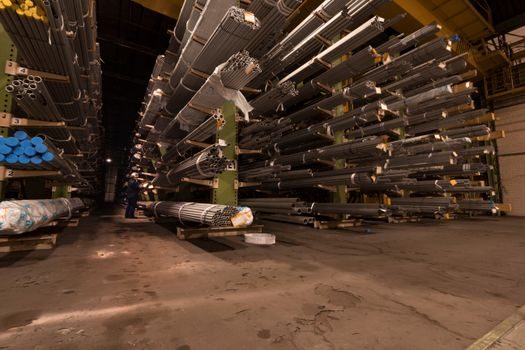
Form factor dictates the price-per-kilo premium more than alloy chemistry does. China-sourced anodized aluminum alloy panel listings cluster at US$23.99–39.99 per m² (MOQ 100 m²) and US$3.50–15.00 per m² (MOQ 100 m²) depending on PV-module framing versus architectural cladding [S3]. Tiger Neo N-type bifacial modules in 560–600 W ratings, with anodized aluminum alloy frames, sit in a separate US$0.08–0.09/W band (MOQ 17,000 W) — the alloy cost is embedded in BOS (balance-of-system) framing rather than the panel itself [S7].
Extrusions beat castings on mechanical properties but cost more per kilo of tooling. CNC machined parts — precision turning and milling in stainless or aluminum — quote at US$4.99–6.99 per piece (MOQ 1 piece) from Suzhou Provence, and US$1.00–2.00 per piece (MOQ 100 pieces) from Ningbo Target for simpler turned fittings [S9]. Sliding-door roller-track extrusions in 6063-T5 quote at roughly US$2.00 per box at 100-box MOQ from Fujian-based Rell Co. [S6]. For architectural cladding specification, the aluminum veneer panel entry covers the 3003 vs 5005 decision for fluorocarbon (PVDF) and anodized finishes.
Support beams illustrate the tonnage-tier: US$2,250–2,650 per ton (MOQ 2 tons) for 6061-T6 heavy structural stock from Hehui General Equipment, falling to US$3.00–5.00 per 25-kg bundle for lighter 6063 profiles from Guangdong Jinhuahai, and US$11.10–11.40 per 5-meter length for finished formwork beams from Dongguan Hengdong [S8]. The 100x price-per-kg spread between tonnage and finished length is the procurement signal: always quote the same form factor across vendors, never ton vs per-piece.
Commodity Pricing and the 2026 Tape
The live tape is where the alloy premium crystallizes. CBCIE's daily aluminum alloy ingot and vanadium-aluminum alloy price index published multiple regional prints on 6 March 2026: Baoji vanadium-aluminum alloy, Jiangsu Wuxi aluminum alloy ingot, Liaoning vanadium-aluminum alloy, Zhejiang Ningbo aluminum alloy ingot, China vanadium-aluminum alloy, and Zhejiang Jinhua Yongkang aluminum alloy ingot [S4].
For non-commodity buy decisions, the tin bronze buying guide maps a parallel non-ferrous sourcing workflow that mirrors this aluminum guide, and the alloy steel price and cost guide provides the steel-side benchmark for any buyer substituting between ferrous and non-ferrous structural members. The die casting machine buying guide is the natural follow-on read for any procurement engineer who has just signed an aluminum casting PO and now needs to specify the casting cell.
Standards, Certification and Mill Audit Gates
Every Chinese mill certificate (MTC) should be read against a known standard. For 1xxx–8xxx series, the underlying designation system is enforced by The Aluminum Association, with ASTM B209 (sheet/plate), ASTM B221 (extruded bar/rod/wire), ASTM B210 (drawn tube) and ASTM B247 (forgings) governing common North American deliveries; the EN 485/EN 573/EN 755/EN 12020 series govern European equivalents. For aerospace plate, AMS-QQ-A-250 and the AMS 4xxx specifications are the call-outs that come with the 7075-T651 plate; for shipbuilding 5083/5086 plate, the relevant rules are in ASTM B928 / EN 13195 with referenced impact testing. [S1]
China-side Diamond-tier and Audited Supplier status on Made-in-China.com is not a quality guarantee — it is a financial and documentation check [S2][S3][S7][S8][S9]. The real gates are: mill test certificate with full chemistry and mechanical trace, third-party inspection (SGS / Bureau Veritas / TÜV) for shipments above 5 tons, and sample mechanical witness testing for any new supplier. For PV module framing, IEC 61215 and IEC 61730 are the module-level standards that indirectly drive the aluminum frame specification; the alloy itself typically follows 6005-T5 or 6063-T5 with anodizing to AA-M10C22A41 (AAMA 611) [S7].
Who This Guide Is For — and Who Should Walk Away
Use this guide if you are a procurement engineer, a mechanical design lead, or a sourcing manager who must place an RFQ for sheet, plate, extrusion, or finished machined parts in aluminum within the next 90 days, and who needs to defend the series/temper/form choice in a design review. It is also written for a solar-EPC buyer specifying module frames, an architectural-spec writer choosing between 3003 and 5005 for a curtain-wall panel, or a marine buyer balancing 5083-H116 plate against 6061-T6 extrusions for a hull-to-deck joint. [S2]
Walk away from this guide if you are buying commodity aluminum cans, beverage-stock foil, or aerospace-qualified 7050/7475 plate — those have dedicated tempers, lot-traceability rules, and distributor channels that this guide does not cover. For general non-aluminum non-ferrous work, the tin bronze buying guide is a better fit. For steel-vs-aluminum substitution decisions on storage racks and mezzanines, the storage rack price and cost guide gives the tonnage and bay-geometry baseline that any structural buy must be compared against.
Failure Modes, Constraints and Sourcing Watch-Outs
Aluminum's three classic failure modes are galvanic corrosion, stress-corrosion cracking (SCC) in 7xxx-T6, and sensitization in 5xxx above ~3.5% Mg when held at 65–200 °C. The procurement-side fix: forbid direct contact with copper or steel in marine or wet service (use isolation gaskets and 300-series stainless fasteners with nylon washers), pin T73 or T76 over T6 for any 7075 part under sustained tensile load, and reject 5083/5086 stock with no lot-traceable Mg content if the part sees sustained elevated temperature. Hard-quote items to check on every PO: chemistry, temper designation, dimensional tolerance class (e.g. ASTM B209 Table 2 for flatness), surface finish (mill finish, anodized to AA-M10C22A41, PVDF coated, or powder coated to AAMA 2604/2605), and packaging (export seaworthy with desiccant for sea freight). [S3]
For sliding-door and window extrusions specifically, the aluminum window and door entry is the downstream reference for hardware compatibility and weather-seal integration. For aluminum alloy downstream conversion into ladders, the aluminum ladder grade reference catalogues EN 131 and ANSI A14.2 duty ratings that govern the temper choice.
Closing reference point: track the CBCIE daily regional aluminum alloy ingot prints (Baoji, Wuxi, Ningbo, Yongkang) at minimum twice a week through Q3 2026 — vanadium-aluminum alloy moves first, standard A7/A8 ingot follows 2–4 weeks later [S4]. Combine that with one North American or European LME print (cash vs 3-month spread) and the Shanghai Futures Exchange SHFE aluminum continuous contract, and the 2026 H2 buy window is readable.