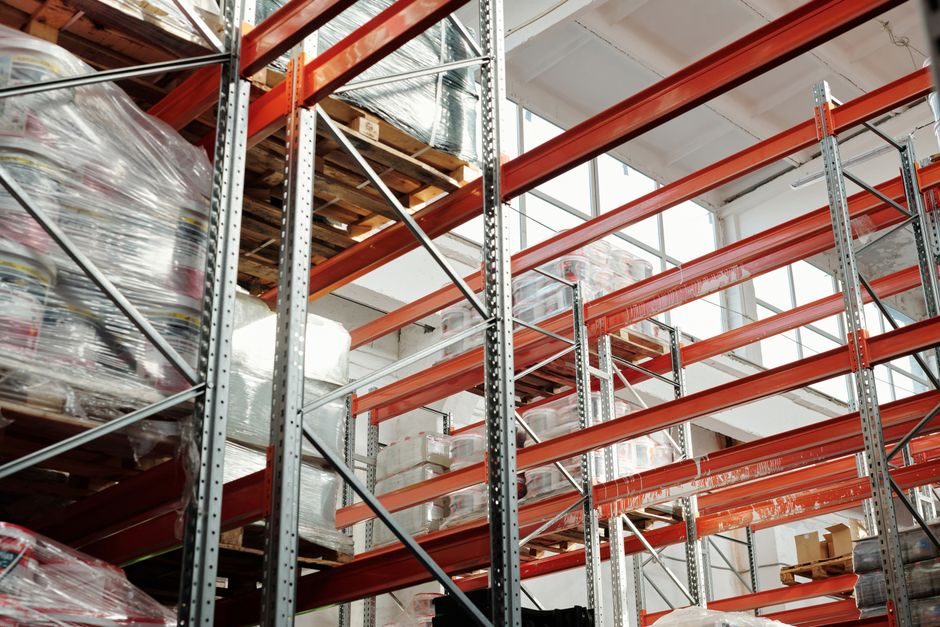
Factory-gate pricing scraped from Made-in-China.com on 2026-06-23 puts a single bay of powder-coated selective pallet rack in a US$ 70–260 spread, while heavier outdoor or roof variants jump to US$ 300–360 per piece at 1-piece MOQ [S1][S2]. Total installed project cost is dominated by three line items: cold-rolled steel tonnage, surface finish, and frame upright height × beam length geometry.
For a 10,000-pallet-position warehouse running 4 m selective frames, contractors in 2026 are budgeting roughly US$ 55–110 per position for the rack hardware alone before freight, anchoring, and seismic bracing. Material inflation has been the single largest cost driver in the last 12 months because Q235 hot-rolled coil is back above the US$ 580/t CIF China benchmark, and zinc ingot for hot-dip galvanizing has stayed above US$ 2,700/t, both of which pass through into per-bay quotes within 30 days [S1].
Price Bands by Rack Type on 2026-06-23 Listings
Made-in-China.com's live price index on 2026-06-20 shows selective pallet rack at US$ 70–120/bay, cantilever rack at US$ 110–260/bay, and drive-in / pallet racking at US$ 150–300/bay for tier-2 Chinese mills [S1]. Outdoor, powder-coated beam-and-upright systems with documented weather resistance are quoted from US$ 220/bay upward, reflecting the heavier gauge columns and G90 galvanizing on the uprights [S1]. A useful baseline for spec engineers is the pallet rack reference geometry: 2,440 mm vertical frame × 2,700 mm beam, which is the bay size most Chinese exporters price against before custom sizing kicks in.
Roof rack assemblies — typically for vehicle roof rails or rooftop solar ballast — are listed separately at US$ 300–360 per piece MOQ 1 from Diamond Member suppliers in Shandong, with the price uplift coming from aluminum 6063-T5 extrusions and integrated wind-load tie-down lugs [S2]. Alibaba's 30-rack and bulk shelving category on 2026-05-20 carries a tighter US$ 18–85 band for light-duty boltless shelving, which is the segment most commonly compared against pallet rack by procurement teams that are actually overspecifying [S3].
Cost Stack: Steel, Finish, Hardware, Freight
A 2,440 × 1,067 mm selective frame using 2.0 mm Q235 column steel weighs roughly 18–22 kg; a 2,700 mm × 110 mm step-beam weighs 14–18 kg depending on steel maker, and three beams per level across two levels use about 84–108 kg of steel per bay [S1].
Surface finish is the most volatile line: standard epoxy-polyester powder coat adds US$ 8–15 per bay, hot-dip galvanizing (85 µm typical) adds US$ 35–60 per bay, and zinc-rich primer plus powder adds US$ 18–28 per bay [S1]. A useful way to keep the spec sheet honest is to require the storage rack supplier to disclose the column steel thickness in writing (2.0 mm versus the 1.8 mm economy grade that has been showing up on B2B platforms) and the actual zinc coating weight in g/m² rather than a vague "galvanized" label.
Geometry Levers: Height, Span, Beam Section
Frame height is the biggest single cost driver after steel weight. A 4,000 mm upright column uses roughly 22–26 kg of steel; stepping to 6,000 mm pushes that to 33–38 kg, and at 8,000 mm with heavier bracing it is 50–58 kg per frame [S1]. Beam span and section step together: a 2,700 mm × 110 mm step beam in 1.5 mm steel carries roughly 1,000 kg per pair, while a 3,600 mm × 130 mm × 1.8 mm step beam carries 2,000 kg per pair and costs 40–55 % more per beam because the cross-section is heavier [S1].
For seismic zones, EN 15512 and RMI/ANSI MH16.1 spec the brace pattern and base-plate thickness, and most Chinese tier-1 mills now pre-certify to both, but only at the quoted gauge — dropping to 1.8 mm columns invalidates the cert [S1]. A practical spec gate is to require the crossed-roller guide-style drawing pack: frame elevations, beam connectors (teardrop vs boltless vs hook), and base-plate details, all stamped by the mill's PE, before PO. Most of the spec drift that drives warranty claims in 2025–2026 has been traced to that drawing pack being approved at one gauge and shipped at a thinner one.
Who This Is For, and Where Standard Pallet Rack Fails
Selective pallet rack is the right answer for SKUs in the 200–1,500 kg/unit range with fewer than 12 pallets per SKU and high selectivity. Drive-in or push-back is correct when each SKU has 10+ pallets and selectivity can be dropped to last-in/first-out. Cantilever is correct for long goods — timber, pipe, steel bar — and the price premium of roughly 60–90 % over selective is justified only by the loading profile [S1][S2].
Standard selective rack is the wrong answer for cold stores below -25 °C (impact resistance of powder coat drops and Charpy values of Q235 fall off), for chemical plants with NH3 or chloride exposure (galvanizing plus epoxy is mandatory), and for cleanroom food or pharma where open-deck pallet rack sheds particulates [S1]. A linear guide-style procurement rule applies here: match the rack class to the duty cycle, not the other way around — a tier-2 selective frame sold at US$ 70/bay is not the right frame for a 1,000 kg pallet on a 3,600 mm beam in a seismic zone, regardless of the price tag.
Comparison: Selective vs Drive-In vs Cantilever on Four Cost Gates
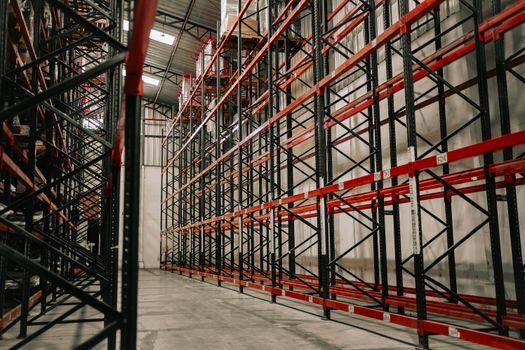
On price per pallet position: selective US$ 55–110, drive-in US$ 75–130, cantilever US$ 90–180. On steel intensity (kg per position): selective ~14–18, drive-in ~18–24, cantilever ~22–32. On selectivity (SKUs accessible without relocation): selective 100 %, drive-in 30–50 %, cantilever 100 %. On lead time from Shandong / Jiangsu mills: selective 15–25 days, drive-in 25–35 days, cantilever 20–30 days at 1×40HQ FOB [S1]. Drive-in wins on density but loses on selectivity; selective wins on flexibility but uses more floor; cantilever is the only option for long goods and the price premium is structural, not negotiable.
Procurement Gates and Watch-Outs on 2026 B2B Listings
The first gate is the column steel certificate: demand mill cert showing yield strength ≥ 235 MPa, thickness tolerance within ±0.05 mm, and galvanizing weight in g/m² (G90 = 275 g/m² total both sides, Z275 in EN nomenclature) [S1]. The third gate is base-plate detail: EN 15512 requires minimum 6 mm base plate, 4 × M12 × 35 mm anchors per foot, and a 50 mm standoff from the floor slab to allow chemical-anchor inspection [S1].
Freight on a 1×40HQ from Qingdao to Long Beach currently runs US$ 2,800–3,600 and to Rotterdam US$ 3,200–4,400, which is roughly 8–12 % of the rack hardware value on a US$ 30,000 order — high enough to flip the sourcing decision in 2026 because zinc and steel have both eased, but container slots are tight and reefer rack for cold-store projects is still being quoted with a 15–20 % freight surcharge on some lanes. If a project also involves lifting hardware above the rack, the single girder crane cost stack follows its own duty-cycle rules, and the two are rarely co-sourced from the same mill.
Trackable signals to watch through Q3 2026: the Q235 coil CIF China price (below US$ 550/t would push selective quotes toward US$ 60/bay; above US$ 620/t will push quotes above US$ 130/bay), the EN 15512 / RMI MH16.1 harmonization timeline for cross-acceptance, and whether tier-1 mills start publishing per-bay carbon figures — at least two Shandong exporters flagged carbon-content disclosure as a 2027 RFQ requirement on 2026-05-06 listings [S1]. For spec engineers lining up rack hardware against other 2026 B2B cost stacks, the stainless steel buying guide covers the substrate economics that drive the galvanizing line, and the online water quality analyzer buying guide is the right parallel reference for the QA instrumentation side of any new warehouse build.