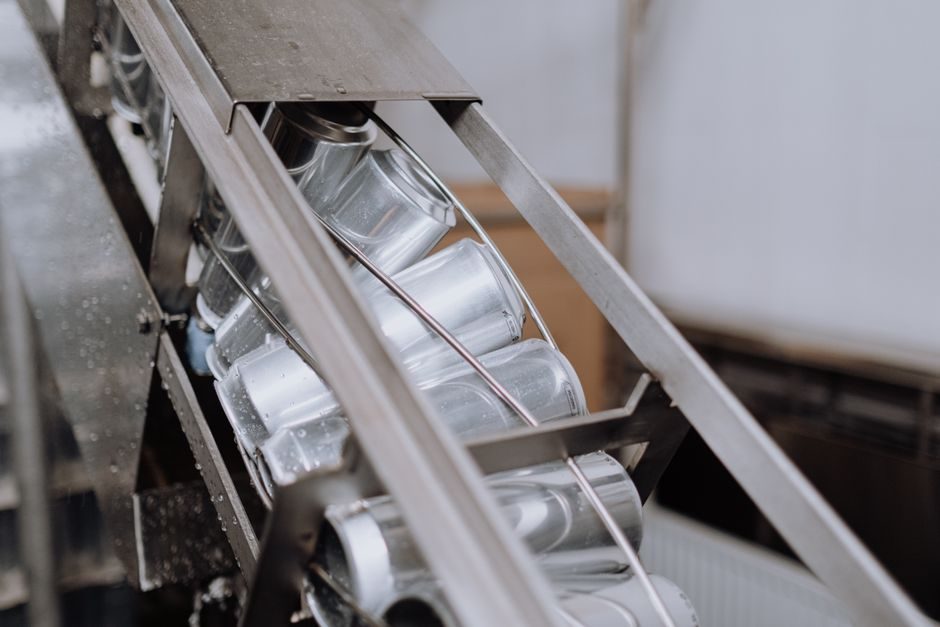
An aluminum coil is a flat-rolled sheet wound into a continuous roll, while an aluminum ladder is a fabricated access product built from extruded profiles — the two serve different functional slots in any industrial supply chain, and the engineering question is which one fits a given RFQ [S1][S3][S7].
Across global supplier listings published 2026-06-30 to 2026-07-25, Chinese manufacturers dominate both categories: Zhengzhou-based coil producers run 100,000-ton annual output with about 60% of volume destined for export [S7], while Tianjin and Guangzhou fabricators list aluminum ladders and scaffolding alongside raw extrusion capacity [S1][S3].
Definition, Form Factor, and Material Pathway
An aluminum coil is a continuously cast and rolled flat product, typically wound in 1xxx, 3xxx, 5xxx, or 6xxx alloy families depending on end use [S4]. European recycling data shows 85% of construction aluminum and 95% of transport-aluminum volumes re-enter the melt, which is why coil stock is widely sourced as secondary alloy where surface finish is not critical [S4].
An aluminum ladder, by contrast, is a discrete fabricated assembly of hollow or C-section extrusions — the Guangzhou Aluminum Material Plant lists "aluminum ladder, aluminum scaffolding, curtain wall" within one extrusion product line because the same 6063-T5 / 6061-T6 billet feeds all three downstream formats [S3]. See the aluminum alloy reference for grade selection logic that applies to both products.
Supplier Landscape: Who Makes Which
Coil supply is concentrated in flat-rolling mills; TwinkleAluminum in Zhengzhou runs three factories covering coil, color-coated coil, circle, and corrugated roofing sheet, with 100,000-ton annual capacity and a stated 60% export ratio [S7]. The 1100-grade coil is a common entry SKU on B2B catalogs, used where deep-drawing and corrosion resistance matter more than strength [S4].
Ladder supply is fragmented across two very different producer types. State-owned extruders like Guangzhou Aluminum Material Plant — 600 staff, USD 4.1M registered capital, USD 20M+ annual turnover, exporting since 1990 — treat the ladder as one SKU inside a much larger extrusion book of business [S3]. Smaller finished-goods shops like Alico (Tianjin) Technology and Industry, Reyi, and Ryder Racks in the US focus on telescopic, step, and truck-rack ladder variants with custom-fit options [S1][S5][S6].
Spec Comparison: Coil vs Ladder on Decision Criteria
Four criteria separate the two categories. Form: coil ships as a continuous roll with declared width, gauge, and temper (e.g. 1100-O, 3003-H14); ladders ship as discrete units with stated step count, working height, and rated load [S4][S6]. Standards: coil is governed by ASTM B209 / EN 485 for flat-rolled tolerance; ladders carry ANSI A14.2 (US) or EN 131 (EU) load and stability ratings, with Reyi's fiberglass and aluminum telescopic lines rated to 150 kg maximum load across 9-step domestic configurations [S6]. Price: coil is priced per ton in long contracts, while ladders are quoted per piece with MOQ as low as 1 piece on the B2B portal [S3]. Lead time: coil runs on mill rolling schedules of 2–6 weeks; ladder fabricators advertise 10,000-piece monthly capacity on standard SKUs [S6]. For the broader aluminum ladder family — including FRP, telescopic, and truck-rack variants — load rating and reach are the dominant decision inputs, not alloy chemistry.
Use Cases: Which One to Specify
Specify aluminum coil when the downstream process involves stamping, roll-forming, or coating — typical end uses are roofing sheet, beverage can stock, building cladding, and HVAC fin stock [S4][S7]. The 1100 alloy dominates the deep-drawing segment because of its formability and corrosion resistance rather than strength [S4].
Specify aluminum ladder when the deliverable is finished access equipment — construction sites, warehouse picking, truck-bed rack loading, or household maintenance. Reyi lists a 3.8 m aluminum telescopic ladder as a stocked SKU alongside a 9-step FRP folding ladder at 150 kg max load [S6]. Ryder Racks takes the ladder concept off the building site and onto light trucks, building custom aluminum ladder racks to order with options for retractable bed covers and tool-box integration [S5]. For multi-storey site access, a related buy is the mobile scaffold tower, which is often sourced from the same extrusion base [S3].
Limits, Failure Modes, and Cross-Product Misuse
Substituting coil stock where a structural extrusion is required is a known failure mode: flat-rolled 1100-O has yield strength around 30 MPa, well below the 6061-T6 range of 240–275 MPa used in ladder side rails [S4]. The opposite error — sourcing a heavy extrusion when a thin coil would do — drives unnecessary cost in cladding and roofing projects where 0.5–1.0 mm gauge 3003 or 3105 is the correct spec [S4].
For ladders, EN 131 and ANSI A14.2 require specific load, slip-resistance, and locking tests; the 150 kg domestic rating that Reyi publishes is for step ladders, not industrial multi-position ladders, which generally carry a 110–125 kg rating on the same standard [S6]. The fiber-reinforced plastic (FRP) variant exists for electrical work because aluminum side rails conduct; specifying an aluminum ladder near live conductors is a documented safety error [S6].
Sourcing Channels and Verifiable Signals
Active buyer inquiries in the past 30 days include a Burkina Faso-based online shop seeking aluminum-ladder samples [S2] and steady European demand for 1100 coil stock [S4]. The Burkina Faso inquiry is sample-stage and small-volume; it is a watch signal, not a bulk-procurement lead [S2].
Track the next three signals: (1) TwinkleAluminum's published 60% export ratio and any quarterly shift as a coarse reading of coil export health [S7]; (2) Guangzhou Aluminum Material Plant's stated over 15% overseas profit share as a state-owned extruder reference point [S3]; (3) Ryder Racks' made-to-order custom aluminum truck rack configurations as a reference point on US demand for custom-fabricated aluminum access products [S5].
For the relevant spec sheets and selection criteria, see solenoid coil.