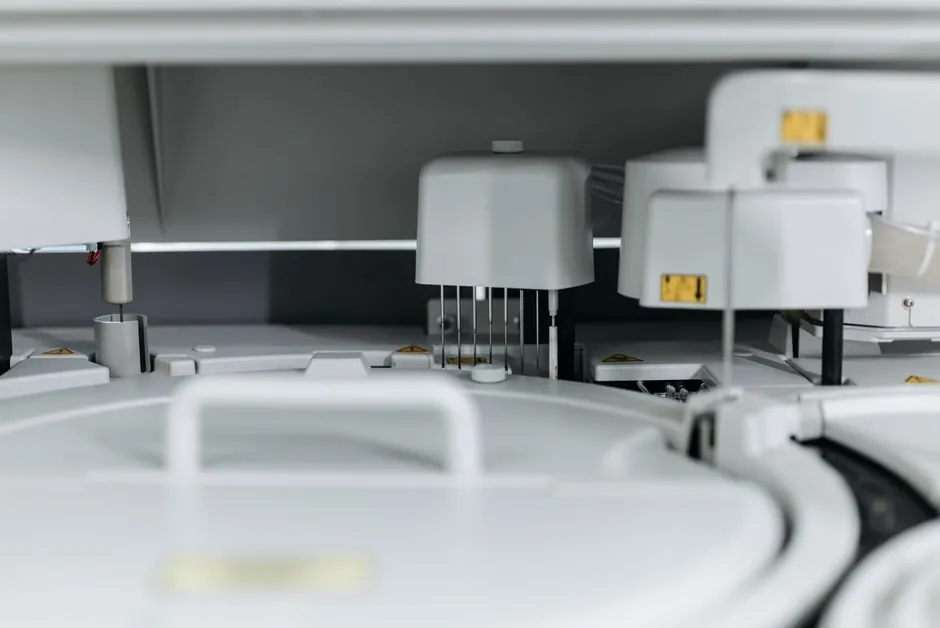
Machine vision systems are made up of interconnected electronic parts, industrial cameras, lighting, computer hardware, and software algorithms that capture, process, and analyze images for real-time inspection, measurement, and decision-making [S2].
Buying a vision system as if it were a commodity is the most common path to a stalled line. The hardware list (camera, lens, vision light source, frame grabber, controller) is the same on every quote; what separates a working installation from a paperweight is whether the spec sheet matches the workpiece, the cycle time, and the factory floor.
What Counts as a Machine Vision System: Scope and Definitions
Machine vision is the technology and methods used to provide imaging-based automatic inspection and analysis for applications such as automatic inspection, process control, and robot guidance in industry; it is a systems-engineering discipline distinct from computer vision [S8].
The functional core can be split into four blocks: image acquisition (light source, lens, camera, frame grabber), image processing and recognition (algorithm + compute), result display, and the vision controller that drives actuators downstream [S3]. Per the OPC Foundation companion spec, the standardised information model covers control, configuration management, recipe management, and result management, with method calls such as PrepareRecipe, ActivateConfiguration, and PrepareProduct defined for cross-vendor interchangeability [S1].
The Four Selection Gates: Resolution, Throughput, Environment, Integration
Resolution and sensitivity are the two governing sensor specifications: higher pixel counts enable detection of smaller features for electronics, pharmaceutical packaging, and semiconductor work, while higher sensitivity keeps detection reliable at low contrast or high line speed [S2].
Cycle time is the second hard gate. A line that must inspect hundreds or thousands of parts per minute cannot run on a smart camera limited to a handful of frames per second; conversely, a slow manual station has no business with a 10 GigE multi-camera rig [S2]. Third is environment: an automotive weld cell sees spatter, EMI, and temperature swings that a cleanroom semiconductor tool does not, so IP65+ housings, ruggedised lenses, and filtered vision light source drives are non-negotiable. Fourth is integration: the vision controller has to land cleanly in the existing PLC/SCADA layer, which is why OPC UA, GigE Vision, PROFINET, and EtherNet/IP support on the datasheet matters as much as the megapixel count.
System Architecture Options: Smart Camera vs. PC-Based Multi-Sensor
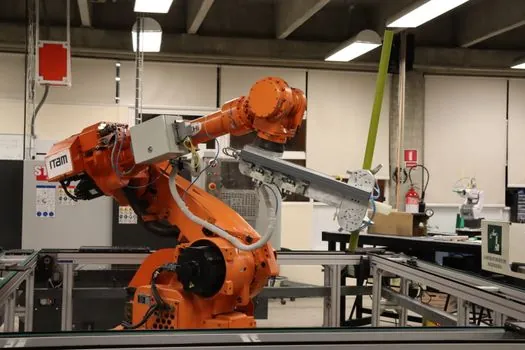
Vision systems can be classified as smart cameras (sensor + processing + I/O in one housing) or multi-sensor systems (separate cameras feeding a PC or industrial controller); both share the same basic component list [S5].
Spec-driven comparison across the four realistic architectures buyers see on RFQs:
1. Smart camera (e.g., compact embedded unit). Pros: lowest integration cost, single IP address, factory-calibrated optics. Cons: limited processing headroom, fixed I/O count, hard to expand with a second camera or a higher-power vision light source. Best fit: simple presence/absence, barcode, or 1D/2D code reading on standalone stations.
2. PC-based multi-camera system. Pros: highest throughput, deep learning inference, multi-camera synchronisation, GigE Vision or 10 GigE bandwidth. Cons: cabinet space, OS patching, larger cyber-attack surface. Best fit: high-speed inspection of electronics, pharma blister packs, and any duty requiring 2D/3D fused results.
3. 3D vision system (laser line profilometer or structured light). Pros: height map for weld seams, glue beads, surface roughness; tolerates part-to-part position variation. Cons: higher unit cost, requires motion control integration, sensitive to vibration and ambient vision light source pollution. Best fit: gap-and-flush, dimensional metrology, bin picking.
4. Modular vision controller + separate cameras. Pros: scales to demanding AI workloads, hot-swappable cameras, OPC UA recipe management built into the controller firmware. Cons: higher engineering hours to commission. Best fit: lines running 50+ part numbers where recipe changeover must be traceable, a requirement the OPC UA for Machine Vision spec addresses via RecipeManagementType and PrepareProduct [S1].
Note that 1D, 2D, 3D, and spectral/color imaging are sensor categories, not architectures; a 3D system can still be a smart camera or a PC-based rig [S4].
Component-Level Spec Checks That Stop Buyer's Remorse
Camera selection has to be cross-checked against three numbers: pixel pitch (to resolve the smallest defect), sensor format (to size the lens), and interface bandwidth (GigE Vision, USB3 Vision, CoaXPress, 10 GigE) against the line rate [S3].
Sensor type matters: CMOS dominates modern industrial cameras, with CCD still used in some high-sensitivity scientific and flat-panel inspection lines; the camera can output standard monochrome video (RS-170 / CCIR), composite (Y/C, RGB), or non-standard progressive scan, line scan, and high-resolution signals [S3]. Lens choice is driven by working distance, sensor format, and required depth of field. Light source choice is driven by surface texture, colour contrast, and required stability; LED arrays in ring, bar, dome, and coaxial geometries cover most factory cases, with high-colour fluorescent and fibre-optic halogen reserved for niche thermal or spectral needs [S3]. The image acquisition card (or, on modern digital interfaces, the software decoder) moves data from camera to host and lets host software adjust parameters such as exposure, gain, and trigger mode [S3].
Integration, Software, and Standards: The Hidden Half of the BOM
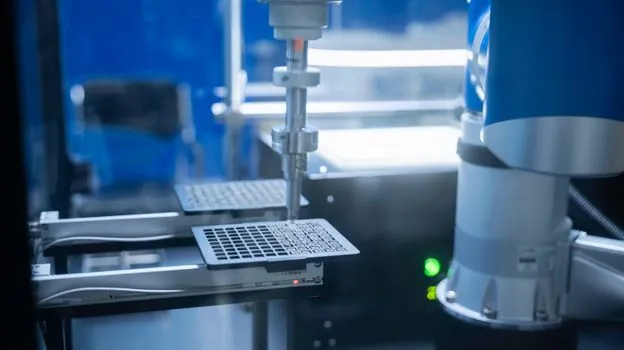
On-machine triggers (fibre-optic or proximity switches) tell the image sensor when to acquire, which means the vision light source, camera, and sensor have to share the same I/O reference and timing budget [S3].
Standard template training functions ship with most vision software: a friendly template-training interface, parameter detection per product spec, and dynamic adjustment of magnification, camera settings, and image-capture timing on trigger [S3]. Cross-vendor interoperability is now codified: OPC UA for Machine Vision, Part 1, defines VisionSystemType, ConfigurationManagementType (AddConfiguration, ActivateConfiguration, GetConfigurationList), and RecipeManagementType (AddRecipe, PrepareRecipe, GetRecipeListFiltered) so that an MES, a vision controller, and a line PLC can exchange recipes and results without custom drivers [S1]. On the component side, the major architectures to compare are: (a) smart camera with integrated vision light source, (b) modular PC-based system with GigE Vision cameras, (c) 3D profiler/structured light, and (d) modular controller + cameras. Trade-off axes: footprint and IP rating, frames per second at the working resolution, ability to host deep learning inference, and recipe/recipe-handling compliance with OPC UA for Machine Vision [S1][S5].
Who Should NOT Pick the Cheapest Smart Camera
Lines running multiple SKUs with strict traceability, multi-camera layouts, or deep-learning defect classification outgrow a single smart camera within 12-18 months [S5].
If the application is high-speed defect classification on a 500 mm-wide web, a solder-paste inspection head, or any duty where the recipe must be loaded from an MES on every part-number change, the smart camera will be the bottleneck. The same applies to harsh environments: a food or chemical washdown zone demands IP67+ housings that entry-level smart cameras do not offer. A practical spec-first rule: if any of (a) throughput >50 fps, (b) >2 cameras per station, (c) deep-learning inference, (d) OPC UA recipe exchange, or (e) IP65+ rating is on the requirement list, the buyer should be pricing modular controller + separate camera systems from day one [S1][S5].
Verifiable Signals to Track Before Issuing the PO

Before sign-off, ask the vendor for a written spec confirmation that the camera, vision light source, and vision controller pair has been validated together at the quoted fps and resolution, and request a sample image taken on the actual production part. [S2]
Two more trackable items: confirm that the controller firmware implements OPC UA for Machine Vision, Part 1 (ConfigurationManagementType, RecipeManagementType) with an MVT profile or vendor equivalent, and verify that the lens and vision light source are rated for the working distance and ambient temperature on the line. A buyer-side spec map of the type detailed in the LPDC machine selection walkthrough applies just as cleanly to vision: classify each candidate by architecture, list the four gating specs (resolution, fps, IP, protocol), and reject any quotation that does not state all four with units on the datasheet.
Component reference pages worth checking: machine vision system.