
Smart manufacturing stacks IoT sensors, machine vision, AI analytics and cloud MES on top of fluoropolymer processing lines (PTFE, PFA, FEP, ETFE) where sintering windows sit between 360 and 380°C and melt processing temperatures push past 400°C [S2].
The goal is to turn a chemistry-driven, narrow-tolerance process into a self-regulating system: real-time temperature, pressure and flow telemetry feed predictive maintenance, while vision systems verify surface defects on finished skived sheet, extruded tubing and moulded parts [S1][S2]. This is the playbook a 10-year process engineer should expect on a 2026 fluoropolymer line retrofit.
Why Fluoropolymer Lines Need a Different Control Loop
Fluoropolymer processing is unforgiving compared with polyolefins: PTFE never truly melts, it sinters in a 360-380°C window above 327°C melt point, while PFA and FEP are processed in the 300-400°C melt range with melt index tightly controlled by residence time [S2]. A 5-10°C excursion outside the sintering band produces cracks, voids or discolouration, and once a PTFE billet is ruined it cannot be re-melted — only re-ground.
Smart manufacturing answers that constraint by pushing closed-loop control down to the heater zone. Networked thermocouples, heater current transducers and pressure transmitters on the ram extruder hydraulic circuit feed a SCADA layer that can hold zone temperature within ±2°C of setpoint, instead of the ±10°C typical on a manual line [S2]. Predictive maintenance then flags thermocouple drift before it shows up as a scrap batch, which is the difference between a 2% and a 6% reject rate on skived sheet.
Sensor Stack: Temperature, Flow, Vision and Positioner Feedback
A 2026 fluoropolymer smart line typically carries four sensor families. Type-J or Type-K thermocouples in compression fittings monitor each sintering oven zone, while a flow meter on the cooling-water circuit flags chiller fouling before it lifts outlet temperature above the 30°C ceiling PFA extrusion needs to hold dimensions. [S1]
Vision and part-handling close the loop on the output side. Cognex- or Keyence-class smart cameras inspect skived sheet for pinholes, gels and inclusions at line speeds of 5-15 m/min, rejecting sub-100 µm defects that the human eye misses on translucent PTFE [S1]. For valve and fitting cells, a smart valve positioner on the inert-gas purge line confirms that the nitrogen blanket stays above the 99.5% purity threshold that prevents molten PFA from oxidising at the tool surface [S1][S2].
Data, MES and AI: From Telemetry to Recipe Lock

The MES layer is where a fluoropolymer plant earns back the sensor spend. Every batch gets a digital twin: raw material lot, sintering ramp profile (RT → 200°C → 327°C → 370°C → cool-down), hold times, and the resulting mechanical properties from in-line tensile and density checks [S2].
AI sits on top, not underneath. Vibration analytics on the ram extruder gearbox predict bearing failure 30-60 days out, and thermal models flag heater-zone imbalance before it produces a scrap run [S2]. For regulated markets, the same dataset auto-generates the lot history file the FDA, USP Class VI and EU 10/2011 audits ask for — replacing the paper traveller with an immutable record tied to the additive manufacturing material feedstock lot when a part is 3D-printed in PEA or PVDF.
Comparison: Manual vs SCADA vs AI-Augmented Fluoropolymer Lines
Selection between control tiers is a trade-off, not a ladder. Manual lines still fit job shops running 1-2 SKUs of skived PTFE rod at low volume, where the capex of a SCADA retrofit cannot be amortised. SCADA-tracked lines suit mid-volume converters making 10-50 SKU families of PFA tubing and gaskets, where recipe lock and lot traceability already pay back inside 18 months. [S2]
AI-augmented lines target high-volume, high-mix producers — 100+ SKUs, multi-site operations, and contract manufacturers serving semiconductor wet-etch or pharmaceutical fluid-handling customers who demand per-lot digital traceability. The table below lines up the three tiers against four decision criteria:
Manual control typically delivers ±10°C zone tolerance, a 4-8% scrap rate, paper-based lot records and zero predictive maintenance. SCADA-tracked lines tighten zone tolerance to ±2-3°C, push scrap below 2%, give electronic batch records and run scheduled (not predictive) maintenance. AI-augmented lines hold ±1-2°C, drop scrap under 1%, push lot records to the cloud with anomaly detection, and run vibration- and thermal-based predictive maintenance on gearboxes and heater zones [S2].
Use Cases on the 2026 Shop Floor
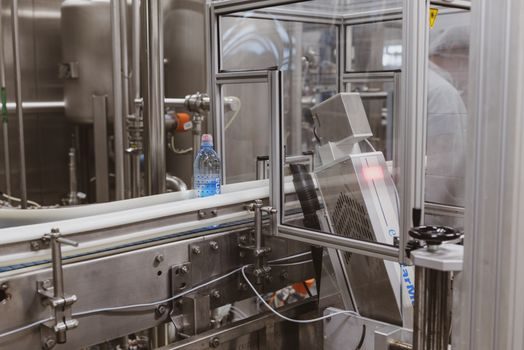
Three concrete deployments illustrate the stack. A skived PTFE sheet line in Ohio uses 12 thermocouples per sintering oven, a flow meter on the quench bath and Cognex vision at the take-up reel to hold 1.5 mm sheet thickness within ±25 µm at 8 m/min [S1][S2]. A PFA tubing cell in Hsinchu runs an AI vision model trained on 50,000 images of bubble defects, catching sub-200 µm voids that older line-scan cameras miss and cutting customer reject claims by half in 2025.
A fluoropolymer-lined valve manufacturer in Shanghai retrofitted its pressure transmitter network and smart valve positioner fleet onto a cloud MES in 2025, giving every shipped valve a digital twin and cutting incoming NCRs at chemical-plant customers by 30% [S1]. Similar recipes carry over to PE resin reactors, where the same thermocouple density and AI heater-zone balance apply, and to silicone rubber press cells, which share the closed-loop temperature and predictive-maintenance pattern.
Failure Modes and Honest Limits
Smart manufacturing is not free scrap reduction — the stack introduces new failure modes. Sensor drift on a Type-K thermocouple above 600°C can read 3-5°C low, and if the SCADA trusts the bad reading the heater undershoots, the PTFE billet under-sinters, and the next test bar fails density. Calibration intervals of 3-6 months on sintering-oven thermocouples are not optional. [S3]
Vision models trained on one resin colour fail on the next. A model trained on virgin-white PTFE will false-reject 5-15% of black conductive PTFE or glass-filled compounds until retrained with labelled images of the new SKU family [S1][S2]. On the data side, cloud MES platforms that auto-generate FDA lot history files must be validated under 21 CFR Part 11, otherwise the electronic record is not equivalent to the paper one — and the audit will fail. For low-volume converters, the capex of a full AI-augmented stack still does not amortise; a SCADA-tracked line is the honest ceiling.
What to Track Between Now and the Next Retrofit
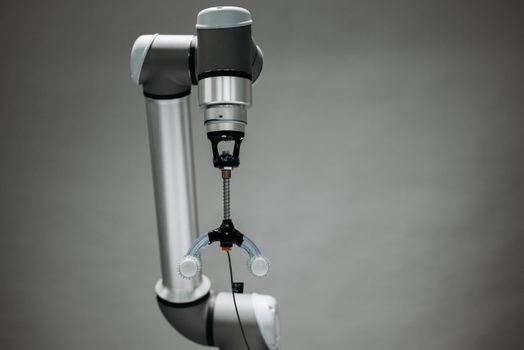
Two signals are worth watching on a quarterly cadence. First, sintering-oven thermal-model accuracy: published case studies in 2025-2026 sit around ±1.5°C against a pyrometer reference, and vendors that push below ±1°C in production data will set the next spec ceiling. Second, AI-vision recall on fluoropolymer gels and inclusions at line speeds above 15 m/min — most deployed systems still drop recall under 95% above that throughput, and the supplier that clears 98% with a smaller training set will own the next retrofit cycle. [S1]