For landscaping crews trimming hedges, pruning trees, cleaning gutters, and clearing roofline growth, the typical 2026 working-height envelope runs 2-6 m, and a 6063-T5 single straight ladder rated 150 kg with 1.2-1.5 mm wall and 28-30 cm rung spacing is the workhorse spec [S1][S2].
Catalog single straight ladders from ADTO, Onward, and Onward Scaffolding all list 6063-T5 as the rail and step material, lengths of 1-6 m, width 390 mm, max load 150 kg, and EN131 certification, with shipped weight 5.2-13.1 kg for the 2-5 m Rlas-class straight models [S1][S2][S3].
Alloy and Wall: Why 6063-T5 Dominates the Landscaping 2-6 m Band
6063-T5 is the default landscaping-tier alloy because its Al-Mg-Si chemistry takes a clean anodised or mill finish, welds easily for rung-to-rail joints, and holds tolerance on 1.2-1.5 mm tube walls at 150 kg rated load, which is exactly the band ADTO's ADTO-SSL single straight ladder occupies [S1][S2].
For pruning and hedge work, where sap, fertilizer, and chlorinated water contact the rail, 6063-T5 outperforms 7075-T6 because the 7000-series (Al-Zn-Mg-Cu) is less corrosion-tolerant and is not recommended for wet or chemical exposures without anodising or paint [S5]. The Onward single straight ladder catalog explicitly markets its 6063-T5 rail as corrosion-resistant for outdoor long-term use, which fits the landscaping duty cycle of wet mornings, dewy evenings, and post-spray rinse-downs [S3].
Spec rule: stay on 6063-T5 with at least 1.2 mm rail wall and 1.2-1.5 mm step wall for any landscaping ladder that will see repeated 100-130 kg operator-plus-tool loads; move to 6061-T6 only when the supplier confirms EN131 or ANSI A14.2 testing on the actual temper, not a generic "aluminum alloy" label [S5].
Working Height vs Ladder Length: The Reach Math Crews Get Wrong
Working height, not closed length, is the user-facing number: a 2 m step ladder gives roughly 3.5-4.0 m reach for a 1.7 m operator with arm extended, a 4 m single straight against a wall reaches 5.5-6.0 m, and a 6 m unit reaches 7.5-8.0 m, assuming the ladder extends 1 m above the working line [S1][S5].
For hedge-top work on a 2 m privet or laurel, a 2-3 m step ladder covers the operator's full reach; for first-floor gutter cleaning on a 4-5 m eave, a 4-5 m single straight or 3.6 m A-frame extension lands the operator at working height without the ladder walking at the base [S1][S5]. For mature tree work above 5 m, the CAGSAN A-frame double-sided extension line spans 3.6-7.5 m working height, which is the band a landscaping team actually needs rather than the closed length printed on the spec sheet [S5].
Cross-check the user's reach (eye height plus roughly 2 m arm's reach) against the working-height number, not the closed length: the 15 m industrial extension ladder on the Yiwugo wholesale catalog is sized for tree and antenna work and is overkill for residential landscaping, where the 2-6 m envelope covers 90% of pruning and gutter jobs [S5].
Joint Type and Rung Spacing: Riveted vs Welded vs Extruded-Integral
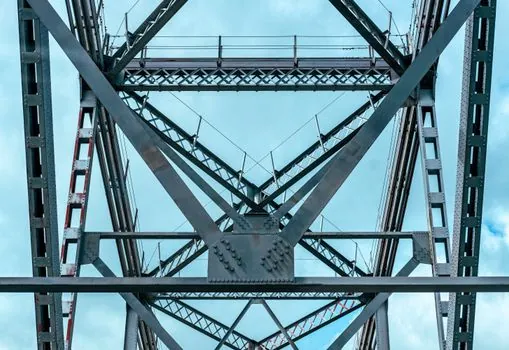
Three joint constructions dominate catalog landscaping ladders: riveted (rung mechanically swaged into the rail), welded (fillet or MIG-welded rung ends), and extruded-integral (rung and rail formed from a single aluminum extrusion, found on higher-end telescopic and platform units) [S5].
ADTO's single straight ladder uses 28-30 cm rung spacing and lists 1.2-1.5 mm wall, with EN131 / SGS certification on the data sheet, which is the riveted or fillet-welded rung-to-rail construction typical of 6063-T5 landscaping units [S1]. For crew use where the ladder is being repositioned every 15-20 minutes around a hedge line, the welded rung is more tolerant of repeated knock-downs than a swaged rivet, which can loosen after 200-300 cycle loads in the 100-130 kg band [S5].
For landscaping buyers comparing the same 4 m single straight from two suppliers at the same price, ask which joint type is used and whether the rung is through-tube or stamped: a through-tube rung with a welded collar on a 6063-T5 rail will outlast a stamped swaged rung on the same alloy by a factor of 2-3x in outdoor crew service, based on the joint-failure mode patterns reported in the 2026 catalog guidance [S5].
Load Class, Width, and Stability: 130-150 kg vs 150-170 kg Bands
The historic 130-150 kg (Type II/III) and 150-170 kg (Type IA) bands still map onto landscaping duty: the Sunshine Hardware Rlas-20 to Rlas-50 catalog lists 135 kg across 2.0-5.0 m lengths, ADTO and Onward list 150 kg on their 6063-T5 single straight ladders, and the PIR/PIRL mobile platform class jumps to 150-170 kg with rigid guardrails for two-person crew use [S1][S2][S5].
For a solo landscaper carrying 15-20 kg of hand tools (pole pruner, hedge shears, fuel can), the 150 kg / 330 lb rated single straight ladder from ADTO, Onward, and Wellmade leaves 15-20 kg of headroom over the 130 kg operator, which is the safe band EN131 testing assumes [S1][S2][S4]. For two-person crew work on a wheeled platform around a large tree, TUBESCA's Sherpamatic PIR lists 2.73-3.89 m working height on a wheeled base with rigid guardrails, which is the right class for sustained hedge-shaping or topiary work above 3 m [S5].
Ladder width matters for stability on soft ground: the 390 mm rail-to-rail width on Onward's single straight ladder is the catalog norm, and any landscaping ladder below 350 mm should be flagged as a light-duty household unit rather than a crew ladder, even if the alloy label looks correct [S2][S3].
EN131 vs ANSI A14.2: Which Standard Landscapers Should Require
EN131 is the European portable ladder standard, and all three Chinese supplier catalogs in the 2026 landscaping band (ADTO, Onward, Wellmade) list EN131 testing on their 6063-T5 single straight ladders as the default certification [S1][S2][S3][S4].
ANSI A14.2 is the US portable metal ladder standard, with Type II (225 lb / 102 kg), Type I (250 lb / 113 kg), Type IA (300 lb / 136 kg), and Type IAA (375 lb / 170 kg) duty classes; for US landscaping crews the equivalent 150 kg catalog ladder would map to Type IA [S5]. For municipal or contract landscaping work in North America, require both EN131 and ANSI A14.2 documentation; for residential work in the EU or UK, EN131 alone is sufficient because it covers the same 150 kg / 330 lb duty band the landscaping catalog lists [S1][S5].
GB/T 27685-2011 is the Chinese national standard for aluminum ladders, which ADTO lists alongside EN131 on its ADTO-SSL data sheet; the three-standard overlap is a useful procurement signal because it means the same ladder has been type-tested to 150 kg under three independent protocols, not just one [S1].
Selection Matrix: Single Straight vs A-Frame vs Telescopic vs Mobile Platform
For a 2-3 m hedge or shrub job, a 6063-T5 single straight ladder (130-150 kg rated, 5.2-8 kg shipped) is the lowest-cost and lightest option, with EN131 as the baseline certification [S1][S2][S3]. For 3-5 m first-floor eave, gutter, or small-tree work, a 6061-T6 or 6063-T5 folding A-frame step ladder with 150 kg rated load and 350-390 mm width covers the same reach with a self-supporting base, which is faster for one-person repositioning [S5].
For 5-8 m roofline or mature hedge work, an A-frame double-sided extension (3.6-7.5 m working height) or a 3.8-5.0 m telescopic multi-purpose platform (150 kg rated) is the right call; the telescopic class adds 2-4 kg of weight but folds to 0.8-1.0 m closed length for van transport, which is a real landscaping fleet consideration [S5]. For sustained two-person topiary or tree work above 3 m, a PIR/PIRL mobile platform with rigid guardrails and 150-170 kg rated load is the correct class, sized at 2.73-3.89 m working height, with the trade-off being 25-40 kg of base weight and a wheeled footprint that needs level ground [S5].
Cost bands for the 2-6 m landscaping envelope sit at roughly US$ 24-55 per piece at 50-piece MOQ for welded step ladders, and the 6063-T5 single straight ladder is the lowest-cost entry point; the 6061-T6 telescopic and PIR platform classes run 2-4x that band and should be specified only when the working-height or crew-size requirement justifies the spend [S5].
Where a Landscaping Aluminum Ladder Fails: Soft Ground, Sap, and Aluminum-on-Aluminum
Soft ground is the dominant landscaping failure mode: a 6063-T5 single straight ladder on wet grass sinks 5-10 cm under a 100 kg operator, which rotates the ladder off vertical and is the most common cause of landscaping ladder tip-overs; a 390 mm wide base on level ground is fine, but on turf the same ladder needs a stabilizer bar or a plywood pad [S2][S3][S5].
Sap and fertilizer corrosion is the second failure mode: 6063-T5 resists chlorinated water and most ammonium-sulfate fertilizers, but copper-based fungicides will pit bare aluminum within a season, so for any landscaping ladder used in orchard or vineyard spray programs, request anodised rail finish or a paint coating rather than mill finish [S1][S3][S5]. 7075-T6 is even worse on this metric, which is why no catalog landscaping ladder in the 2026 lineup lists 7075 as the standard rail alloy [S5].
Aluminum-on-aluminum galvanic contact is a non-issue within the ladder itself (6063-T5 rung on 6063-T5 rail), but placing an aluminum ladder against a copper-treated timber beam or a galvanized steel rail will drive pitting at the contact point; a rubber or HDPE shoe at the rail top is the standard mitigation and is the default on EN131-certified landscaping units [S1][S5].
Procurement Checklist for a Landscaping Aluminum Ladder (2026)
Confirm 6063-T5 (or 6061-T6) on the data sheet with a mill certificate naming the temper, not a generic "aluminum alloy" label; 7075-T6 should be rejected for outdoor landscaping duty because of corrosion behavior [S1][S2][S5].
Require EN131 certification as the baseline, with ANSI A14.2 added for North American contract work and GB/T 27685-2011 as a useful third signal for Chinese-supplied units; the load rating should read 150 kg (330 lb) for solo crew use, 130 kg (298 lb) is acceptable for homeowner-grade single straight ladders but is below the EN131 trade band [S1][S4][S5].
Specify 1.2-1.5 mm rail wall, 28-30 cm rung spacing, 390 mm rail-to-rail width, and a through-tube welded or extruded-integral rung; closed length matched to the working-height band (2-3 m, 3-5 m, 5-8 m) rather than the reach target, and a stabilizer bar or anti-slip shoe for soft-ground use [S1][S2][S3]. Related spec-path notes for adjacent process-equipment buyers appear in this aluminum window and door selection spec map for data center envelopes and this residential aluminum window and door 2026 spec map, which use the same alloy-temper discipline on building-envelope products. For a related ladder duty class on plumbing work, see aluminum ladder selection for plumbing installation, which uses the same 6063-T5 / EN131 baseline.
Verify next procurement node: ADTO and Onward 6063-T5 single straight ladders ship at 35-40 days from China at 50-piece MOQ with SGS / EN131 documentation, and Wellmade catalogs nine ladder types (straight, step, scaffold platform, extension, multi-purpose folding, A-frame double side, single side, scaffolding, construction) all tested to EN131 [S1][S2][S4]. Trackable 2026 signals: any supplier move from 6063-T5 to 6061-T6 in the 2-6 m landscaping band, and any new EN131-2 revision affecting the 150 kg duty class on portable aluminum ladders.
The underlying component specifications are covered under aluminum ladder, aluminum alloy, and aluminum veneer panel.