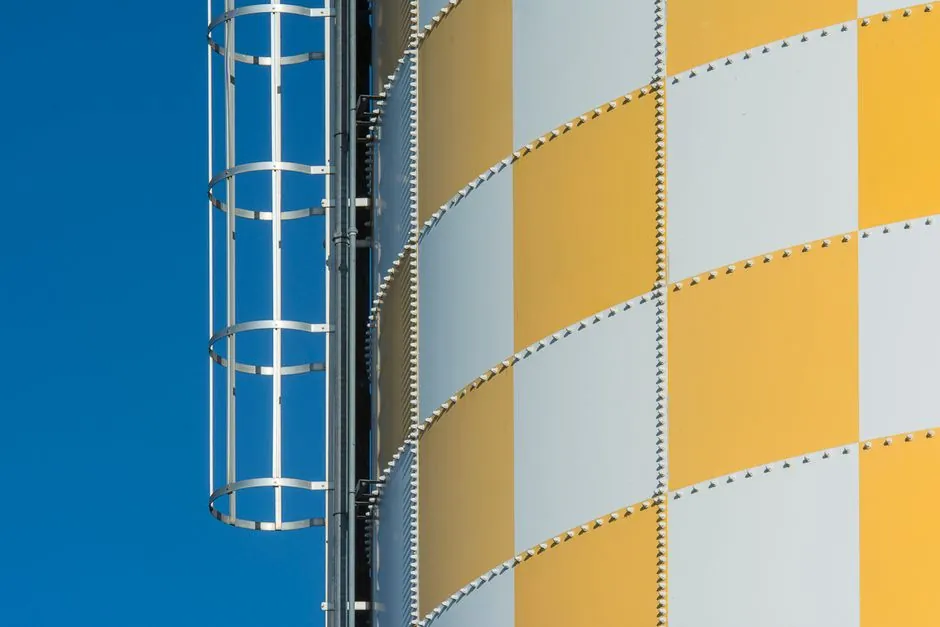
For metro, utility and road tunnel sites the working envelope is a fixed cross-section 4-8 m above invert, with semi-permanent vault ladders fixed into the segmental concrete plus portable rigs for invert and bench work, which is why aluminum ladder selection is driven less by reach than by alloy temper, duty class and confined-space fit. Taimco's SL1482 elevated pit ladder ships in 4 ft to 14 ft aluminium sections for permanent elevator-pit and tunnel-sump access, while AE Concrete's standard aluminium ladder rung is the cast-in counterpart for new vault and manhole shafts [S1][S5][S7].
Industrial tunnel ladders span single straight, two-section extension and platform-step geometries; ADTO's FAD-series catalogues 10- to 19-step straight ladders in 3.0-5.7 m lengths at 1.2 mm wall thickness and 150 kg load, and Onward's 6063-T5 single straight series covers 2-6 m at 390 mm width, both compliant with EN 131 [S3][S4][S6].
Alloy and Temper Selection for Tunnel Atmosphere
6000-series aluminium dominates tunnel ladder rails because the extruded 6061-T6 (yield around 240 MPa, ultimate around 310 MPa) and 6063-T5 (yield around 145 MPa) sections trade corrosion resistance against section stiffness in a way that maps cleanly to duty class [S2]. For shafts and portals that see intermittent groundwater, chloride-bearing dust and shotcrete splash, 6061-T6 is the default rail; 6063-T5 stays acceptable on light straight ladders where mass matters, as in the ADTO FAD-30 to FAD-57 range and the Onward 2-6 m single straight line at 1.2 mm wall [S3][S4].
The 1.2-1.6 mm rail wall and 2.5-3.0 mm rung-wall band is the practical industrial corridor; below 1.0 mm a rail will not pass the EN 131 static-load deflection check at 1.5x rated load, and tunnel QA teams tend to reject sub-1.0 mm extrusions on inspection [S2]. Cast-in rungs such as AE Concrete's standard aluminium ladder rung are specified as the structural anchor in the segmental lining, with the portable ladder hung or bracketed off the rung line [S7].
Duty Class, Load Rating and Joint Type
EN 131 separates non-professional ladders (EN 131-1, 150 kg) from professional (EN 131-2, 150 kg with extra torsion and strength tests), while ANSI A14.2 ladders run Type III 200 lb, Type II 225 lb, Type I 250 lb, Type IA 300 lb, Type IAA 375 lb, and the industrial rule of thumb is to use Type IA for one-person-plus-tool work and Type IAA for two-person-plus-gear work [S2]. On a tunnel face this translates into a portable extension ladder at Type IA / EN 131-2 150 kg for invert and bench crews, and a fixed vault ladder at the same 150 kg rating for permanent access shafts [S1][S6].
Joint type separates swaged rung-to-rail, rung-and-rail aluminium extrusion, and hinged multi-position; the swaged rung on a single straight ladder is the simplest field-repairable joint, while two-section extension ladders add a rope-and-pulley or pin-lock rung. For tunnel rigs the swaged rung plus a separate fall-arrest post is the typical assembly, because the post adds a 0.7-1.0 m grab-rail above the top rung for safe transition into the bore opening [S1][S2].
Working Height, Reach and Section Length Logic
Working height is the highest standing-reach height, roughly platform height plus 2.0 m on a straight ladder and top-rung plus 2.0 m on an extension, and the fixed ladder length should leave 1.0-1.5 m of ladder above the landing edge to maintain the three-point contact rule [S2]. Taimco's SL1482 aluminium pit ladder at 4 ft to 14 ft (1.2-4.3 m) covers shaft depths typical of metro cross-passages, while ADTO's FAD-30 to FAD-57 straight ladders at 3.0-5.7 m cover tunnel-face reach where the workpoint is above the bench [S3][S5].
Two-section extension ladders usually span 3.0-4.5 m closed and 6.0-9.0 m extended in the tunnel context, with the upper fly section overlapped at least 1.0 m on the base for the published load rating to hold; below 1.0 m overlap the published load no longer applies and that is one of the most common field failures in tunnel fit-out [S2]. The aluminum ladder geometry must also clear the tunnel gauge: width 390 mm rails and 30 x 30 mm rungs fit a standard 600 mm gauge refuge niche, while wider 450 mm platforms need a 750 mm minimum niche clear width [S3][S4].
Confined-Space and Tunnel-Specific Hazards
Tunnel air routinely contains diesel particulate, blasting fume residue and elevated humidity, and aluminium's oxide skin handles this better than painted mild steel but is still attacked above pH 9 and below pH 4, which rules out unprotected aluminium in new-shotcrete wash water and in some chemical-grout catch pits [S2]. For M&E galleries the standard construction tools inventory is completed by adding a fixed aluminum alloy rung-and-rail assembly plus a portable EN 131-2 step platform for cable-tray work above the walkway.
Electrical bonding matters: aluminium ladders on DC traction rails must be kept clear of the contact wire envelope and bonded where stray current is documented, while a fibreglass or rubber-footed step is the safer choice for live traction-side work. Where the bore carries HV fans or jet-fan cabling above the walkway, a non-conductive step stool or fibreglass-reinforced aluminium rail is preferred over a bare aluminum alloy rail to avoid induced-voltage paths during energised work.
Selection Rules: Single Straight, Extension, Platform, Pit-Fixed
A four-criteria cut works for tunnel procurement. On load: ADTO and Onward single straight at EN 131 150 kg, Taimco SL1482 pit ladder at commercial fixed duty, AE Concrete vault ladder with safety post at utility-chamber duty, and ADTO extension ladders at 150 kg extended. On reach: 3.0-5.7 m straight (ADTO FAD-30 to FAD-57), 1.2-4.3 m fixed (Taimco SL1482), 6-9 m extension (typical tunnel-fit-out), and 2-6 m straight (Onward). On joint: swaged rung for single straight, rope-and-pulley or pin-lock for extension, cast-in rung for fixed shaft, and hinged multi-position for M&E galleries. On atmosphere: 6061-T6 default, 6063-T5 acceptable for light straight, fibreglass-reinforced rail preferred near HV, and 6061-T6 with PVC foot for wet invert [S1][S2][S3][S4][S5][S6].
Standards, Inspection and Field Rejection Modes
EN 131 and ANSI A14.2 / A14.5 govern ladder type and load; tunnel QA typically references EN 131-2 plus a project-specific lift-plan when the ladder is tied into the segmental scaffold. For metro and rail tunnels the contractor lift plan adds a fall-arrest post, a top grab-rail extension of 0.7-1.0 m above the top rung, and a maximum two-person occupancy on Type IA / Type IAA rails during panel carry [S1][S2].
Common rejection modes on a tunnel delivery are: rail wall below 1.0 mm, swaged rungs without anti-slip knurling, no safety post on a fixed vault ladder delivered to a chamber drawing, and aluminium step stools used in a chemical-grout catch pit where pH drifts below 4. A pre-mobilisation audit should match each ladder's published length, alloy temper and rung geometry to the access drawing, and demand the OEM data sheet rather than the catalogue cover [S1][S2][S7]. For demolition or strip-out phases on the same tunnel, the duty-class logic shifts again, as detailed in Aluminum Ladder Selection for Demolition. Track next: the OEM data-sheet read across the FAD-, SL1482 and Onward lines for 1.2 mm wall certification, and the tunnel lift-plan sign-off for 1.0 m overlap on every two-section extension in use.