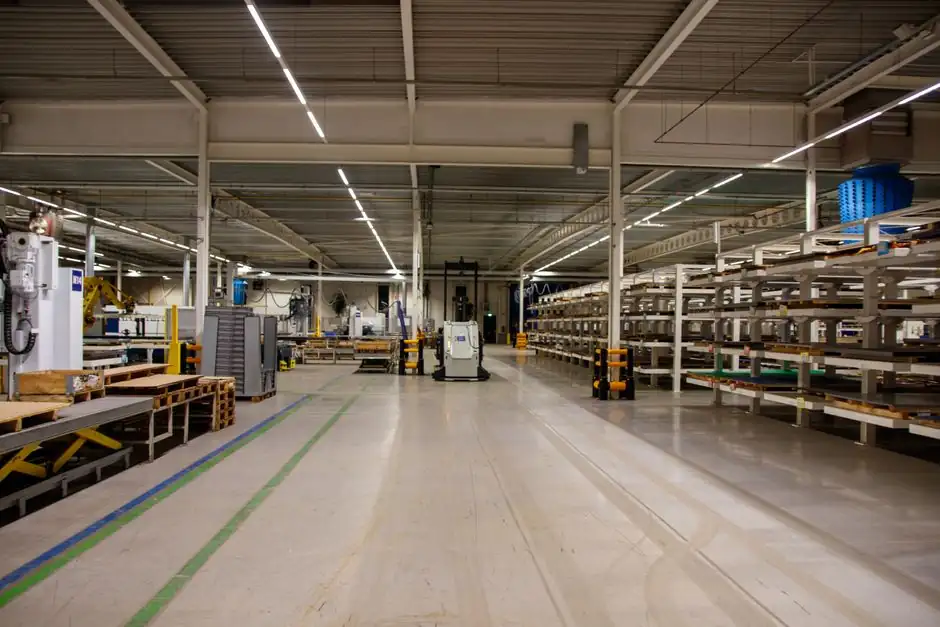
AMRs built on SLAM navigation routinely run in 70 cm aisles with 20 mm obstacle clearance and 8 percent slope tolerance, per the AUTOXING spec sheet published 2026-09 [S5].
Traditional AGVs follow magnetic tape, floor wire, or laser-reflector guides, so their minimum aisle width is set by the guided-route turning radius plus buffer, not by the vehicle's footprint, per the Georgia Tech minimum-aisle AGV path-planning research [S1].
The 70 cm figure is the AMR's mapped-corridor width with no fixed infrastructure on the floor; an AGV running the same physical chassis would still need the guide path plus a separate clearance band on each side of that guide [S5][S1].
Why the AMR aisle is physically smaller than the AGV aisle
AMRs plan their own path inside a mapped zone, so the aisle only has to contain the robot's footprint plus a sensor-defined safety margin, and AUTOXING's lifting AMR L300 cites 20 mm obstacle clearance and 70 cm corridor width on a free-map deployment [S5].
AGVs are constrained by nonholonomic kinematics, the same no-slip constraint that makes a car have to rock into a parallel parking space, and the Georgia Tech 1997 minimum-aisle study models this as a global-minimum aisle width problem driven by vehicle shape, steering geometry, and turn angle [S1].
Vecna's AMR vs AGV comparison reinforces the same split: AMRs actively reroute around obstacles, while AGVs "stop for obstacles and cannot proceed until path is clear" because the route is the guide, not a software plan [S4].
Decision criteria: route stability vs layout churn
KUKA's selection table maps the choice onto three conditions: AGVs fit where routes and processes are stable, where process reliability on fixed routes is required, and where changes occur infrequently [S2].
AMRs fit where the layout or requirements change frequently, where obstacles are dynamic and route-around matters, and where flexible scaling or adaptation is required [S2].
MiR's write-up of the same decision is more pointed: an AGV "cannot navigate around [an obstacle], stopping until the obstacle is removed," and modifying AGV routes "involves additional costs and disruptions," while an AMR "can detect obstacles and safely maneuver around them, choosing the best alternative route" [S3].
Comparison table: AMR vs AGV on aisle-driving specs
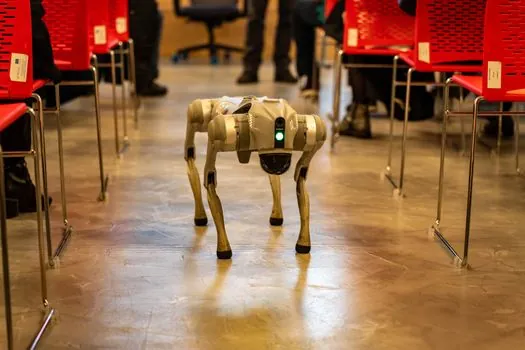
Direct spec-to-spec, the four most decision-relevant rows on a 2026 spec sheet line up as follows, drawn from AUTOXING's published L300 / Smart Pallet Truck figures [S5] and the Georgia Tech kinematic model [S1]:
Minimum aisle width: AMR 70 cm mapped corridor, AGV guided-route turning radius plus safety buffer (typically larger than 70 cm for any unit-load or pallet AGV; AUTOXING cites no equivalent AGV number on its current sheet) [S5][S1].
Obstacle clearance: AMR 20 mm active sensor margin, AGV fixed-route stop plus external safety-scanner coverage [S5][S3].
Slope tolerance: AMR 8 percent rated slope, AGV not stated as a differentiator on the same AUTOXING sheet, because the guide path itself is the constraint [S5].
Reconfigure time: AMR 10 minute map re-run per L300 site mapping figure, AGV re-lay magnetic tape or move reflectors (hours to days, site-dependent) [S5].
Who the AMR aisle figure is for, and who it is not for
70 cm is a useful target for totes, bins, and small-cart AMRs in picking aisles where the chassis is roughly 50–60 cm wide, because the AMR can self-navigate and treat the 20 mm clearance as a soft constraint it plans around [S5].
70 cm is not the right number for unit-load AGV lanes carrying standard 1200 x 1000 mm EUR pallets or 1219 x 1016 mm GMA pallets, where the aisle is set by the pallet footprint plus fork or jack geometry plus the AGV's guided turn radius, all of which the Hogan/Book paper models as a nonholonomic minimum-aisle problem [S1].
For those heavier classes, the realistic AMR-vs-AGV comparison is not 70 cm versus 70 cm, it is whether the AMR's onboard LiDAR and SLAM stack can replace the floor infrastructure that an AGV needs and free up the same physical corridor for self-planned routing [S2][S3].
Limits and failure modes of the 70 cm number
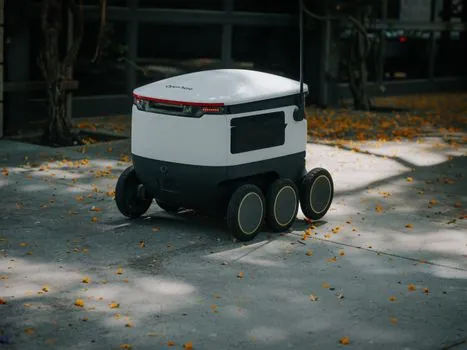
The 70 cm value is a free-map deployment figure, not a rated payload figure, so heavier AMR chassis, longer pallet trucks, and any towed load will push the required corridor width up; the FT1500 and FT2000 Smart Pallet Truck sit in a different envelope than the L300 lift AMR [S5].
AMR obstacle behavior assumes the sensors see the obstacle: the 20 mm clearance is a detection margin, not a structural one, so racks, conveyors, and pallet-rack uprights that intrude into the mapped corridor will still cost usable width, which is why the vendor qualifies the figure with "site review" rather than a guaranteed number [S5].
AGV aisle-width gains, on the other side of the same trade, come from infrastructure choices (magnetic tape is narrower than a reflector array) and from vehicle shape, because the Hogan/Book kinematic model shows minimum aisle width is a function of vehicle length, wheelbase, and steering geometry as much as it is of the guide path itself [S1].
Standards and sourcing signals to track
ISO 3691-4:2020 is the driverless industrial truck safety standard that both classes fall under in CE-marked deployments, and it governs obstacle-detection performance, braking distances, and mixed-traffic zones, which is what any quoted 20 mm or 70 cm figure is validated against on a real site. [S2]
MiR, KUKA, and Vecna all position AMR advantage on "no infrastructure change," which is also the selling point of AUTOXING's hybrid free/track/hybrid driving mode on the Sub Lift AMR S Series, and that convergence is a trackable signal that the AGV/AMR line is blurring on the floor even as the aisle-width math stays distinct [S2][S3][S4][S5].
For related reference on the other side of the same aisle-width problem, the reach-truck minimum aisle width spec reference covers the forklift-driven case the AGV side of this comparison has to match in a greenfield warehouse.