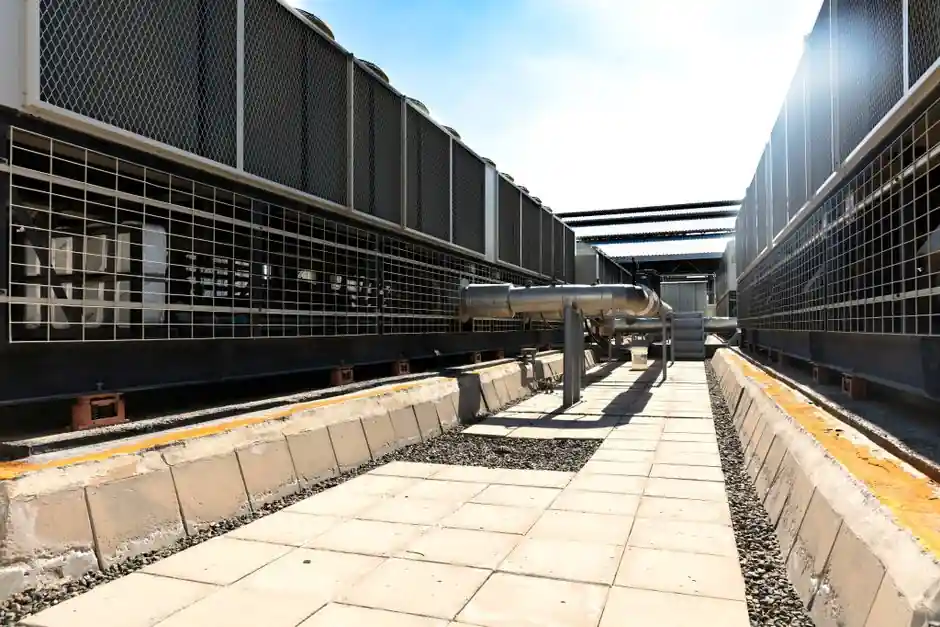
An analyzer shelter in 2026 is sized by four hard constraints before process fit is even discussed: road-transport envelope, crane lift at site, slab/foundation load, and HVAC heat-rejection budget, with sample conditioning and utility drops acting as soft multipliers on all four [S1][S6].
The oil-and-gas analyzer-shelter market was valued at $1.23 billion in 2025 and is projected to reach $1.89 billion by 2034 at a 5.2% CAGR, with data verified as of May 2026, confirming that shelter capacity is still a growing spend line on every mid-stream and downstream project [S2].
Footprint and analyzer count per shelter
Typical 2026 analyzer shelters run 6 m, 9 m, or 12 m long on a 2.4-3.0 m module width, with 6-8 process analyzers (gas chromatographs, photometric, oxygen, moisture analyzer units) fitting in the mid-size 9 m class before HVAC and sample-rack space force a step up to 12 m [S1].
Each gas chromatograph needs roughly 1.2-1.8 m of wall or bench footprint, plus 0.6-1.0 m of clearance for the heated oven enclosure, while a single-component analyzer drops to 0.3-0.5 m, so shelter length scales almost linearly with GC count rather than analyzer count [S1][S3].
Add the sample-conditioning wall (typically 1.5-2.5 m of the long axis) plus a 1.0-1.5 m purge-panel and utilities zone, and a shelter designed for 4 GCs plus 4 single-component analyzers is rarely shorter than 9 m in practice [S1].
Weight, transport, and lift limits
Shipping restrictions and over-the-road envelopes are the first hard gate, with most regions limiting width to 2.5 m and height to 4.0-4.3 m without police escort, so anything wider is built as two modules and spliced on a common base [S6].
Empty shelter weight for a 9 m insulated steel building lands around 8-12 t, and a fully fitted 12 m shelter holding 6 GCs, sample conditioning, and a 5-10 kW HVAC skid is commonly in the 18-30 t range, which pushes standard 20-25 t crane picks to their working radius and forces a 30-50 t crane for any lift above 15 m hook height [S6][S8].
FRP alternatives cut empty mass by roughly 40-60% versus carbon steel, so a fiberglass shelter from suppliers such as Shelter Works is typically 4-7 t empty for the same 9 m envelope, which is why natural-gas and offshore-adjacent projects specify FRP whenever the site crane is the binding constraint [S8].
HVAC heat load and enclosure classification
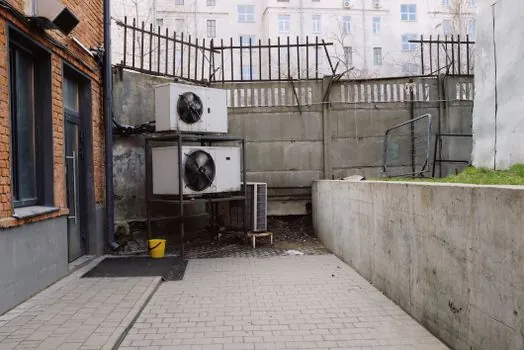
Each gas chromatograph in a shelter dissipates 0.8-1.5 kW through its heated oven, and a single-component analyzer adds another 0.1-0.4 kW, so a 6-GC shelter typically needs 6-10 kW of HVAC cooling plus a 1.5-2.0x latent-load safety factor, which in a Zone 1 or Zone 2 area forces a purged, explosion-proof HVAC skid rather than a standard split unit [S1][S3].
Analyzer shelters are treated as enclosed spaces for personnel safety, so the HVAC must hold the interior within the analyzer vendor's specified ambient band (commonly 10-30 °C for GCs, 5-40 °C for NDIR units) while keeping the shelter positively pressurized relative to the hazardous outside atmosphere [S1].
European and offshore projects typically require the HVAC and electrical package to be ATEX or IECEx certified, with shelters carrying plate markings such as Ex pzc IIB+H2 T3 or Ex db IIB T4 for the gas analyzer compartments, and FRP enclosures with explosion-proof electrical packages are a common way to meet both the weight and certification constraints in a single spec [S5][S8].
Safety detection layer: gases, oxygen, smoke, heat
Combustible-gas, oxygen-deficiency, toxic-gas, smoke, and heat detection are baseline inside every enclosed analyzer shelter, with oxygen monitors set to alarm at 19.5% by volume because that is the recognised lower limit for unimpaired judgement and motor coordination [S1].
Where hydrogen is one of the combustible gases, catalytic-bead detectors must be specified because infrared point or open-path detectors are insensitive to H2, a frequent miss on refinery shelter retrofits that simply copy a natural-gas detector spec [S1].
Toxic-gas detection is selected per stream chemistry, with common picks including H2S, Cl2, CO, phosgene, and HCl sensors mounted at breathing-zone height inside the shelter door, and oxygen-deficiency risk is highest where nitrogen is used both as instrument-air backup and as analyzer carrier/purge gas, so a single redundant O2 sensor at low level plus one at breathing zone is the conservative pattern [S1].
Utility drops, sample conditioning, and soft multipliers
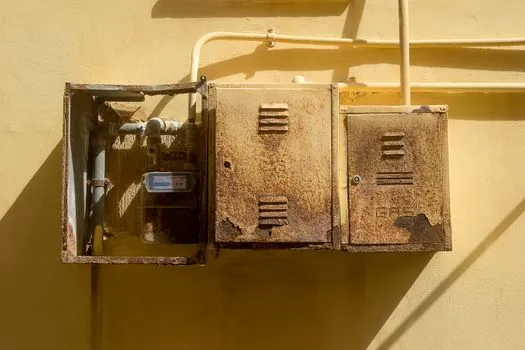
A typical petrochemical shelter needs 480 VAC 3-phase power, UPS power, steam, water, plant air, instrument air, nitrogen, calibration-gas cylinder banks, and a flare or atmospheric-vent header routed in, so utility penetrations and routing ducts often consume 0.5-1.0 m of wall that would otherwise be analyzers [S1].
Sample conditioning is the other soft multiplier: pressure, temperature, viscosity swings, and hazardous-vapor compatibility on the sample side drive the size of the probe, heat-traced line, filter, and coalescer or membrane separator, and a single dirty or condensing stream can add a full sample-rack wall (1.5-2.5 m) that the original process-fit calculation never accounted for [S1][S3][S5].
Climatic and electrical-area-classification variation is the third soft multiplier, because Arctic, desert, marine, and Zone 1 / Division 1 sites each push the shelter to a different insulation, HVAC, and purge-panel spec, and a shelter designed for an onshore 40 °C ambient rarely ships as-is to an offshore 5 °C ambient site [S5].
Who needs a custom shelter and who can use a catalog unit
Custom-engineered shelters are the right call for any project mixing more than two gas chromatographs with hazardous-area HVAC, a sample-conditioning wall longer than 1.5 m, or transport envelopes that force modular construction, because the integration work is where most schedule slip happens, not at the analyzer vendor's bench [S4][S6].
Catalog or standard shelters fit simpler applications such as a single moisture or oxygen analyzer on a non-hazardous utility skid, a small CEMS at a single stack, or a one-off analyzer cabinet mounted adjacent to the sample tap rather than on a dedicated pad [S5].
Turnkey supply, factory acceptance testing, and modular pre-fabrication give the best capacity headroom, because the shelter, sample system, HVAC, and electrical are built in parallel with the civil works, which shortens site hookup from weeks to days and is the main reason EPCs push turnkey scope on shelter packages in 2026 [S3][S6].
Comparison: shelter construction options against decision criteria

On modular versus monolithic, modular 6 m buildings stay inside standard 2.5 m wide, 4.0-4.3 m high envelopes without police escort, while monolithic 12 m shelters save splice work and seal points but routinely need wide-load permits and 30-50 t crane picks, which is why inland North American projects lean modular and offshore-adjacent projects lean monolithic where a single heavy-lift vessel is already on site [S6].
Compliance scoring is straightforward: ATEX or IECEx certification, DNV type approval for offshore, and NACE MR0175 conformance for sour service are the three marks to look for on the shelter data plate, and an ANSI/UL 508A panel shop building the purge, HVAC, and detection panel inside the shelter is the usual way the electrical package is matched to those certifications [S5][S7].
Trackable signals for 2026 shelter programs
Three numbers to watch on any 2026 analyzer-shelter procurement: total empty lift weight against the largest site crane, the HVAC kW divided by shelter floor area (anything above roughly 250-300 W/m² flags HVAC as the binding constraint), and the count of utility penetrations against the spare wall area on the sample-conditioning side, because that ratio is the leading indicator of whether the shelter stays a single module or has to be split. [S5]
Across the broader process-analyzer market, components such as gas analyzers and moisture analyzers are increasingly delivered as shelter-integrated packages, with EPCs writing the shelter, sample system, and analyzer as one line item rather than three, which is the structural shift that 5.2% CAGR through 2034 is funding [S2][S3].
The underlying component specifications are covered under skid steer loader.
For related coverage, see Analog chip market 2026: industrial and automotive pull selective recovery.