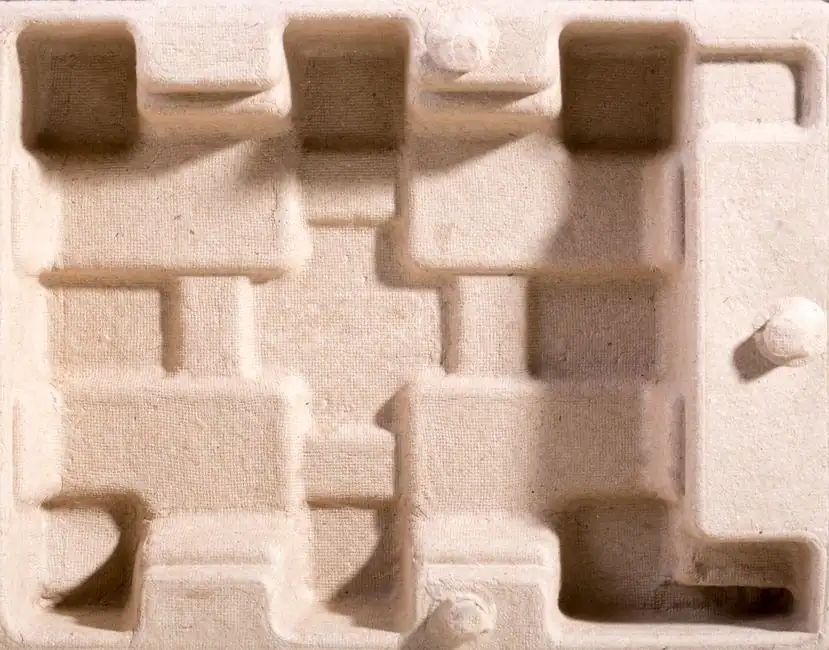
Black anti-static alumina grades, engineered into the 10⁶–10⁹ Ω surface-resistivity window, drop electrostatic decay time from the 60+ s typical of ordinary materials to under 0.1–2 s, qualifying them as ESD protection components per IEC 61340-5-1 [S3].
The same conductive modification that tames static also preserves alumina's mechanical and thermal baseline, so handling fixtures can hold sub-micron tolerances without the wear, outgassing, or magnetic pickup of metal or plastic alternatives [S1][S3].
Why standard alumina fails on an ESD-sensitive line
A standard advanced ceramic such as alumina is deliberately made as insulating as possible, with volume resistivity above 10¹⁴ Ω·cm, and against a bare die or wafer that is exactly the wrong property: charge from contact-and-separation has nowhere to bleed off and releases in one damaging breakdown event [S1]. Anti-static ceramics target a much lower window, typically 10⁶–10⁹ Ω surface resistivity or 10⁷–10⁸ Ω·cm volume resistivity, the "dissipative" band where charge relaxes slowly instead of arcing [S1][S3].
The dissipative window is also what separates an ESD fixture from a plain conductive one. A conductor below roughly 10⁵ Ω would equalise potential through a hard spark; an insulator above 10¹¹ Ω holds the charge until something else does; the 10⁶–10⁹ Ω band bleeds it off on a timescale the device can survive [S3]. On a 300 mm wafer-handling robot arm, that difference shows up as scrap-rate swings between cells, not as a spec-sheet number, which is why ESD audits care about resistivity range rather than a single value [S1][S3].
How the three dissipative grades compare
Three commercial material families now land in the dissipative band and are specified for different jobs on the same line: black zirconia (LONGYI ZOB56, 710 MPa flexural, 5.6 g/cm³ bulk density, 1600°C max use temperature), black silicon carbide (SCB316, 450 MPa flexural, 3.16 g/cm³, 1600°C), and a porous SiC PS series (PS03–PS30, 260–280 MPa flexural, 2.5–2.8 g/cm³, 1400–1500°C, with through-body vacuum) [S1].
On the four criteria that matter when you swap a fixture material, the grades line up as follows. Volume resistivity: PS series ~10⁷ Ω·cm, ZOB56/SCB316 ~10⁸ Ω·cm, all comfortably inside IEC 61340-5-1's dissipative band [S1][S3]. Flexural strength: ZOB56 710 MPa > SCB316 450 MPa > PS series 260–280 MPa, so ZOB56 wins for thin cantilevers and SCB316 for rigid large-format carriers [S1]. Bulk density: 2.5–2.8 vs 3.16 vs 5.6 g/cm³, which determines the inertial load on a robot-arm end effector and matters on high-acceleration pick-and-place heads [S1]. Max use temperature: 1600°C for both ZOB56 and SCB316, 1400–1500°C for PS series, so only ZOB56/SCB316 survive the high-heat side of any post-sinter or hot-probe step [S1].
Coating routes versus bulk-doped bodies
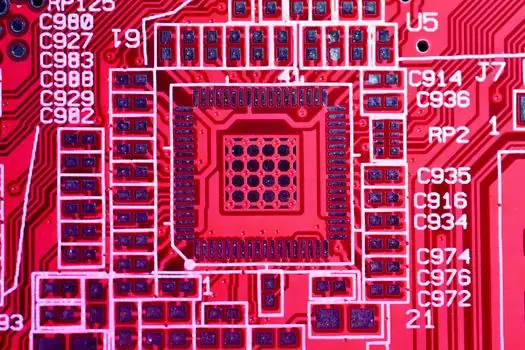
Two routes are in use: bulk conductive modification of the sintered body, and surface coating on a standard insulating substrate. Bulk doping (carbon nanotube, metal-oxide, or ion-implant routes) is what puts LONGYI's ZOB56 and SCB316 squarely in the dissipative band, and gives the same 10⁶–10⁹ Ω surface-resistivity target that anti-static alumina datasheets quote [S1][S3].
Thermal-spray alumina, by contrast, is being studied as a dielectric isolation layer rather than a static-dissipative one: plasma-sprayed and HVOF alumina coatings on AlSiC baseplates are evaluated for direct-voltage dielectric breakdown and leakage current, with the porous microstructure needing a hermetic package to keep moisture out of the coating [S4]. That makes thermal-spray alumina a candidate for the high-voltage isolation layer inside power modules, not a substitute for a static-dissipative handling fixture, so the two technologies solve different problems on the same fab floor [S1][S4].
A related patent, CN105236941A assigned to Ningbo Toptek Advanced Ceramics, claims an aluminum-oxide anti-static ceramic made by precipitation of aluminum hydroxide, spray drying, and sintering, with a resistivity target aimed at the same dissipative band used in the commercial grades above [S5].
Where these fixtures actually get specified
Anti-static alumina is specified across four application clusters that share the same electrical problem but have very different mechanical demands. Semiconductor back-end: wafer-handling robot arms, vacuum suction cups, probe cards, anti-static tweezers and carriers, and anti-static suction nozzles, all of which need both ESD safety and zero particle generation [S3].
Medical and bioengineering: surgical scalpels and endoscopic components where static adhesion to tissue is a clinical nuisance, plus implant surfaces (artificial joints) where friction-induced static is a downstream inflammation risk [S3]. Industrial explosion protection: non-sparking wrenches and scrapers for flammable environments, and antistatic grinding tanks and conveying pipework to prevent dust-cloud ignition [S3]. Optics and precision instruments: mirror mounts and vacuum-chamber liners where dust attraction degrades imaging and where corrosion resistance also matters [S3].
For electronic-accessory-level parts, sintered alumina sheets (e.g. 1 cm side length, 0.5 mm thickness) ship as standard catalog items and serve as insulating heat-spreaders and structural spacers, but they sit above the 10¹⁴ Ω·cm insulating range and are not used where static dissipation is required [S6].
Machining, shrinkage, and the 20% rule
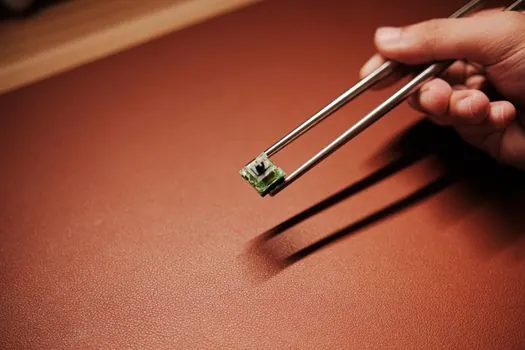
Alumina, anti-static or not, is processed in the green or billet state into complex shapes, then sintered to full density with roughly 20% linear shrinkage, which is the number that decides whether you can hold a finished tolerance on a thin wall or a long cantilever [S3]. Post-sinter, only diamond grinding cuts it, so any hole, slot, or thread that has to land on a tolerance tighter than the shrinkage budget has to be machined, not molded [S3].
The same brazed joint has to be designed so its interface does not re-introduce an insulating barrier, otherwise the dissipative surface can be defeated at the mechanical mount [S3].
Standards and sourcing signals to track
ESD compliance is set by IEC 61340-5-1, which the commercial anti-static alumina grades explicitly cite as their target, and which is the right standard to call out on a fixture drawing or an incoming-material certificate [S3]. For high-voltage isolation layers in power modules, the ASTM dielectric-strength test methods applied to thermal-sprayed alumina are the relevant reference, not IEC 61340-5-1, because the function is isolation rather than dissipation [S4].
Alumina's broader electronics role, including thermal-insulator and heat-sink use, is covered in the standard alumina ceramic reference, and the dissipative surface behaviour of an ESD fixture sits inside the wider anti-static equipment and material handling categories used in process-engineering specifications. For downstream questions on pick-and-place fixturing and conveyor interfaces, the storage handling and industrial coating encyclopedia pages give the surrounding context a specifier usually needs.
Two trackable signals to watch: published resistivity data on porous SiC vacuum-chuck grades, which is the only dissipative option that combines through-body vacuum with ESD safety, and the next round of IEC 61340-5-1 clarifications, which periodically tighten the boundary between "dissipative" and "conductive" on handling fixtures. For comparison shopping on related wear parts, AlNiCo vs ferrite magnets is a useful cross-reference for thermal-stability tradeoffs on the same high-temperature handling lines.