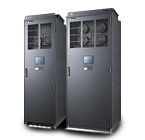
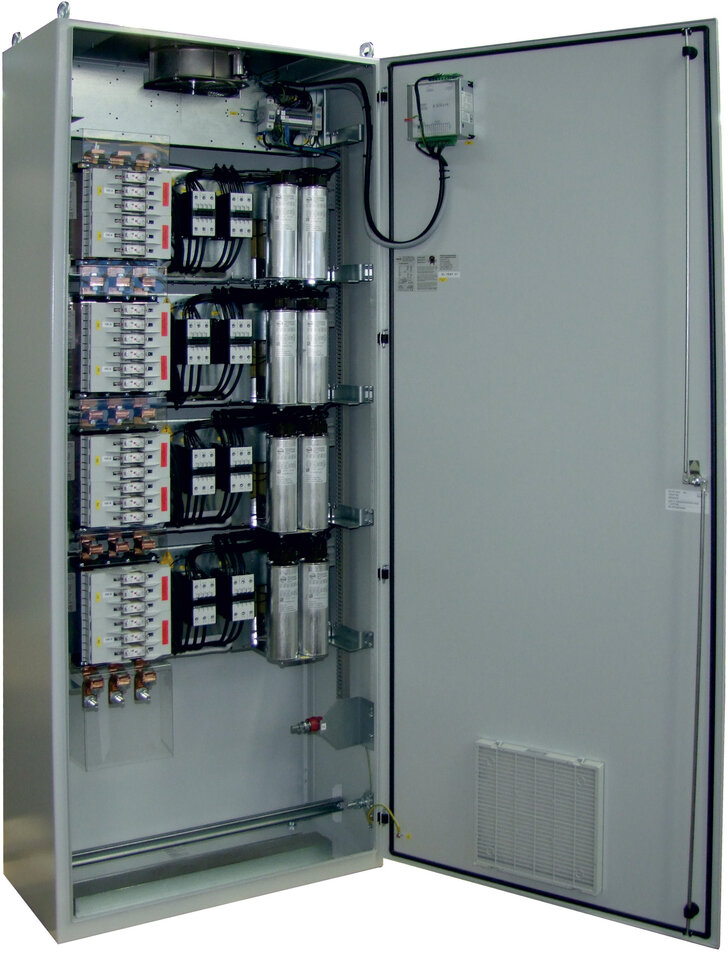
Reactive power compensation is the practice of supplying inductive loads with reactive power (measured in kVAR) locally, rather than drawing it all the way from the generator. By adding capacitive reactive power near the load, an installation raises its displacement power factor (cos phi) toward unity, reduces the apparent power (kVA) the utility must deliver, frees up transformer and cable capacity, and avoids low-power-factor penalties on the electricity bill.
The toolbox spans a wide range: fixed and automatically switched capacitor banks for steady industrial loads, detuned filter banks for plants with harmonics, and converter-based equipment such as the static var compensator (SVC), static var generator (SVG), and static synchronous compensator (STATCOM) for fast, transient-free dynamic correction. This guide decodes the types, the kVAR math, the governing IEC standards, and the selection decisions that separate a bank that lasts fifteen years from one that fails in two.
This guide is written for industrial purchasing engineers and electrical design engineers. It covers 6 chapters from the physics of reactive power, through capacitor bank classification, switching and converter technologies, harmonics and detuning, the key spec parameters, to a selection decision sequence, with 7 selection FAQs. All parameters reference public standards including IEC 60831-1 (low-voltage self-healing shunt capacitors), IEC 60871-1 (high-voltage shunt capacitors), IEC 61921 (low-voltage power factor correction banks), and IEC 61642 (capacitor banks in harmonic environments).
Chapter 1 / 06
What is Reactive Power Compensation
In an alternating-current network, every motor, transformer, welding set, and fluorescent ballast draws two kinds of power. Active power (P, in kilowatts) does useful work: it turns a shaft or produces heat. Reactive power (Q, in kilovolt-amperes reactive, kVAR) does no net work; it shuttles back and forth each cycle to build and collapse the magnetic fields that inductive loads need to function. The vector sum of the two is apparent power (S, in kilovolt-amperes, kVA), related by the power triangle S squared = P squared + Q squared. The ratio P divided by S is the displacement power factor, cos phi.
A low power factor is expensive even though reactive power consumes no fuel. The reason is that cables, transformers, and switchgear are sized for current, and current is proportional to apparent power. A plant running at cos phi 0.70 draws roughly 43 percent more current than the same active load at unity, so conductors run hotter, voltage drop worsens, and a fraction of transformer capacity is wasted carrying reactive current that does no work. Utilities recover this cost by metering reactive energy (kVARh) and levying a penalty, or by billing on kVA demand. Reactive power compensation answers the problem by generating the needed kVAR at the load, so the reactive current circulates only in the short loop between the capacitor and the motor, never in the upstream network.
The governing equation for sizing is Qc = P x (tan phi1 minus tan phi2), where Qc is the capacitive reactive power to install, P is the active load in kilowatts, phi1 is the existing phase angle and phi2 the target. As a worked figure, a 475 kW load measured at cos phi 0.75 (tan phi 0.88) and corrected to a target cos phi 0.955 (tan phi 0.31) requires Qc = 475 x (0.88 minus 0.31), which is 271 kVAR, so a 270 kVAR bank is specified. Capacitors are the natural source of leading reactive power because their current leads voltage by 90 degrees, exactly opposing the lagging current of inductive loads.
The engineering field is old and well standardized. Shunt capacitor compensation on power systems dates to the early twentieth century, and synchronous condensers, freely spinning over-excited synchronous machines used purely as variable reactive sources, predate solid-state electronics entirely. The modern apparatus divides into two families: passive devices (capacitors, reactors, and combinations of the two) that present a fixed or stepped reactance, and active devices (thyristor and IGBT converters) that synthesize a controllable reactive current. The remaining chapters trace this division from the simplest fixed bank to the fastest converter.
Four engineering metrics decide whether a compensation scheme is sound: how closely it holds the target power factor under a swinging load, how fast it responds to load steps, how it behaves in the presence of harmonics, and how long the equipment survives the thermal and electrical stress of daily switching. A bank that meets the kVAR figure on paper but ignores harmonics or switches with excessive inrush will fail early and is a false economy, a theme this guide returns to repeatedly.
Chapter 2 / 06
Compensation Types and Topologies
Reactive power compensation is classified along two axes: where the compensation sits relative to the load, and whether the reactive output is fixed, stepped, or continuously variable. Choosing the wrong topology is the most common and most expensive selection error, because a scheme that is perfect for a steady pump motor is wrong for a spot welder or a wind farm. The table below summarizes the main topologies and where each belongs.
By location, compensation is individual, group, or central. Individual (also called fixed) compensation wires a capacitor permanently across the terminals of one large motor or transformer, switching on and off with the load; it is the most effective at unloading the cabling because the kVAR is generated at the very point of consumption, but it is uneconomic for many small loads. Group compensation places one bank on a sub-distribution board serving several loads. Central compensation installs one automatically controlled bank at the main low-voltage switchboard, correcting the whole plant; it gives the best capacitor utilization because the simultaneity of many loads is averaged, but it does not relieve the downstream cabling.
Fixed banks deliver a constant kVAR and are matched to a constant reactive demand, classically the magnetizing kVAR of a transformer or a motor that runs at near-constant load. Because they cannot follow a changing load, an oversized fixed bank can overcompensate at light load, pushing the power factor leading, which utilities also penalize and which can cause self-excitation of nearby motors and voltage rise. Fixed banks are therefore reserved for predictable, steady reactive demand.
Automatically switched (stepped) banks divide the total kVAR into steps switched by contactors under the command of a power factor controller, so the delivered reactive power tracks the load in discrete increments. This is the workhorse of industrial low-voltage compensation and is the configuration covered by IEC 61921. The step granularity (for example 12 steps in a 1:2:2:2 binary-ish pattern) sets how closely the bank can approach the target without hunting. Stepped banks respond in seconds, which is fine for slowly varying loads but too slow for rapidly cycling ones, where the thyristor and converter topologies of the next chapter take over.
Chapter 3 / 06
Switching and Converter Technologies
The speed and the electrical cleanliness of a compensation scheme are set by how the reactive elements are switched in and out. Four technologies span the field: electromechanical contactors, thyristor-switched capacitors, the thyristor-controlled reactor that forms the SVC, and the IGBT voltage-source converter that forms the SVG and STATCOM. Each trades cost against speed and against the smoothness of the reactive output. The table compares the key engineering metrics.
Technology
Switching Speed
Output Steps
Relative Cost
Transient on Switching
Contactor (capacitor-rated)
5 to 60 s
Discrete
Low
Inrush, limited by damping resistors
Thyristor-switched (TSC)
5 to 20 ms
Discrete
Medium
Transient-free at voltage zero match
SVC (TCR + TSC)
20 to 40 ms
Continuous
High
None, but TCR generates harmonics
SVG / STATCOM (IGBT)
under 5 to 10 ms
Continuous
High
None, low harmonic injection
Contactor switching is the lowest-cost method and serves the great majority of low-voltage stepped banks. A capacitor presents almost a short circuit at the instant of connection, so the inrush current can reach many times the rated current of the step. Ordinary motor contactors weld their contacts under this stress, so capacitor switching uses purpose-built capacitor-rated contactors with leading auxiliary contacts and series damping resistors that absorb the first few milliseconds of inrush before the main poles close. ABB, Schneider, and others publish dedicated contactors-for-capacitor-switching guides because mis-selection here is a frequent failure cause. The penalty of contactor switching is mechanical wear and a response measured in seconds, which limits the number of operations per day and rules it out for fast loads.
Thyristor-switched capacitors (TSC) replace the contactor with back-to-back thyristors that close at the precise instant the supply voltage equals the residual capacitor voltage, so the capacitor is connected with essentially zero inrush and zero transient. This transient-free switching, achievable in roughly 5 to 20 ms, is what makes dynamic compensation of welding plants, cranes, and other fast-cycling loads practical without the contactor wear and the voltage notching of mechanical switching. A small series reactor still limits the rate of rise of current.
The static var compensator (SVC) combines a thyristor-controlled reactor (TCR), whose absorbed reactive power varies continuously with the thyristor firing angle, with one or more thyristor-switched capacitor banks. By trimming the reactor against fixed capacitor steps the SVC synthesizes a continuously variable reactive output in about 20 to 40 ms. Its limitation is fundamental: the SVC is an impedance, so its reactive current is proportional to the system voltage, and the maximum capacitive current it can deliver falls as the voltage it is meant to support sags. The TCR also generates harmonics that must themselves be filtered.
The SVG and STATCOM use an IGBT voltage-source converter that behaves as a controlled current source rather than an impedance. It can deliver close to its rated reactive current even when the system voltage is depressed, which is precisely the condition during a fault or a heavy load step, so it gives far better voltage support than an SVC at low voltage. Response is under 5 to 10 ms, and a STATCOM can swing from full capacitive to full inductive output in around 1 ms. SVG is the common commercial name for a low-voltage STATCOM, and many SVG units use the same converter to perform active harmonic filtering, compensating reactive power and cancelling harmonic currents in one cabinet. The cost is the highest of the four technologies, justified where speed, low-voltage performance, or harmonic cancellation are required, as on wind and solar plants and weak grids.
Chapter 4 / 06
Harmonics, Resonance and Detuning
The single biggest cause of premature capacitor failure is not voltage and not temperature but harmonics. Modern plants are full of non-linear loads: variable frequency drives, six-pulse rectifiers, switch-mode power supplies, UPS, and arc furnaces all draw current in pulses rather than sinusoids, injecting harmonic currents at multiples of the fundamental, predominantly the 5th (250 Hz on a 50 Hz network), 7th, 11th, and 13th. A capacitor presents an impedance that falls with frequency, so it acts as a sink that pulls these harmonic currents into itself, overheating the dielectric and ageing the self-healing film. Worse, the capacitance of the bank and the inductance of the supply transformer form a parallel resonant circuit, and if that resonance lands near a harmonic the harmonic current is amplified, sometimes by a factor of several, destroying the bank in months.
The cure is the detuned reactor: a small inductor placed in series with each capacitor step so that the series combination resonates at a frequency safely below the lowest significant harmonic. Below this tuning point the branch is net capacitive and corrects power factor as intended; above it the branch is net inductive, so it can never form a parallel resonance with the supply at a harmonic frequency, and it draws only a limited, controlled share of harmonic current rather than acting as a sink. The reactor is specified by its relative impedance, often called the detuning or blocking factor, p, expressed as a percentage of the capacitor impedance at the fundamental. The table relates the common values to their tuning frequencies on a 50 Hz system.
Detuning factor p
Tuning frequency (50 Hz)
Tuning order
Used when
5.7%
approx. 210 Hz
4.2
5th harmonic dominant, tighter margin
7%
approx. 189 Hz
3.8
5th harmonic dominant, common default
14%
approx. 134 Hz
2.7
High 3rd harmonic present
The 7 percent reactor is the most widely specified general-purpose choice, tuning the branch to about 189 Hz, comfortably below the 5th harmonic at 250 Hz. A 5.7 percent reactor tunes higher (near 210 Hz) and is used where the margin to the 5th harmonic can be tighter. The 14 percent reactor tunes down near 134 Hz and is reserved for networks with significant 3rd-harmonic voltage, typically where single-phase non-linear loads or certain generator sets are present. A detuned bank also reduces voltage distortion, because it provides a defined inductive path to harmonic currents above its tuning point, typically removing a meaningful fraction of the lower-order harmonic current from the busbar.
When the goal is not merely to survive harmonics but to actively remove them to meet a distortion limit such as IEC 61000-3 or IEEE 519, a passive detuned bank is not enough. Here the choice is a tuned passive filter, an LC branch deliberately resonant at a single harmonic to short it to ground, or an active harmonic filter or SVG, which measures the load harmonics and injects an equal and opposite current in real time. Active units handle a spectrum of harmonics and a changing load that fixed tuned filters cannot, at higher cost. The boundary between reactive power compensation and harmonic mitigation blurs at this point, and a single SVG cabinet often does both, which is why the two product categories increasingly overlap.
One practical caution: a detuned reactor raises the voltage across the capacitor above the network voltage, because the inductive and capacitive voltages partly cancel only at the fundamental. A 7 percent reactor, for instance, requires capacitors rated for a higher voltage than the nominal supply (commonly 440 V capacitors on a 400 V network for a 7 percent reactor, and higher still for 14 percent). Specifying a detuned bank with capacitors rated only at the line voltage is a classic error that leads to overvoltage failure of the cells.
Chapter 5 / 06
Key Specification Parameters
Reading a capacitor bank or compensator datasheet is a core purchasing skill. The same equipment may list twenty parameters, but the decisive ones are a short set: rated reactive power and step pattern, rated and maximum voltage, overcurrent and overload limits, the temperature category, the detuning factor, the switching technology, and the controlling standards. Each is decoded below.
Rated reactive power and step pattern. The bank is rated in kVAR at a stated voltage and frequency, and critically a capacitor delivers kVAR proportional to the square of the applied voltage and linearly with frequency, so a unit rated 50 kVAR at 415 V delivers only about 46 kVAR at 400 V. Always confirm the rating voltage matches the network. The step pattern (for example 6 equal steps, or a graduated 1:1:2:2:4 set) determines the smallest increment and therefore how closely the controller can approach the target power factor.
Voltage ratings and overvoltage capability. IEC 60831-1 (for self-healing capacitors up to 1000 V) and IEC 60871-1 (above 1000 V) define the rated voltage and the permissible overvoltage duration: a capacitor must withstand 1.10 times rated voltage for up to 8 hours in every 24, and higher multiples for shorter intervals. Detuned banks need capacitors rated above the line voltage as noted in Chapter 4.
Overcurrent and overload. Standards permit a continuous current of up to 1.30 times the rated current of self-healing capacitors to allow for harmonics and overvoltage combined, and the bank's contactors, reactors, and cabling must all be sized for this. A bank running near a harmonic-rich busbar without detuning routinely exceeds this and fails.
Temperature category. IEC 60831-1 marks each capacitor with a temperature category (for example -25 / D, meaning a lower limit of -25 degrees C and an upper category letter that fixes the maximum and 24-hour mean ambient). Exceeding the marked ambient is a direct cause of accelerated dielectric ageing. Cabinet ventilation and step duty must keep the internal temperature within the category.
Key parameters at a glance. The list below is the minimum data a complete request for quotation should pin down before comparing offers:
Rated reactive power (kVAR) and the voltage and frequency it is referenced to.
Step count and pattern, plus the smallest step, which sets the controller C/k threshold.
Detuning factor (none, 5.7%, 7%, or 14%) and the capacitor voltage rating that goes with it.
Switching technology: contactor, thyristor (TSC), or converter (SVG/STATCOM).
Temperature category and the maximum ambient inside the cabinet.
Response time, in seconds for contactor banks, milliseconds for thyristor and converter units.
Governing standards: IEC 60831-1 or 60871-1 for capacitors, IEC 61921 for LV banks, IEC 61642 for harmonic environments.
For converter-based equipment (SVC, SVG, STATCOM) the spec set shifts toward dynamic parameters: continuous reactive current rating in both capacitive and inductive directions, response time, the harmonic spectrum the unit can compensate if it doubles as an active filter, and the converter efficiency, since IGBT switching losses are a running cost a passive bank does not carry.
Chapter 6 / 06
Selection Decision Factors
To turn the preceding chapters into a specific purchase, follow the decision sequence below. Most selection failures come not from one wrong answer but from skipping the harmonic survey, which then invalidates every later choice. These steps can serve as a fixed RFQ template.
Measure, do not assume, the load: log active power, reactive power, and the existing power factor over a representative period (a few days covering shift patterns). Compute the required kVAR with Qc = P x (tan phi1 minus tan phi2) against the genuine active load, never the nameplate kVA.
Survey the harmonics: measure the voltage and current total harmonic distortion and the spectrum at the point of connection. If non-linear loads exceed roughly 15 to 20 percent of the transformer rating, a plain bank is not acceptable and a detuned (or active) solution is mandatory.
Pick the topology and location: individual compensation for one large steady motor, central automatic compensation for a mixed plant, group compensation for a sub-board. Match the speed of the load to the speed of the technology from Chapter 3.
Choose the switching technology: contactor-switched for slow loads, thyristor-switched (TSC) for fast-cycling loads such as welding and cranes, SVC or SVG/STATCOM for continuously variable, low-voltage, or flicker-sensitive duties.
Set the detuning factor: none only for a verified harmonic-free network, 7 percent as the common default against the 5th harmonic, 5.7 percent for a tighter tuning margin, 14 percent where the 3rd harmonic is significant. Confirm the capacitor voltage rating rises to match.
Specify protection and switching ratings: capacitor-rated contactors with damping resistors, fuses or breakers sized for up to 1.30 times rated current, discharge resistors meeting the IEC 60831 discharge-time limit, and a cabinet temperature category that suits the site ambient.
Configure the controller: select a power factor controller with enough steps (commonly 6 to 12), set the target cos phi and the C/k threshold to suit the smallest step and the CT ratio, and enable a leading-power-factor alarm so the bank never overcompensates at light load.
Cost the whole life, not the box: add the saved demand and penalty charges, the released transformer and cable capacity, and the running losses (negligible for passive banks, real for converters) against the purchase price. A bank that is cheap because it omits detuning is the most expensive choice once it fails in a harmonic-rich plant.
One frequently overlooked dimension is serviceability over the fifteen-to-twenty-year life of the equipment: availability of replacement capacitor cells and reactors, local stock of capacitor-rated contactors (a wear item), firmware and configuration support for the power factor controller, and field service for converter-based SVG and STATCOM. Schneider Electric (VarSet, VarPlus, AccuSine), ABB (CLMD capacitors, PCS100), Eaton, Siemens, and Legrand maintain global parts and service networks, while controller makers such as Janitza, Beluk, and ABB (RVC/RVT) support the relays. In China, Sieyuan, CHINT, and Delixi offer cost-competitive banks and SVG carrying the relevant IEC and GB certifications, suitable for non-critical loads. The right choice balances the kVAR figure against the certainty of being able to keep the equipment running a decade after the purchase order.
FAQ
What is the difference between power factor correction and reactive power compensation?
The two terms overlap but are not identical. Power factor correction (PFC) is the commercial and regulatory goal: raising the displacement power factor (cos phi) toward unity so the utility delivers less apparent power (kVA) for the same useful active power (kW), which avoids low-power-factor penalties. Reactive power compensation is the physical means: injecting or absorbing reactive power (kVAR) locally with capacitors, reactors, or converters so the reactive component does not have to travel from the generator. In a purely linear 50/60 Hz network the two are the same task. Once non-linear loads inject harmonics, compensation broadens to include detuned reactors and active filtering, while the displacement power factor target stays the same.
How do I calculate the capacitor kVAR needed to correct power factor?
Use Qc = P x (tan phi1 minus tan phi2), where P is the active load in kW, phi1 is the original phase angle and phi2 is the target. Convert each power factor to its tangent: tan(arccos PF). Worked example: a 475 kW load at cos phi 0.75 (tan 0.88) corrected to cos phi 0.955 (tan 0.31) needs Qc = 475 x (0.88 minus 0.31) = 271 kVAR, so a 270 kVAR bank is selected. Always size against the genuine active load, not the nameplate kVA, and split the total into steps (for example 6 x 45 kVAR) so the controller can track load swings rather than over or under compensating.
When do I need a detuned reactor in front of the capacitor bank?
Add detuned reactors whenever harmonic-producing loads (variable frequency drives, rectifiers, UPS, arc furnaces) make up more than roughly 15 to 20 percent of the transformer load, or whenever a plain capacitor bank has previously failed early. A detuned reactor in series with each step shifts the bank's series resonance below the lowest significant harmonic, typically the 5th at 250 Hz on a 50 Hz network. Common relative impedance values are 5.7 percent (tuned near 210 Hz), 7 percent (near 189 Hz) and 14 percent (near 134 Hz, used where 3rd harmonic is high). Below the tuning point the branch is capacitive and corrects power factor; above it the branch is inductive and cannot amplify harmonics through parallel resonance.
What is the difference between SVC, SVG and STATCOM?
SVC (static var compensator) is an impedance-based device built from a thyristor-controlled reactor (TCR) plus thyristor-switched capacitors (TSC); it varies admittance, so its available current falls as system voltage drops, and response time is typically 20 to 40 ms. STATCOM (static synchronous compensator) is a voltage-source-converter device that behaves as a controlled current source: it can deliver near-rated current even at low voltage and responds within about 10 ms, swinging from full capacitive to full inductive in roughly 1 ms. SVG (static var generator) is the common commercial name for a low-voltage STATCOM, usually IGBT-based with response under 5 to 10 ms; many SVG units also perform active harmonic filtering in the same hardware.
Why does my capacitor bank fail or trip earlier than expected?
The dominant cause is harmonic overloading. A plain capacitor presents falling impedance to higher frequencies, so harmonic currents from drives and rectifiers concentrate in the bank, overheating the dielectric and aging the self-healing film. Parallel resonance between the bank and the supply transformer can amplify a harmonic current several fold. Other causes are switching inrush above the contactor rating (a capacitor-rated contactor with damping resistors limits this), overvoltage above the IEC 60831 limit of 1.1 times rated for 8 hours per 24, and ambient temperature beyond the marked temperature category. The fix is almost always a detuned reactor in front of each step and correctly rated switching.
What does the C/k setting on a power factor controller mean?
C/k is the switching threshold a power factor relay uses to decide when a step may be added or removed. It equals the reactive power of the smallest step C divided by the current transformer ratio k, expressed as a current. The controller compares the measured reactive current against C/k: if the deficit exceeds the threshold it switches a step on, and a built-in hysteresis prevents hunting around the target. Set C/k too low and the bank chatters on light load; set it too high and the controller never reaches the target power factor. Modern controllers measure C/k automatically, but the value still has to suit the smallest step and the CT ratio, typically read from the manufacturer table.
Which manufacturers supply low-voltage reactive power compensation equipment?
For capacitor banks and detuned filter banks, Schneider Electric (VarSet, VarPlus, VarPlusBox), ABB (CLMD capacitors, contactor-switched and dynamic banks), Eaton, Siemens and Legrand (Alpivar) are the mainstream global suppliers. For self-healing capacitor cells, EPCOS/TDK, Vishay and ZEZ Silko are common component sources. For dynamic and converter-based compensation, ABB (PCS100), Schneider (AccuSine), Hitachi Energy and Sieyuan supply SVC, SVG and STATCOM. Power factor controllers come from Janitza, Beluk (BLR), ABB (RVC/RVT) and Schneider. In China, Sieyuan, CHINT and Delixi offer cost-competitive banks and SVG that carry the relevant IEC and GB certifications for non-critical loads.
Reactive Power Compensation Manufacturers
Source-backed product routes. Open a company dossier for procurement scope and cited evidence.