U.S. Of that consumption, 49% flowed into metal products including flame retardants, 40% into antimonial lead and ammunition, and 11% into nonmetal products such as ceramics, glass, and rubber [S1].
China's August 2024 export restrictions, followed by an outright ban on shipments to the United States in December 2024, pushed the average monthly antimony price from $9.80 per pound in August 2024 to $18.10 per pound by December 2024, then up another 52% to $27.50 per pound by June 2025 [S1]. Western consumers declared force majeure on antimony supply contracts during the 2024-2025 spike, with prices quoted in parallel at roughly $13,500 per tonne in April 2024 climbing toward $60,000 per tonne by mid-2025 on BMO Capital Markets-tracked indices [S3].
Demand split: 49% flame retardants, 40% lead and ammunition, 11% other
Antimony trioxide (ATO) is the workhorse synergist for halogenated flame retardants in plastics, electronics enclosures, military textiles, and construction materials, accounting for the single largest 49% share of U.S. antimony use in 2025 [S1][S4]. S&P Global's August 2026 market report sizes flame retardants at 26% of global antimony consumption, a wider number than the U.S.-only USGS figure because global demand also pulls antimony into solar glass clarifying, lead-acid battery grids, and defense applications [S4].
Antimonial lead and ammunition absorbed 40% of U.S. antimony in 2025, with the bulk of secondary antimony recovered as antimonial lead from spent lead-acid batteries and recycled back into the battery industry at secondary lead smelters [S1]. The Oregon Group's August 2026 analysis notes that ammunition itself accounts for only about 2% of measured global antimony demand, meaning hard-pressed defense buyers are competing with much larger ATO and battery end-uses for the same constrained units [S2].
Supply concentration and the 91% import-reliance cliff
Mine production inside the United States was withheld as proprietary in 2025, but primary smelter output reached 700 metric tons and secondary recovery added 3,500 metric tons, against apparent consumption of 45,000 metric tons, leaving the 91% net import reliance figure [S1]. China supplied 55% of total U.S. metal and oxide imports over 2021-2024, followed by Belgium at 12%, Thailand at 8%, and India at 6% [S1].
The principal antimony mineral, stibnite (Sb₂S₃), is mined primarily underground and then smelted, with antimony also recovered as a byproduct of gold and silver operations [S4]. Chinese state-owned China Minmetals owns Canada's only antimony mine, Beaver Brook, and is keeping it idle; the asset could deliver roughly 6,000 tonnes of antimony concentrate annually, or about 5% of global supply, if restarted [S3]. Mining, refining, and intermediate-oxide capacity remains heavily concentrated in China, Russia, and Tajikistan, which is why the U.S. Department of War (formerly Department of Defense) conditionally awarded $80 million in October 2025 to an Idaho project with reported proven and probable antimony reserves of 14 million tons [S1][S3].
Flame retardants, solar glass, and the non-substitutable niche

ATO functions as a synergist with halogenated flame retardants rather than as a flame retardant on its own, and sodium antimonate is specified as a glass clarifier in photovoltaic glass to lower melt temperatures and improve light transmission [S3][S4]. Fastmarkets notes there is currently no mature, cost-effective substitute for sodium antimonate in solar glass clarification, which is why the solar panel build-out is now layered on top of ATO electronics demand and traditional construction plastics [S3].
For halogen-free polymer systems, alternative synergists such as zinc borate, magnesium hydroxide, and phosphorus-based intumescent char formers can partially replace ATO, but the high-temperature performance gap versus antimony-synergised brominated systems keeps ATO specified in many military textile, electronics enclosure, and flame arrester matrix applications. The recycling rate of 12% of U.S. apparent consumption in 2025 came almost entirely from antimonial lead scrap routed back to lead-acid battery grids, not from ATO recovery, leaving virgin oxide imports the only meaningful supply lever [S1].
Ammunition and defense: small volume, strategic leverage
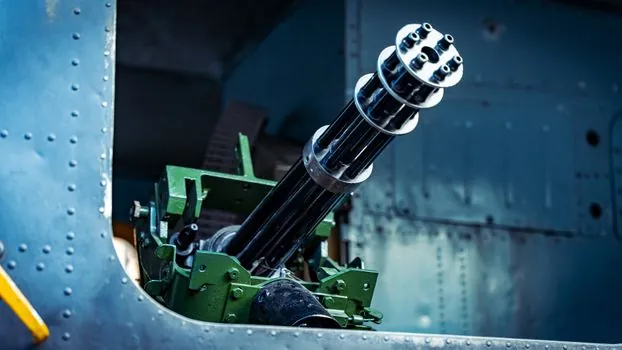
The Military Applications Antimony Market is forecast to grow at an 11.0% CAGR from USD 190.4 million in 2026 to USD 320.7 million by 2031, according to Knowledge Sourcing's June 2026 report [S5]. Antimony trisulfide is used in primers, detonators, and tracer rounds, while lead-antimony alloys harden bullet cores, artillery shells, and armor-piercing projectiles, and antimony trioxide and pentoxide support infrared detectors and night-vision components [S5].
The Oregon Group estimates ammunition at roughly 2% of measured global antimony demand, but defense and military applications sit alongside that small share and pull harder per tonne because the metallurgical tolerance for substitution is essentially zero in many uses [S2]. The 11% CAGR reflects not a civilian ammunition boom but hardening defense electronics, armored vehicle interiors, and infrared sensor manufacturing, all of which require the same Sb units competing with aramid fiber and other flame-retardant pathways in tight-spec applications [S5].
Price path: $5.31 to $25 per pound in five years
U.S. average antimony prices climbed from $5.31 per pound in 2021 to $6.18 in 2022, $5.49 in 2023, $10.24 in 2024, and an estimated $25 in 2025, a 4.7x increase over the period driven by the Chinese export controls and U.S. ban rather than by underlying demand growth [S1]. The monthly trajectory inside 2025 was non-monotonic: a $27.50 per pound peak in June 2025 fell back to $20.30 per pound by November 2025 as Myanmar artisanal supply eased the immediate shortage [S1][S3].
Two structural offsets exist. First, S&P Global's August 2026 supply-cost analysis (excluding Russia, China, North Korea, and Chinese majority-owned assets worldwide) shows the marginal non-Chinese producer sits at the upper end of the cost curve, which caps how far prices can fall without curtailing Western restart economics [S4]. Second, the restart of the Beaver Brook mine in Canada, currently on care and maintenance under China Minmetals ownership, could shift roughly 5% of global supply onto the market if a non-Chinese operator takes the asset, though no restart date is publicly confirmed [S3].
Comparison: where antimony use is elastic and where it is not
Across the four main end-uses, substitutability and price elasticity differ sharply. Antimony in lead-acid battery grids can be partially replaced by calcium or tin-based grid alloys, though at a cost to deep-cycle life, so battery demand is moderately elastic. Antimony in solar glass clarification has no mature substitute and is highly inelastic, which is why photovoltaic expansion is now bidding against military buyers for the same units. Antimony in ammunition primers and lead-antimony bullet cores is metallurgically tight, with substitution degrading ballistic performance, and antimony trioxide in military textile and electronics-enclosure flame retardancy sits in a similar high-stickiness band. That ordering matters for procurement teams: batteries and ATO in commodity plastics can hedge with FRP composite price shifts and reformulation, while solar and defense buyers face near-zero switching options [S1][S3][S4].
What procurement teams should track through Q4 2026
Three signals are worth watching into late 2026. The USGS FY 2026 potential acquisitions line for the National Defense Stockpile is currently listed as NA, while FY 2025 showed 700 metric tons of potential acquisitions, so any Q4 2026 stockpile buy against the 91% import-reliance figure would be a material demand signal [S1]. Second, the Idaho antimony project with the $80 million Department of War conditional award and 14-million-ton reported reserves needs construction, permitting, and processing milestones, with antimony trioxide and metallic antimony both off-take-constrained at the global level [S1][S4]. Third, the Beaver Brook restart decision in Canada is the single largest non-Chinese supply swing on the table, and any change in China Minmetals' idle status there would shift roughly 5% of global concentrate supply [S3]. The Heritage Foundation flagged antimony as a critical mineral in a critical moment in mid-2025, and the price collapse from $27.50 in June 2025 back to $20.30 by November 2025 has bought Western buyers time, not solved the structural concentration, with artillery shell primer and infrared detector supply chains remaining the most exposure-sensitive nodes [S1][S7].
For component-level specifications, see construction machinery and equipment, and lamps and light fittings.