On a tracked or wheeled asphalt paver, the auger and the screed do two different jobs in series: the auger distributes the hot-mix asphalt (HMA) transversely across the full paving width, and the asphalt paver screed then levels and pre-compacts that material to the target mat thickness [S1][S3]. Misreading the two functions is the most common reason a crew blames the screed for auger-side segregation, or vice versa.
Since the Barber-Greene Model 79 of 1934, the basic sequence has stayed the same: HMA loads in the front hopper, conveyors carry it rearward, the augers spread it across width, and the floating screed finishes it [S1][S3]. Material-feed control is handled by variable-speed conveyors, variable-speed augers, or flow gates, increasingly tied to an automatic feed control loop on modern machines [S1][S3].
What the Auger Actually Does
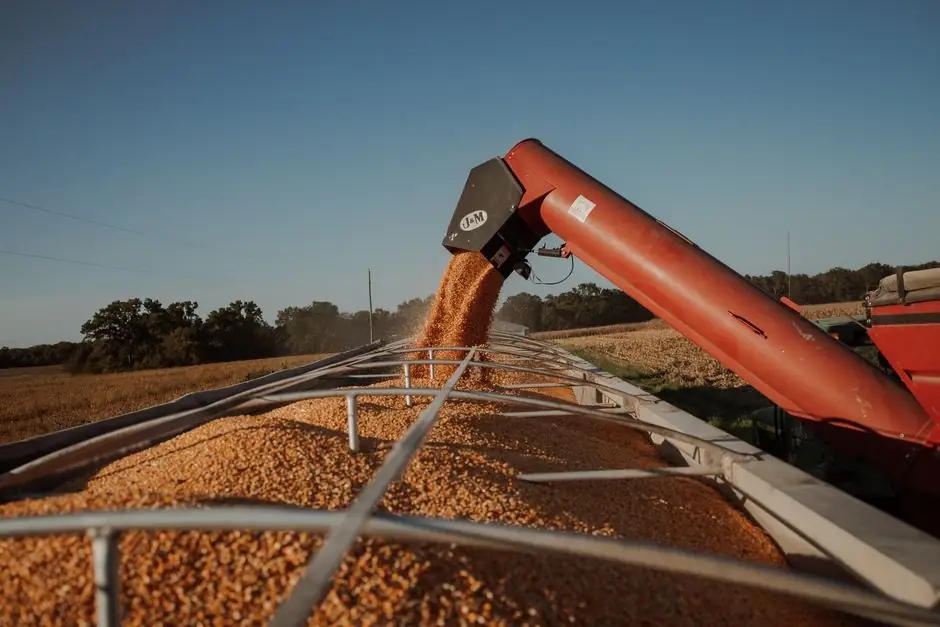
The auger sits across the rear of the tractor, just in front of the screed, and is the transverse spreading device that converts a narrow conveyor stream into a uniform head of material across the full paving width [S1][S2][S3]. Most pavers run two independently controlled augers, one per side, and several designs let each auger run in forward or reverse so all the mix can be biased to one side for partial-width passes or wide pave-outs [S3].
Auger height is a real setup number, not a vibe: The Asphalt Pro's setup guidance calls for setting the auger 1 to 2 inches above the target compacted mat so the mix flows under the screed smoothly and consistently [S6]. Caterpillar's paving handbook ties the visual target to the same physics: the operator's goal is to cover roughly one half, to slightly more than one half, of the auger flighting with material at all times [S7]. Starving the auger produces a thin, segregated longitudinal streak; overfeeding produces screed bounce and waves downstream [S1][S3][S7].
Gearbox placement is a spec-level decision that affects mat quality: middle-mounted gearboxes leave a starved strip directly under the center if the head of material drops, producing a lower-density longitudinal streak from aggregate segregation and temperature differentials, while outside-mounted gearboxes remove that central starvation zone but change the service access pattern [S1][S3]. Conveyor-to-auger delivery is regulated by variable-speed conveyors and augers, by raise/lower flow gates, or by a closed-loop automatic feed control system, with the latter now standard on most highway-class machines [S1][S3].
What the Screed Actually Does
The screed is a towed, heated, vibrating, and sometimes tamping plate that floats on the head of material the auger has just spread; it controls mat thickness, smoothness, slope, crown, and initial compaction [S1][S3][S4]. Beyond thickness, the screed carries the sensors used for grade control and for transverse slope and crown, with a slope sensor mounted on a transverse member reading the cross-fall the operator has dialled in [S1].
Screed mounting position is a real spec choice with real consequences: Vögele's front-mount VF 500 and VF 600 screeds mount extensions forward of the main screed, which permits faster screed retraction and reduces trapped material compared with rear-mount designs, and that geometry is what makes front-mount units more tolerant of varying widths on jobs with islands, light poles, and utility cuts [S4]. The VF 500 ships at 8 ft basic width, extends hydraulically up to 15 ft 6 in, and builds with bolt-on extensions to a maximum of 21 ft 6 in; the VF 600 starts at 10 ft basic, is infinitely variable from 10 ft to 19 ft 6 in, and reaches 25 ft 6 in with bolt-ons, with vibration across the full paving width [S4].
Mount style also changes how the screed is automated: Vögele's Niveltronic Plus integrates automated grade-and-slope control into the dual screed control stations and auto-recognises connected sensors, with no parameter calibration step because the system is matched to Vögele's hydraulic and control circuits; slope is read directly from the screed control displays so a separate smart level is not needed [S4]. On a wheeled 5203-2i-class paver that pair can lay at speeds up to 250 fpm and travel at up to 12 mph, both infinitely variable, and meet Tier 4-interim emissions [S4].
Front-Mount vs Rear-Mount Screeds: Decision Criteria
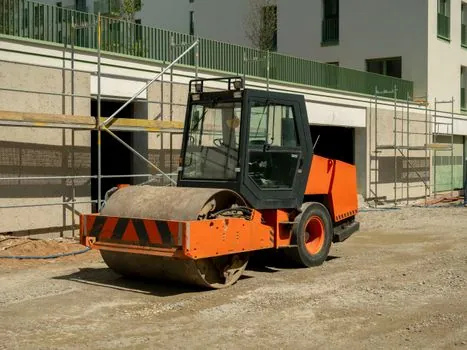
Front-mount and rear-mount screeds solve different paving problems, and the choice is driven by width variability, surface regularity, and crew workflow more than by raw horsepower [S4]. The four criteria below are the ones that actually change on site:
Width changeover: front-mount extensions retract faster and trap less material, so they are the better pick on parking lots with islands, residential and city streets with storm, gas, and water utilities, and county roads with multiple obstructions [S4]. Rear-mount units are slower to reconfigure but tolerate long, uniform mainline pulls where the crew rarely changes width [S4].
Smoothness on variable depths: front-mount geometry follows the head of material more aggressively when feed is irregular, which is helpful where utility covers or patches force depth changes, while rear-mount units give a calmer response on deep, uniform lifts [S4]. Pre-compaction: screeds with vibration across the full paving width, like Vögele's VF 500 with vibration out to 15 ft 6 in, deliver consistent density across extensions instead of leaving unvibrated edge zones [S4]. Automation fit: front-mount screeds in current product lines are tightly integrated with factory grade-and-slope systems such as Niveltronic Plus, so spec'ing a non-OEM screed onto a factory tractor usually costs the integrated automation story [S4].
Setup Numbers That Decide Mat Quality
Most mat problems blamed on the screed are actually auger-feed problems, and the field numbers that separate a good head of material from a bad one are small and measurable [S6][S7]. The auger height should sit 1 to 2 inches above the target compacted lift, and the operator should aim to bury roughly half, to slightly more than half, of the auger flighting in mix at steady state [S6][S7].
Conveyor and auger speeds are the two knobs a feed-control system actually drives: on automatic, the system holds that target head of material by speeding up or slowing the conveyors and augers together, while flow gates stay as a mechanical limit rather than the primary control [S1][S3]. For partial-width or widen-up passes, the ability to run each side's auger independently, and in reverse on at least one side, is what lets a crew bias all mix to one half of the screed without starving the other [S3]. A laser screed reference, used on the adjacent concrete work, is not part of the asphalt paver's own loop; the paver's own grade and slope sensors ride on the screed, not on an external laser, and they read off a reference string, a ski, or a 3D model [S1][S4].
Common Failure Modes by Subsystem
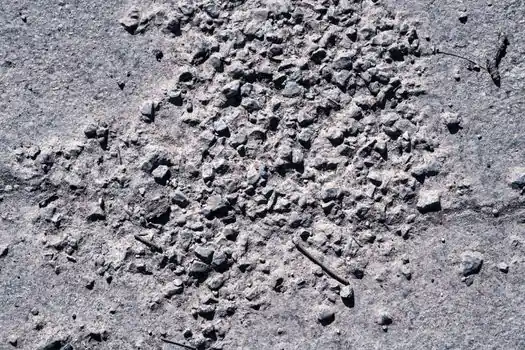
Auger-side failures almost always show up as longitudinal defects aligned with the tractor centerline or with the gearbox: a thin, lower-density strip in the middle of the mat points to a starved middle gearbox, while a coarse, segregated strip points to the auger running too slow or too low and letting the larger aggregate roll out ahead of the fines [S1][S3][S6].
Screed-side failures show up as transverse waves, tears, or drags in the surface: a screed running too hot, too cold, or with a worn leading edge produces scuffing, while a screed hunting up and down on a varying head of material produces short-wavelength ripples that ride on top of the auger problem rather than causing it [S1][S6]. A practical diagnostic is to watch the auger before touching the screed: if the head of material is steady and within the half-to-slightly-over-half coverage target, any remaining surface defect is almost certainly a screed wear, heat, or tow-arm issue, and the flow-meter-style feed-control indicators on the dash will read stable; if the head of material is swinging, the screed is just amplifying the auger's error [S1][S6][S7].
Standards, Specs, and What to Track on the Datasheet
Asphalt paver specification is still mostly OEM-driven rather than standards-driven, so the numbers that matter on a purchase or rental decision are the ones the manufacturer publishes, not a universal code [S1][S3][S4]. Track the basic screed width, the hydraulically variable paving width, the maximum paving width with bolt-on extensions, whether vibration is available across the full paving width, the paving speed in fpm, the travel speed in mph, the engine tier (for example Tier 4-interim on the Vögele 5200-2i and 5203-2i), and whether the factory grade-and-slope system auto-recognises sensors without a calibration step [S4].
For the material-feed side, track whether the paver uses independent two-auger drive, whether reverse is available on each auger, whether the gearbox is centre- or outside-mounted, and what automatic feed-control logic the conveyors and augers share [S1][S3]. For mix-quality risk, the gearbox-streak failure mode is a known and documented defect pattern, not a warranty grey area, so any tender language that requires centre-gearbox machines on segregation-sensitive lifts should be paired with an operator spec that mandates the half-to-slightly-over-half auger coverage target [S1][S3][S7].
On a 2026 buy or rent, the verifiable signals worth watching are whether the OEM offers an automatic feed-control loop that ties conveyor and auger speeds to a head-of-material sensor, whether the screed ships with full-width vibration as standard rather than as an option, and whether grade-and-slope automation is integrated into the screed control stations or sold as a bolt-on, because that integration is what removes a calibration step and a smart level from the crew's daily setup [S1][S4]. A useful cross-reference when sizing hydraulic power for any of this is the industrial valve package that controls the auger and screed circuits, since the same proportional-control logic shows up in paver hydraulics and in process skid valve manifolds.
Background reading: Anaerobic Threadlocker vs Lock Washer: A 2026 Spec-First Decision.