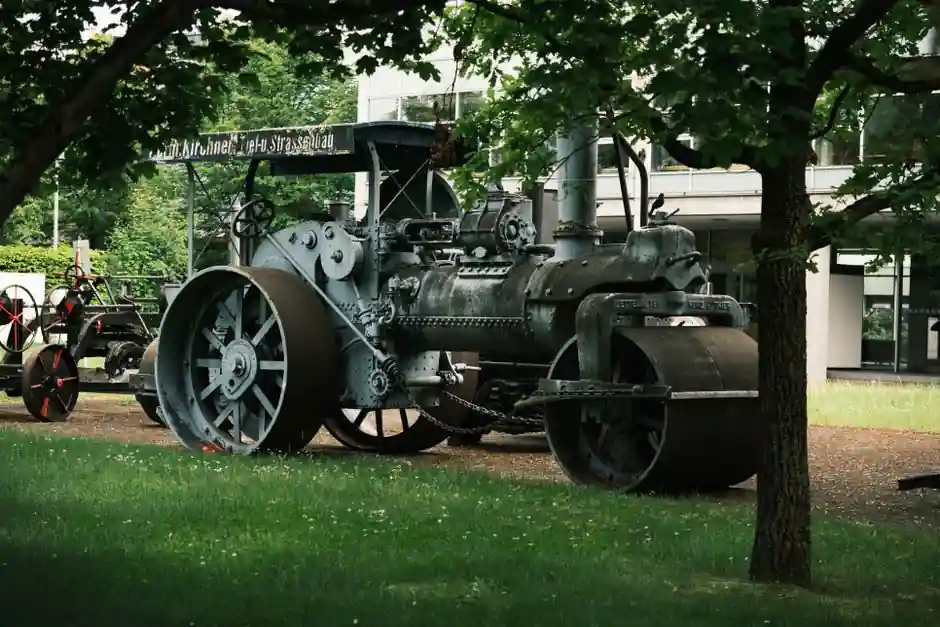
A well-maintained tracked or wheeled asphalt paver commonly runs 7-9 years in primary service before contractors sell or rotate it to a secondary role, and the engine itself can clear 10,000 operating hours between rebuilds [S4].
Annual utilization sits at 750-1,000 hours at minimum and averages near 1,200 hours, with regional seasonal windows stretching from roughly 6.5 months in Pennsylvania to 11 months in Phoenix [S4]. Daily throughput on larger pavers runs 3,000 tons, with high-production contractors targeting up to 6,000 tons per day where mix and job specs allow [S4].
Engine, Drivetrain, and Wear-Part Service Intervals
Asphalt pavers handle an abrasive charge that combines heat, aggregate impact, and continuous material conveyance, so the conveyor chains, flight bars, auger and auger bearings, screed plate, and floor plate are inspected at the end of every paving season, with most components being replaced or rebuilt within 2-3 seasons [S4]. A LeeBoy service manager quoted in the trade press states the typical contractor keeps an asphalt paver 5-7 years before trading, because downtime with $500-per-load trucks in queue is not tolerated [S4].
Engine power tiers in current production machines range from 49 hp (36.5 kW) on compact 11,000-lb units up to 74 hp (55 kW) Tier 4 Final on 17,550-lb highway-class pavers, with paving widths variable from 7 ft to 15 ft depending on model [S5]. Routine daily cleaning, release-agent application on hopper and auger surfaces, and regular lubrication of moving parts are the maintenance practices manufacturers recommend to keep wear-part and drivetrain intervals on schedule [S5].
Pavement Service Life Versus Machine Service Life
The asphalt the paver lays has a different clock: residential driveways last 15-30 years with a 20-year average, commercial parking lots run 10-15 years, and roads or highways can exceed 20 years under proper care [S1][S2]. A neglected residential driveway can fail in 8-12 years, while a well-installed and sealcoated surface can reach 25-30 years [S1][S3].
The driver is base and drainage, not the paver. A compacted stone base of 6-8 inches under at least 3 inches of compacted hot-mix asphalt, a slope of 1-2% to move water off the surface, and sealcoating every 2-3 years are the specs that determine whether the mat outlives the machine that placed it [S1]. Freeze-thaw cycling, clay-rich expansive soils, surface temps above 160 degrees F, and routine heavy-truck or RV traffic are the main accelerators of early replacement [S1][S2].
Selection Criteria by Use Case
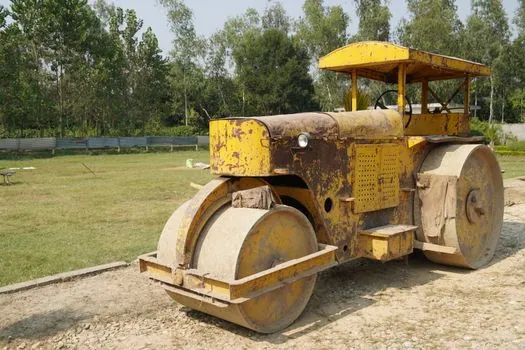
For municipal road crews and small paving contractors running 750-1,200 hours per year, a 49-71 hp compact paver in the 11,000-13,000 lb class is the typical fit, balancing transportability with 7-13 ft paving widths [S5]. For highway and large commercial lots where 3,000-6,000 tons per day is the production target, a 74 hp Tier 4 Final unit in the 17,500 lb class with paving widths up to 15 ft is the spec to match [S4][S5].
Selection criteria to weigh against purchase price: (1) engine tier and emission standard (Tier 4 Final is now the spec floor in North America for 74 hp-class units); (2) paving width range, since variable-width screeds reduce the need for bolted extensions; (3) hopper capacity and conveyor type, which set how often trucks must cycle; and (4) regional aggregate abrasiveness, because granite mixes in Georgia and parts of New England wear laydown equipment significantly faster than softer limestone mixes in the Midwest [S4].
Decision Triggers: Rebuild, Resell, or Replace
Three measurable signals drive a contractor's replacement decision, per industry guidance: (1) engine hours crossing the 10,000-hour mark without a major rebuild, (2) wear-part rebuild costs compounding for 2-3 consecutive seasons, and (3) production rate dropping below the tonnage needed to keep a loaded truck queue moving [S4]. The contractor calculus is that ten idling trucks at $500 per load cost more per day than a paver payment, so depreciation schedules of 3-5 years are common even when mechanical life extends to 10-15 years [S4].
For the underlying pavement, the equivalent replacement triggers are functional, not cosmetic: drainage that no longer sheds water, persistent settling or bumpiness after crackfill and sealcoat, surface oxidation severe enough to expose aggregate, and any safety concern from loose material or trip hazards [S3]. Comparing asphalt to concrete, asphalt runs 15-30 years at lower upfront cost and higher maintenance, while concrete runs 25-50 years at higher upfront cost and lower maintenance, with asphalt performing better in cold climates and concrete in hot climates [S1].
Standards, Sourcing, and Trackable Signals
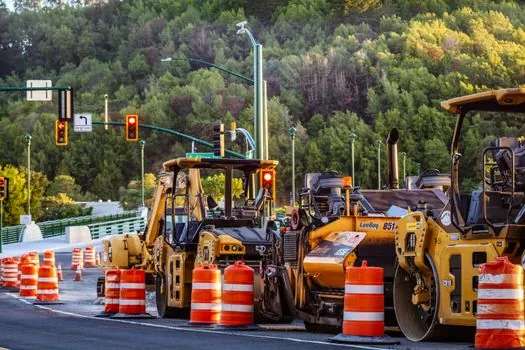
No single ISO or ASTM standard is named in the source material as governing paver engine life or pavement service intervals; the dominant variables are OEM service manuals, regional climate data, and the wear rate of locally sourced aggregate [S4]. For contractors benchmarking replacement timing, three trackable signals are: (1) engine hour-meter readings logged against the 10,000-hour rebuild benchmark, (2) annual regional paving-season length (April 15 to November 1 in colder markets versus 11 months in Phoenix), and (3) wear-part replacement costs as a share of annual paving revenue, which the trade press recommends tracking season-over-season [S4]. A field procedure for pre-shift inspection and commissioning of these machines is laid out in this commissioning walkthrough, useful for setting the baseline against which the 7-9 year service-life figure is measured. For owners running high-tonnage die-casting cells alongside paving fleets, the replacement-decision math on capital equipment follows a similar wear-part-versus-engine-hour framework, detailed in this spec-driven replacement guide.
For component-level specifications, see asphalt paver, linear guide, and crossed roller guide.