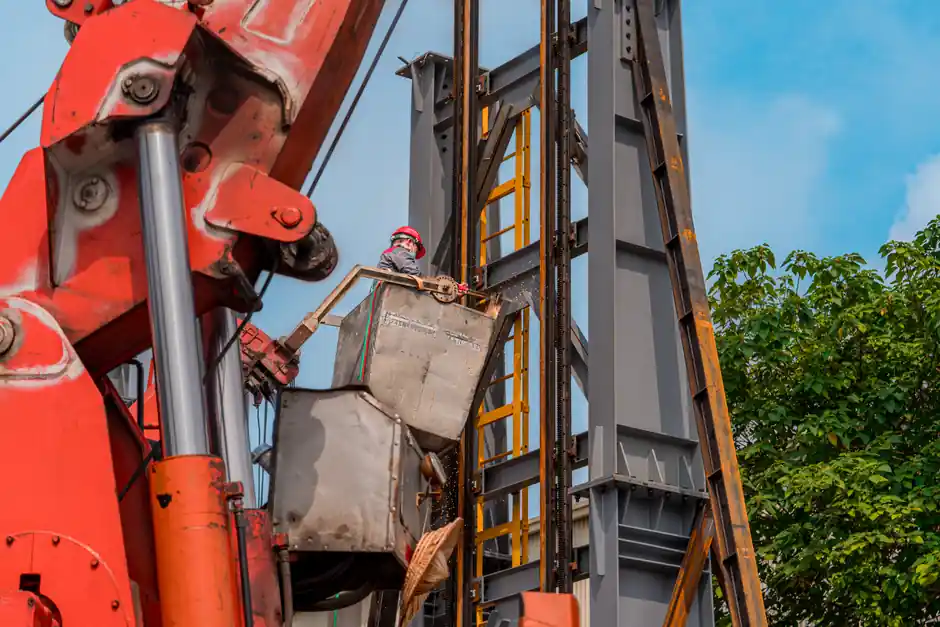
Die casting machines that follow documented preventive maintenance routinely reach 15-25 years of service life, while poorly serviced units can fail within 8-12 years, with rebuilds typically costing 30-50% of a comparable new machine and restoring 80-90% of original performance [S3].
Process engineers evaluating a die casting cell should treat the machine as a system of wearing subsystems, not a single asset: platens, tie bars, hydraulic or servo injection units, shot ends, dies, and controls each carry independent failure curves and replacement intervals. The dominant wear mechanisms in a die casting machine are thermal fatigue at the platen and shot sleeve, mechanical wear on bushings and toggle pins, and electronics obsolescence on the control cabinet.
Lifespan Benchmarks by Machine Class and Process
Service life varies sharply by tonnage, process family, and duty cycle, with cold chamber aluminum die casting machine cells running hotter and harder than zinc die casting machine hot chamber units, which typically log lower thermal swing per cycle and longer platen life [S4].
For hot chamber zinc work, machine frames commonly exceed 200,000 operating hours before platen fatigue becomes limiting, while cold chamber aluminum and magnesium die casting machine cells typically fall in the 100,000-150,000 hour range, and high-tonnage cold chamber units above 1600 tonnes often need frame refurbishment at 80,000-100,000 hours [S2][S4]. Shot sleeves, tie-bar nuts, and toggle bushings are mid-life wear items at 25,000-60,000 cycles depending on injection pressure profile [S4].
The Three Replacement Paths: New, Rebuild, and Used
Shibaura Machine's December 2023 buyer guidance frames the choice as three distinct paths rather than a binary, with used equipment priced lowest but carrying the highest risk of obsolete electronics and undocumented wear, rebuilds priced at roughly 30-50% of a new unit and restoring 80-90% of original performance, and new machines priced highest but offering current safety compliance, automation, and warranty coverage [S2].
Used machines demand direct verification of the original builder's status, parts availability for legacy electronics, and any warranty policy, because if the manufacturer has ceased operations, spares become orphaned and the machine effectively depreciates on a different curve. Rebuilds from the original equipment maker typically include a new PLC/HMI, retied platens, re-bored shot sleeves, and recertified toggle systems, which is why they often outperform late-life used units on mean time between failures even at a higher headline price [S2].
Wear Indicators That Drive the Rebuild-versus-Replace Decision
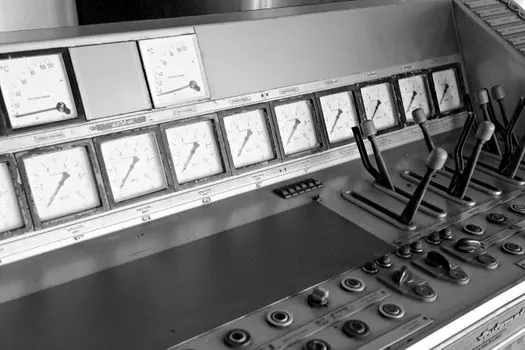
Five measurable indicators typically trigger a decision review: declining output rate, compatibility failures with new auxiliary equipment, original equipment vendor status, obsolete electronics, and accelerating wear on mechanical subsystems, all of which can be tracked before they cascade into unplanned downtime [S2].
Quantitatively, the threshold is often drawn at unplanned downtime exceeding 10-15% of scheduled operating hours, hydraulic pump efficiency dropping below 70-75% of nameplate, or platen deflection exceeding 0.1-0.15 mm under clamp tonnage. At that point a vacuum die casting machine rebuild rarely recovers the lost OEE, and a new machine with closed-loop shot control and real-time process monitoring delivers a 2-4 year payback on energy and scrap reduction alone [S2][S3].
Maintenance Economics: What Routine Service Actually Delivers
Proactive maintenance on a gravity die casting machine or any other die casting cell prevents roughly 47% of premature tooling failures seen in aluminum operations, while structured daily inspections alone reduce premature wear by 18-24% and routine lubrication every 500-800 cycles cuts friction by 30-40% [S4].
On the tooling side, which dominates cell downtime, the cost of unplanned mold repairs averages around $740,000 annually per facility, with replacement tooling running $50,000-$250,000 per mold, so the math on preventive maintenance is straightforward. Thermal cycling is the controlling wear mechanism, accounting for roughly 70% of premature mold failures, with each cycle imposing a 500-700°C swing that drives micro-cracks from ejector pins, oxidizes cavity finishes, and increases ejection forces by 30-40% [S4].
Specification Thresholds for Acceptance on Used or Rebuilt Equipment
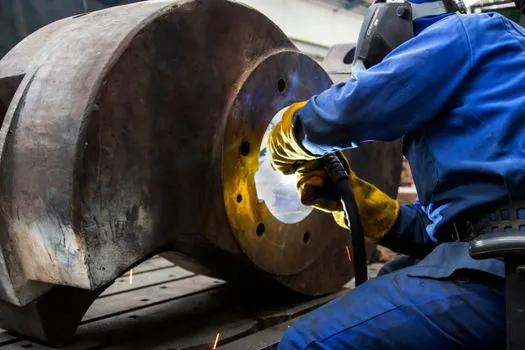
Any used or rebuilt die casting machine should be accepted against a documented spec sheet, not a verbal assurance, with the key pass/fail criteria being platen parallelism under load, shot sleeve bore concentricity, hydraulic pump efficiency, PLC generation and parts availability, safety circuit compliance to the current machinery directive in the buyer's jurisdiction, and a full maintenance log going back at least five years [S2][S3].
Field-validated thresholds worth specifying: cavity surface roughness Ra at or below 1.6 micrometer, ejector pin diameter wear at or below 0.05 mm, gate and runner erosion at or below 0.1 mm depth, and cooling channel pressure drop within 15% of the original baseline. Buyers should also confirm the original equipment maker is still operating, because if the manufacturer has ceased operations, parts and service support typically degrade within 24-36 months regardless of machine condition [S2][S4].
Standards, Compliance, and Resale Value
Safety compliance is non-negotiable on a used unit, and the buyer inherits full operator-safety liability once the machine crosses the loading dock, which is why the original equipment maker's pre-purchase inspection report is the single most valuable document in any used transaction [S2].
On the resale side, a well-maintained die casting machine with documented service history commands a materially higher resale price than an equivalent hour-meter unit without records, and the same documentation shortens rebuild lead time by weeks because the rebuilder starts with verified baseline data rather than teardown discovery [S3]. For broader context on capital-equipment spec discipline, the industrial hose selection guide covers analogous wear-driven replacement logic for fluid-handling assets, while casting mold specs for hardware manufacturing breaks down the H13 versus maraging steel trade-off at the tooling level.
Track these signals over the next two quarters to time the replacement decision: OEM service bulletins for your machine series, hour-meter versus OEE trend on the cell, and quoted lead time on a comparable new build, since a 9-12 month new-machine lead time is the realistic planning window that makes rebuild-versus-replace economics legible.