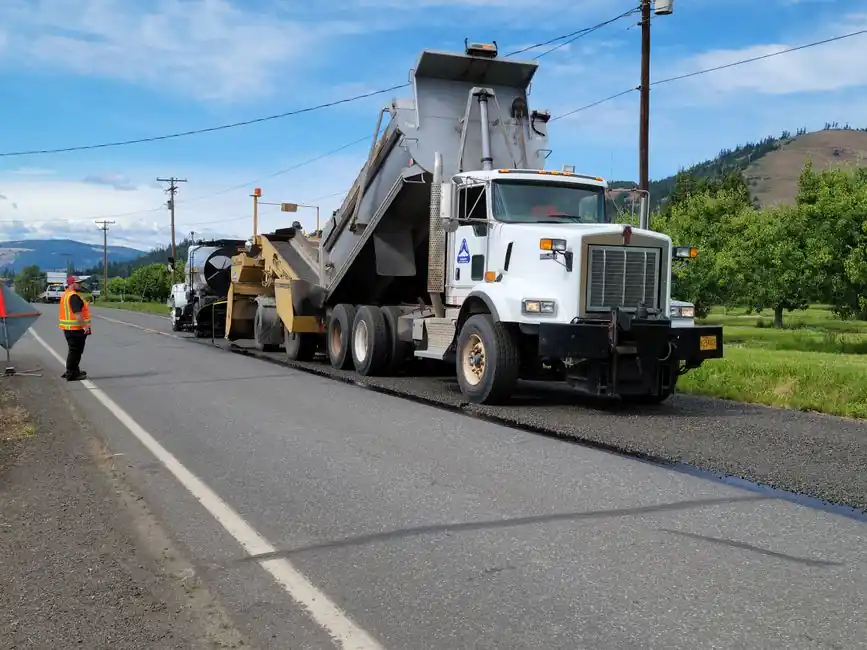
Asphalt paving crews work inside a 130-180°C hot zone where contact burns, struck-by incidents, and bitumen-fume exposure dominate the injury record [S2]. The practical safety envelope combines thermal PPE, banksman-guided reversing, fuel-fire discipline, and adherence to the GB/T 16277-2021 product standard plus OEM lockout procedures [S3][S4].
Asphalt pavers are slow-moving but visibility-restricted machines: a typical track paver such as the Caterpillar AP355 weighs 8,700 kg and pushes up to 406 t/h of hot-mix material through a screed that holds above 150°C during operation [S7]. That combination of mass, thermal load, and blind spots is why structured controls, not improvisation, govern safe paver work, as detailed in this asphalt paver safety reference.
Hot-Contact and Burn Hazards: The 130-180°C Operating Window
Machine-laid asphalt enters the paver at 130-180°C and the screed plate runs above 150°C, making contact burns the single most frequent injury on paving sites [S2][S6]. Hot asphalt at 160°C causes instant severe burns on skin contact, so long-sleeved thermal gloves, safety boots, and barrier cream are baseline PPE rather than optional gear [S2]. Cold running water and burn kits must be staged within immediate reach because even small contact wounds worsen without prompt cooling [S2][S5].
Bitumen fumes generated during laydown contain polycyclic aromatic hydrocarbons (PAHs), and long-term exposure is linked to respiratory disease, skin irritation, and elevated cancer risk [S2]. UK practice cites COSHH 2002 as the controlling regulation for bitumen-fume exposure assessment, requiring wind-direction awareness, upwind positioning of ground crew, and regular rotation off the raking station to limit cumulative dose [S2]. Operatives should never touch the screed plate without thermal protection, and the screed must be lowered or safety-cable-secured before any inspection, repair, or adjustment [S2][S4].
Struck-By and Crush Risks: Blind Spots, Banksmen, and Truck Exchange
Pavers move slowly but have severely restricted rearward visibility, and the truck-exchange window at the hopper is the highest-risk interaction on a paving train [S2][S5]. Workers between reversing tippers, the paver, and rollers are struck and crushed in paving operations every year, which is why a trained banksman is mandatory for every reversing maneuver and no one is allowed to stand between a tipper truck and the paver hopper during material transfer [S2][S4].
Pre-job briefings must lock down the paving direction, equipment order, truck-exchange method, hand signals, pedestrian routes, and emergency-stop expectations before the first truck arrives [S5]. A single agreed stop signal, established eye contact, and a hard rule that operators halt whenever a worker's position is uncertain are the three behaviors that prevent most struck-by incidents, and they are the same controls called out in the construction machinery and equipment operating-discipline references [S4][S5].
Fire and Explosion Prevention: The 50 ft Refueling Rule
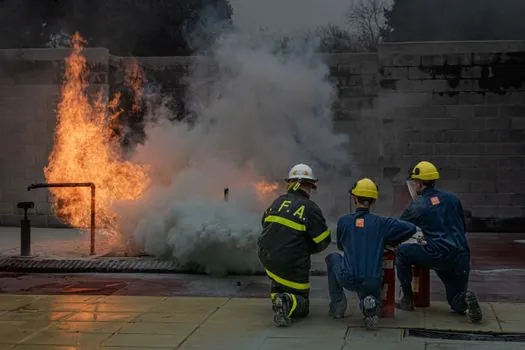
Diesel and residual bitumen residue on a hot paver create a chronic ignition source, and OEM manuals impose a hard 15.2 m (50 ft) clearance between the refueling point and any spark or open flame [S4]. Refueling is prohibited while the tractor engine or screed heater is running, and washing down the screed or tractor with the heater active is similarly forbidden because steam and fuel vapors can flash [S4].
Daily pre-shift inspection of brakes, steering, alarms, cameras, mirrors, lights, access steps, guards, and controls is the layer that catches the failures a fire would expose; asphalt buildup, damaged handrails, and slippery platforms must be cleared before the paver enters the live lane [S1][S5]. For broader equipment-level fire-prevention logic on hot-work and flammable-material sites, the fire safety reference captures the same hierarchy of controls applied to paver refueling zones.
Machine Guarding and Lockout: Conveyors, Augers, Screeds
Hoppers, slat conveyors, augers, screeds, articulation points, and moving linkages are the catch-and-pinch points that make paver internals as dangerous as the hot mat outside [S5]. All guards and covers must be installed before the paver is operated or moved, no part may be fitted or removed while the machine is running, and personnel must be kept clear of the material feed system during operation [S4].
Jam clearing, cleaning, and adjustment must follow a full shutdown with energy isolation, and the screed safety cables or a lowered screed position must be in place before any under-screed work begins [S4][S5]. These lockout expectations align with the machine safety principle that energy control comes before hands-on tooling, a discipline reinforced in the OEM operating instructions.
Slope, Rollover, and Traffic-Management Controls
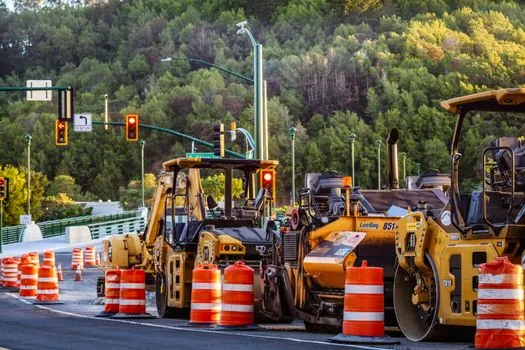
Pavers and rollers lose stability on pavement edges, drop-offs, slopes, soft shoulders, and overhead obstructions, so seat belts and rollover protective structures must be used as designed and never bypassed [S5]. Parking for service requires stable ground, lowered or secured attachments, neutralized controls, and cool-down of hot or pressurized systems before any cleaning or maintenance begins [S5].
On live carriageways, traffic management has to physically separate the laying crew from passing vehicles, and ground workers exposed to traffic while guiding trucks or checking the mat need spotters, high-visibility garments, and defined escape routes [S2][S5]. For lighting plants, sign stands, and other temporary-works gear that the same crews bring onto a paving site, the lighting equipment and electric lamps reference captures the matching electrical-safety rules.
Operator Competency, Grade Control, and Documented Method Statements
Paver competency extends past the operator licence to include demonstrated ability to set up laser references, string lines, and automated slope sensors from Moba, Topcon, or Leica grade-control systems, then interpret sensor feedback for progressive, gradual corrections to cross-fall and longitudinal grade [S8]. Misread slope data is a direct contributor to edge-collapse and rollover exposure on finished mats, which is why the safe work method statement format treats grade-control setup as a competency gate rather than a checkbox [S8].
For a fuller view of how the hopper, conveyor, auger, and floating screed interact mechanically, the asphalt paver working principle breakdown maps the same components whose guarding this article calls out. Tool-box talks dated March 2026 (TBT-ROA-007 and TBT-ROA-011) remain the most current field-deliverable records on burns, fumes, and screed-contact controls available to UK surfacing gangs [S2][S6].