A modern hydraulic pile driver like the post-driver class can deliver 1,300-2,000 blows per minute at 85 J impact energy, with sound pressure levels reaching 95 dB(A) at 1 m, which is why a layered PPE and exclusion-zone program is non-negotiable on any piling job [S4].
Pile driving combines heavy equipment, suspended loads, high-pressure hydraulic or steam lines, and vibration: OSHA 1926.603 specifically mandates safety chains or equivalent restraints at every pile hammer hose connection to stop a pressurized line from whipping if a coupling fails [S6].
OSHA 1926.603: The Core Compliance Anchor
OSHA 1926.603 governs pile-driving equipment, leads, and the hoses feeding the hammer, with the headline rule requiring safety chains or equivalent restraints at hammer hose connections so a separated coupling cannot flail into nearby workers [S6]. The same standard frames the broader expectation that leads, hammer, and hoist are inspected and that pressurized air or steam lines are physically tethered against whip [S6]. Compliance is verified through pre-shift inspection records and a job hazard analysis that names hose-restraint, suspended-load, and overhead-hazard controls [S1].
For contractors, 1926.603 is treated as the floor, not the ceiling: UBC Pile Drivers programs build on top of it, with documented zero-tolerance for safety infractions and certified rigger/signaler accreditation layered over the OSHA baseline [S1]. Side-grip hydraulic variants add their own risks because the operator sits adjacent to a high-vibration, hydraulically clamped rotary drive, and the same restraint, exclusion-zone, and lockout discipline still applies [S5].
Mandatory PPE and Operator Zone Controls
Minimum PPE on a pile driving site is ear protection, eye protection, hard hats, and steel-toed boots, with high-visibility clothing and cut-resistant gloves added for riggers and signallers handling leads and slings [S2]. Modern post-driver designs in the 25-260 mm pile-mouth class now ship with a four-level buffer protection system built into the tool itself, but that buffer is a backup, not a substitute, for the operator's hard hat, eye shield, and hearing protection [S4].
An exclusion zone equal to at least the height of the lead plus the suspended load swing radius must be enforced around the hammer, and only the operator, oiler, and a designated spotter with a valid rigger/signaler card are permitted inside it during driving [S1][S2]. Posted warning signs, audible travel alarms, and a single clear path of retreat are the three field-visible controls that separate a compliant setup from an incident [S5].
Pre-Op Inspection: Hammer, Leads, Hoses, Hoist
Every shift starts with a documented walk-around covering the hammer cushion, lead alignment, hoist line and wedge socket, boom pin retention, and the whip-restraint chain on every pressurized hose [S6]. A trained technician must perform scheduled inspections on the hydraulic system, with attention to the 100-140 bar work-pressure range and the 172 bar relief setting that protects the cylinder if the pile meets refusal [S4].
Before the first blow, the operator confirms the pile is plumb, the cap block is seated, and the surrounding area is clear of loose objects and unsecured clothing that the piston stroke could throw [S2]. Hand-held post drivers, fence post drivers, and small hand-tool-class machines still require eye and ear protection, gloves, and a clear footprint check even though the energies are an order of magnitude lower than a crawler-mounted rig [S3].
Comparison: Pile Driver Classes and Their Safety Profile
Four common classes line up against three decision criteria, operator exposure, energy class, and control complexity, so buyers and site planners can pick the right risk envelope. Crawler-mounted diesel or hydraulic hammers sit at the top of the energy and exposure scale and need the full OSHA 1926.603 plus a full-time rigger and signaler; side-grip vibro drivers add continuous vibration exposure on top [S5]. Mid-sized excavator-mounted hydraulic drivers in the 1,300-2,000 bpm range share the same whip-hose and exclusion rules but are simpler to reposition; small post and fence drivers in the 25.8 kg, 85 J class are the lowest exposure but still demand hearing protection at 95 dB(A) [S4].
Hand-held post drivers and manual fence drivers sit at the bottom of the energy and complexity scale, and are often the right call for utility, fencing, and small foundation work where mobilising a crawler rig is uneconomic, as long as PPE and footing discipline are still enforced [S3]. For flood-response and emergency reinforcement, the same machine class is reused for rapid barrier construction because high-frequency vibration drives piles into sandy, clay, and gravel layers that slower rigs struggle with [S4].
Operating Hazards and Common Failure Modes
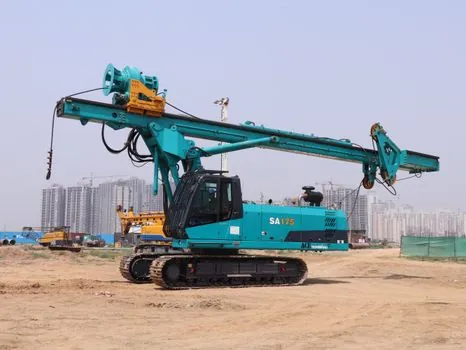
Side-grip and vibro drivers expose operators to whole-body vibration rated at 8-9.5 m/s² on some production units, which sits at or above the action threshold many EU regulations flag for reduced exposure time [S4][S5]. Hose whip from a separated coupling is the most common lethal failure mode, and is exactly what OSHA 1926.603's safety-chain rule is designed to contain rather than just document [S6].
Misalignment between the pile and the lead, a worn hammer cushion, or a hydraulic pressure spike above 172 bar are the three precursors to a cracked pile or a thrown pile cap, and any one of them is grounds to stop driving and call a technician before the next blow [S2][S4]. Failures in the cylinder, piston, or driving plate are typically announced by noise change, visible leakage, or sudden loss of penetration rate, and the operating rule is simple: stop, lock out, and report [S2].
Standards, Training, and Where to Verify
The compliance baseline is OSHA 29 CFR 1926.603 for pile-driving equipment, leads, and hose restraints, with the UBC Pile Drivers' Certified Rigger and Signaler Program providing the recognised operator-side training layer that contractors specify on US heavy-highway and marine jobs [S1][S6]. For equipment selection across the wider construction machinery and equipment category, the same whip-hose, exclusion-zone, and PPE rules are referenced against machine safety and fire safety controls for any on-site refuelling or hot work near the rig.
Buyers cross-checking the pile driver category should treat the OSHA 1926.603 hose-restraint rule, the documented pre-shift inspection, and a valid operator certification as the three non-negotiable acceptance criteria before sign-off [S1][S2][S6]. The next trackable signal is the 2026-09-16 update window for OSHA letter-of-interpretation updates on 1926.603 and any state-plan amendments, while the side-grip vibration and hydraulic-pressure envelope numbers above are the spec-level signals worth re-verifying against the OEM data sheet on each new shipment [S4][S5][S6].
Background reading: UHMWPE Selection for Electronics: Grade Map and Dielectric Criteria.